
Related News
- 00
0000-00
How to size heavy-duty loaders for North American mining operations - 00
0000-00
How altitude affects mining excavator performance in Latin America - 00
0000-00
Caterpillar Launches New Cat 6060 and Upgraded Autonomous Mining System - 00
0000-00
When does eco-friendly construction equipment pay for itself? - 00
0000-00
Will a wheel loader quick coupler fit your existing attachments?
Before finalizing 2026 budgets, financial decision-makers in the heavy machinery industry must look beyond purchase prices to the full cost picture—fuel volatility, compliance upgrades, labor pressure, parts inflation, and fleet digitization. This guide highlights the cost signals shaping excavators, loaders, graders, bulldozers, and skid steers, helping approvers balance capital discipline with long-term equipment performance and strategic competitiveness.
Which Cost Pressures Are Reshaping the Heavy Machinery Industry Before 2026?
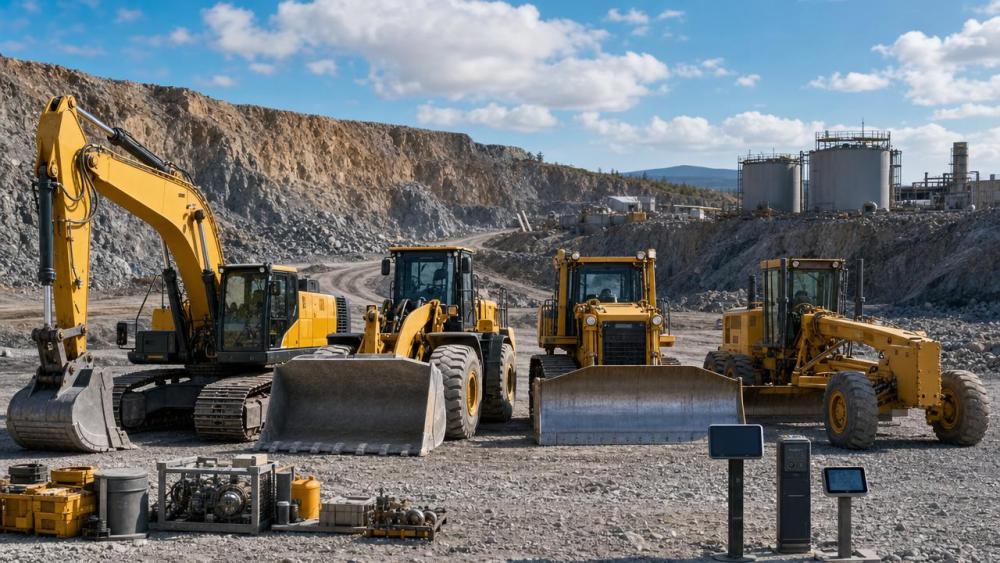
For budget owners, the heavy machinery industry is entering a phase where total cost of ownership matters more than sticker price. A machine that looks cheaper on a purchase order can become expensive through fuel burn, downtime, compliance retrofits, and weak residual value.
This is especially true across crawler excavators, wheel loaders, motor graders, bulldozers, and skid steer loaders, where utilization patterns differ sharply. A finance approver needs more than vendor quotations. They need cost visibility by duty cycle, emissions pathway, attachment mix, and digital readiness.
EMD tracks these issues through a machinery-specific lens. Its coverage of hydraulic performance, grading precision systems, hydrostatic drivetrains, remote-control architecture, and non-road emissions changes helps budget teams connect technical details to financial outcomes.
- Fuel and energy costs remain unstable, especially for high-hour fleets in quarrying, mining support, road building, and bulk earthmoving.
- Compliance costs are rising as fleets face stricter non-road emissions rules, noise limits, and reporting expectations.
- Labor shortages increase dependence on operator-assist systems, telematics, and lower-training-intensity equipment.
- Spare parts inflation and longer lead times can turn a minor repair event into a serious budget overrun.
- Fleet digitization is no longer optional for many buyers because utilization data now influences financing, maintenance planning, and replacement timing.
In practical terms, the heavy machinery industry is moving from asset purchase decisions to asset performance decisions. That shift changes what finance teams should approve, how they compare bids, and which risks deserve contingency budgets.
What Should Financial Approvers Measure Beyond Equipment Purchase Price?
A disciplined budget process starts by breaking costs into measurable buckets. This table summarizes the cost categories that often distort heavy machinery industry budgets when they are underestimated early.
The key takeaway is simple: in the heavy machinery industry, budget accuracy improves when finance teams approve a cost model, not just a machine. That model should include expected utilization, idle ratio, maintenance intervals, operator productivity, and end-of-life assumptions.
A practical approval checklist
- Confirm annual operating hours by asset class rather than applying one fleet average.
- Model fuel burn under both normal and severe-duty conditions.
- Separate mandatory compliance spending from productivity-enhancing upgrades.
- Request parts availability and service response assumptions in writing.
- Evaluate whether telematics lowers downtime enough to justify recurring fees.
How Do Cost Drivers Differ Across Excavators, Loaders, Graders, Dozers, and Skid Steers?
Not every machine class creates the same cost exposure. Financial approvers in the heavy machinery industry often miss this by using one broad budgeting logic across the whole fleet. The result is either underfunded maintenance or overcapitalized replacement plans.
The table below helps compare where cost pressure usually concentrates by equipment type.
This comparison matters because EMD’s coverage shows that technical features create different financial results depending on application. A grader with advanced GPS and laser sensing can reduce rework dramatically on airport and road surfaces, while an overconfigured skid steer may never recover its extra capital cost in low-hour municipal use.
Where approval errors often happen
- Buying for peak demand instead of average duty cycle, which inflates capital cost and fuel spend.
- Ignoring attachment economics, especially on excavators and skid steers where usage patterns vary widely.
- Assuming automation packages are luxury features rather than labor-risk controls in hard-to-staff regions.
Why Are Compliance, Decarbonization, and Autonomy Becoming Budget Items?
In the heavy machinery industry, compliance costs are no longer isolated to legal departments. They are entering capex and opex planning through emissions upgrades, cleaner powertrain choices, machine monitoring, and site-specific restrictions on noise and idling.
EMD’s strategic intelligence perspective is useful here because it connects macro infrastructure cycles with machine-level engineering changes. For finance teams, that means a better view of when a regulation trend is likely to influence procurement, residual value, or operating limitations.
Budget areas that deserve early review
- Engine and aftertreatment strategy for regions with tighter non-road emissions expectations.
- Electrification readiness for compact machines, especially where indoor, urban, or low-noise work is growing.
- Remote-control and low-latency communication architecture for hazardous mines and restricted-access sites.
- Data retention, reporting, and cyber considerations linked to telematics platforms.
These are not theoretical issues. They affect financing decisions, insurance assumptions, maintenance training, and whether an asset stays usable across multiple projects. A finance approver who ignores them may approve a lower purchase price but create a higher mid-life cost curve.
How Should Budget Teams Compare New Purchase, Fleet Upgrade, and Life-Extension Options?
When 2026 budget pressure is high, most organizations in the heavy machinery industry compare three paths: buy new, upgrade critical systems, or extend life with targeted rebuilds. The decision should depend on compliance horizon, utilization intensity, and maintenance predictability.
Use the following framework to guide selection decisions instead of relying on headline capex alone.
For example, a bulldozer working in severe push applications may reach a point where track, fuel, and hydrostatic service costs erase the apparent savings of life extension. By contrast, a lower-hour skid steer with stable urban service demand may justify a selective upgrade path.
Questions to ask before approval
- Will the chosen option remain compliant across the planned budget horizon?
- What is the expected downtime cost if parts lead times worsen?
- Can the machine support the attachments, digital tools, and control functions required by future contracts?
- How will this decision affect residual value and fleet standardization?
What Common Budget Mistakes Does the Heavy Machinery Industry Still Make?
Even experienced companies repeat a few mistakes when budgets tighten. These errors usually come from treating machines as generic capital assets rather than jobsite-specific production tools.
Mistake 1: Approving on price per unit instead of cost per productive hour
A lower acquisition price can mask poor fuel economy, weak operator support, or slower cycle times. In excavation, loading, and grading work, productivity shortfalls quickly multiply through labor and project delay costs.
Mistake 2: Ignoring technology because it looks discretionary
Telematics, 3D grading aids, and remote diagnostics may appear optional, but in many fleets they reduce idle hours, unauthorized use, rework, and emergency service events. The financial test should be measured savings, not whether the feature feels advanced.
Mistake 3: Underestimating labor-related cost inflation
When skilled operators or field technicians are scarce, machines that simplify control response, automate repetitive functions, or improve diagnostics can protect budget performance. This is one reason EMD closely follows electro-hydraulic controls and remote operating systems.
Mistake 4: Leaving no buffer for application drift
A machine purchased for one duty may be reassigned to another within a year. If the specification is too narrow, attachment limits, cooling capacity, or undercarriage wear can drive unexpected costs. Approval teams should test likely secondary use cases before signing off.
FAQ for Finance Teams Reviewing Heavy Machinery Industry Budgets
How should we prioritize spending if the 2026 budget is tight?
Start with assets that combine high annual hours, compliance exposure, and high downtime cost. In many fleets, that means core excavators, primary loaders, or dozers in production-critical roles. Secondary or seasonal machines may be better candidates for upgrade or life extension.
When does telematics become financially justified?
Telematics usually pays off when fleets suffer from poor visibility on idle time, inconsistent maintenance intervals, site dispersion, or theft risk. It is particularly useful where multiple machine classes operate across remote projects and where replacement timing depends on real utilization data.
Is electrification relevant now for the heavy machinery industry?
It depends on machine size, duty cycle, and charging constraints. Compact equipment and certain urban applications may justify it earlier because of low-noise requirements and site restrictions. Large earthmoving fleets still need careful analysis of runtime, charging windows, and infrastructure cost.
What documentation should finance request from suppliers?
Request duty-based fuel assumptions, preventive maintenance schedules, expected wear parts intervals, digital subscription terms, parts lead-time guidance, and any applicable compliance statements. If guidance systems or remote diagnostics are included, ask how training and support are structured.
Why Choose Us for Cost Intelligence and 2026 Planning Support?
EMD helps financial approvers understand the heavy machinery industry at the point where engineering detail meets budget accountability. Our focus spans crawler excavators, wheel loaders, motor graders, bulldozers, and skid steer loaders, with attention to hydraulic force, grading precision, drivetrain efficiency, autonomy pathways, and decarbonization trends.
That means your team can move beyond generic market commentary and ask sharper questions: which machine class faces the highest wear-risk inflation, where telematics can offset labor pressure, how regulation changes may affect replacement timing, and which technical options support long-term asset utilization.
- Consult us for parameter confirmation when comparing excavator, loader, grader, dozer, or skid steer configurations.
- Ask for support on product selection logic tied to application, utilization, and budget horizon.
- Discuss delivery timing risks, parts support concerns, and phased procurement strategies before final approval.
- Review certification and compliance questions relevant to non-road equipment planning across different markets.
- Open a quotation discussion with clearer assumptions on lifecycle cost, digital options, and future fleet flexibility.
If your 2026 budget decisions must stand up to both operational scrutiny and financial discipline, a more technical cost view is the right place to start. EMD is built to help you evaluate that view with greater precision.