
Related News
- 00
0000-00
How to size heavy-duty loaders for North American mining operations - 00
0000-00
How altitude affects mining excavator performance in Latin America - 00
0000-00
Caterpillar Launches New Cat 6060 and Upgraded Autonomous Mining System - 00
0000-00
When does eco-friendly construction equipment pay for itself? - 00
0000-00
Will a wheel loader quick coupler fit your existing attachments?
Expanding a fleet of heavy construction equipment can unlock capacity, but it can also magnify hidden financial, operational, and compliance risks. For business evaluators, a disciplined review before capital deployment is essential. This article outlines five critical risks to assess—from utilization and lifecycle cost to emissions regulation and technology fit—so expansion decisions support long-term productivity, resilience, and return on investment.
Heavy Construction Equipment Expansion in Today’s Operating Environment
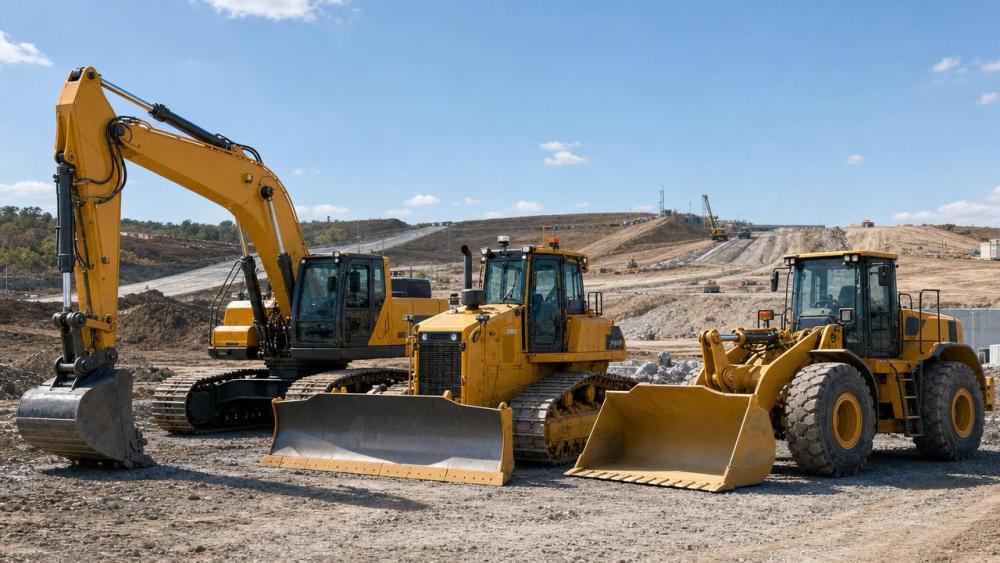
Heavy construction equipment includes excavators, wheel loaders, bulldozers, motor graders, and skid steer loaders used in infrastructure, mining, roadbuilding, and site development.
Fleet expansion usually aims to increase output, reduce rental dependence, enter new project categories, or improve scheduling control across multiple jobsites.
Yet every added machine changes the economics of ownership. It also affects maintenance complexity, operator requirements, transportation planning, fuel strategy, and regulatory exposure.
For intelligence-driven organizations such as EMD, the heavy construction equipment decision is no longer about tonnage alone. It is about asset productivity across a changing industrial system.
That system now includes tighter emissions rules, digital machine controls, autonomous functions, telematics, and growing pressure to cut downtime and carbon intensity.
Why risk review matters before ordering new units
A machine can appear profitable on a spreadsheet and still underperform in the field. Mismatch between duty cycle and equipment specification is a common source of value erosion.
Before expanding heavy construction equipment fleets, decision-makers should test assumptions about hours, terrain, attachments, haul distance, idle time, labor access, and residual value.
Five Core Risks to Check Before Fleet Expansion
1. Utilization risk
The first risk is underutilization. Buying more heavy construction equipment only creates value when productive hours remain high across seasons, project types, and site locations.
Utilization should be measured by billable hours, actual working hours, idle ratio, attachment usage, and transport downtime between assignments.
- Review twelve to twenty-four months of machine hour data.
- Separate peak demand from baseline demand.
- Test whether rentals can cover short spikes more efficiently.
- Check if one versatile model can replace several specialized units.
For example, a crawler excavator may be busy in bulk excavation but sit idle during finishing phases. A skid steer loader may outperform larger machines in constrained urban work.
2. Total lifecycle cost risk
Purchase price is only the visible part of the investment. The larger risk lies in total lifecycle cost across fuel, maintenance, wear parts, financing, insurance, and resale.
Heavy construction equipment working in abrasive material, steep grades, or high-impact loading often accumulates hidden costs faster than standard ownership models assume.
A lower-cost unit may become more expensive if parts lead times are long or hydraulic reliability is weak in severe applications.
3. Compliance and emissions risk
Regulatory exposure is rising across the heavy construction equipment market. Emissions standards, noise limits, jobsite reporting, and urban low-emission rules now shape equipment viability.
A fleet expansion that ignores local and cross-border compliance may restrict deployment options or create retrofit expenses soon after delivery.
This is especially relevant for machines used in public infrastructure, airport works, municipal projects, tunnels, and environmentally sensitive areas.
- Confirm applicable engine standards in every operating jurisdiction.
- Review idle reduction rules and jobsite decarbonization targets.
- Assess whether electric or hybrid options fit recurring use cases.
- Check documentation needs for public tender participation.
EMD’s industry lens shows a clear trend: machine capability must now align with both earthmoving performance and environmental legitimacy.
4. Technology integration risk
Modern heavy construction equipment increasingly depends on telematics, electro-hydraulic controls, GPS grading systems, payload monitoring, and remote diagnostics.
Technology creates value only when it fits the operating model. Otherwise, advanced features become underused assets with extra service and training burdens.
This risk is highest when expanding into precision grading, hazardous mining support, or mixed fleets with incompatible software ecosystems.
Questions to test technology fit
- Can data from different brands be unified in one dashboard?
- Do sites have connectivity for live machine monitoring?
- Are operators ready for 3D controls and automated assist functions?
- Will dealers support software updates and sensor calibration quickly?
For motor graders, precision systems can be transformative. For basic rough work, simpler heavy construction equipment may deliver better overall value.
5. Service, parts, and workforce risk
Fleet growth can fail because support capacity does not scale with the machines. Parts access, field service response, and trained technicians are strategic constraints.
The same issue applies to operators. Expanding heavy construction equipment fleets without sufficient skill depth can increase idle time, unsafe operation, and component damage.
High-output equipment often needs disciplined operating technique. Hydraulic efficiency, bucket fill factor, blade accuracy, and undercarriage life all depend on human execution.
Industry Signals Shaping Heavy Construction Equipment Decisions
Several market shifts explain why risk discipline matters more now than in previous fleet cycles.
- Infrastructure spending remains active but uneven by region and segment.
- Emission regulation is tightening for non-road machinery.
- Electrification and autonomy are advancing, but not uniformly practical.
- Used equipment values can swing sharply with supply conditions.
- Telematics is turning fleet management into a data-led discipline.
EMD tracks these signals across crawler excavators, wheel loaders, graders, bulldozers, and compact multipurpose machines. The common theme is asset optimization, not blind accumulation.
Where Expansion Usually Delivers the Best Business Value
Not every expansion case is equal. Heavy construction equipment investments tend to create stronger returns in a few repeatable conditions.
- Long-duration infrastructure programs with predictable utilization.
- High rental spend that exceeds ownership economics.
- Applications needing specialized control, accuracy, or breakout force.
- Regions where service support and resale channels are strong.
- Sites where telematics can reduce idle time and fuel waste.
For example, frequent airport grading may justify advanced motor graders. Dense urban utility work may favor compact, attachment-ready units over larger heavy construction equipment.
Practical Review Framework Before Committing Capital
A disciplined pre-expansion review should combine technical, financial, and operational evidence. This reduces the chance of buying capacity that cannot be fully monetized.
Recommended checklist
- Map machines to confirmed project demand, not optimistic forecasts.
- Calculate ownership cost under conservative utilization scenarios.
- Validate emissions and tender compliance across target markets.
- Audit dealer support, parts lead times, and software compatibility.
- Plan operator onboarding and maintenance training before delivery.
- Define exit assumptions, including resale timing and remarketing channels.
This framework is particularly useful when comparing crawler excavators, bulldozers, and loaders with different attachment ecosystems and duty-cycle profiles.
Conclusion and Next-Step Considerations
Fleet growth in heavy construction equipment can be a strong strategic move, but only when expansion is grounded in real utilization, lifecycle economics, compliance readiness, technology fit, and support capacity.
The most resilient decisions treat each machine as part of a connected operating system. Productivity, reliability, and decarbonization must be evaluated together.
A practical next step is to build a machine-by-machine risk matrix using the five checks above. Rank each planned unit by demand certainty, total cost, regulatory fit, digital readiness, and service support.
That process helps ensure heavy construction equipment expansion supports sustainable output instead of creating expensive idle capacity. In a tighter, smarter market, disciplined fleet decisions win over simple fleet size.