
Related News
- 00
0000-00
How to size heavy-duty loaders for North American mining operations - 00
0000-00
How altitude affects mining excavator performance in Latin America - 00
0000-00
Caterpillar Launches New Cat 6060 and Upgraded Autonomous Mining System - 00
0000-00
When does eco-friendly construction equipment pay for itself? - 00
0000-00
Will a wheel loader quick coupler fit your existing attachments?
For financial approvers, the decision between ownership and heavy equipment rental is less about preference and more about measurable cost signals. Utilization rates, project duration, financing terms, maintenance exposure, depreciation, transport, and compliance risk can quickly shift the economics. In a market shaped by electrification, autonomy, and tighter emissions rules, the right choice protects capital while keeping earthmoving fleets productive, flexible, and bid-ready.
The issue is especially sensitive for crawler excavators, wheel loaders, motor graders, bulldozers, and skid steer loaders. These assets can support critical production, but they also carry large ownership costs when idle, under-specified, or exposed to unexpected maintenance events.
For finance teams, heavy equipment rental should be evaluated with the same discipline as a capital acquisition. The best answer comes from utilization data, jobsite conditions, cash timing, emission exposure, residual value assumptions, and operational risk.
Start With Utilization: The First Cost Signal
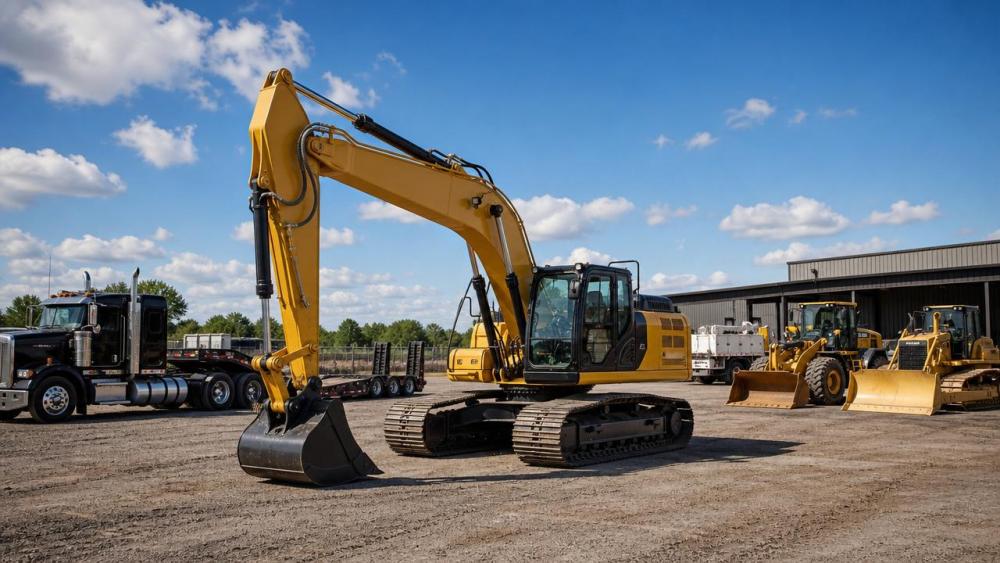
Utilization is the fastest way to challenge assumptions about ownership. A machine used 70% of available working days has a different financial profile from one used only 25% across seasonal projects.
For many earthmoving fleets, the practical break-even point often appears between 55% and 65% annual utilization. Below that range, heavy equipment rental can protect capital and reduce idle asset drag.
How to Measure Utilization Before Approval
Financial approvers should avoid relying only on operator requests or project optimism. Utilization should be measured through 3 layers: scheduled days, productive engine hours, and revenue-linked operating hours.
- Track planned use by project phase, such as stripping, trenching, grading, loading, or site cleanup.
- Compare expected engine hours with realistic daily productivity, often 6–8 productive hours per shift.
- Separate mobilization time, waiting time, weather delays, and permit-related downtime from billable use.
- Review whether one machine can serve 2–3 consecutive projects without costly transport gaps.
The following matrix helps finance teams frame heavy equipment rental versus ownership based on utilization, predictability, and operational control.
The key conclusion is simple: ownership rewards predictable, high-frequency work. Heavy equipment rental rewards flexibility when workload, specification, or location can change within a few months.
Red Flag for Approvers
If an asset request cannot show projected engine hours, job allocation, and transport frequency, approval should pause. A vague “we will use it often” is not a cost model.
Compare Full Cost, Not Just Monthly Payment
A monthly loan payment can appear lower than heavy equipment rental, but ownership adds maintenance, insurance, storage, telematics, depreciation, and resale uncertainty. These costs may appear in separate budgets.
For a crawler excavator or wheel loader, a 5-year ownership model should include purchase price, interest, preventive service, wear parts, undercarriage or tire exposure, downtime, and disposal cost.
Cost Categories Finance Teams Should Normalize
Approvers should convert both options into a comparable cost per hour, cost per project, or cost per cubic meter moved. This prevents accounting category bias.
- Capital cost: purchase price, down payment, interest rate, lease structure, and tax treatment.
- Operating cost: fuel or charging, fluids, filters, teeth, cutting edges, ground-engaging tools, and attachments.
- Maintenance exposure: planned services every 250–500 hours and major repairs after heavy-duty cycles.
- Logistics cost: mobilization, demobilization, oversize permits, escort vehicles, and site storage.
- Risk cost: downtime penalties, emissions non-compliance, technology obsolescence, and resale volatility.
Heavy equipment rental can shift some costs into a predictable operating expense. However, rental contracts still require review for overtime hours, damage responsibility, fuel policy, pickup windows, and attachment availability.
Depreciation and Residual Value Risk
Depreciation is not only an accounting entry. It becomes a real cash issue when a machine must be sold into a weak market or after regulation changes reduce buyer demand.
Earthmoving assets may retain value well when maintained, but residual estimates can move sharply across a 3–5 year period. Emission tier changes can alter resale opportunities across regions.
Ownership Makes More Sense When
- The asset supports a core capability, such as precision grading or continuous quarry loading.
- The company has internal maintenance capacity and parts planning discipline.
- Projects require custom attachments or permanent machine control systems.
- The expected ownership cycle is at least 4–7 years with strong utilization.
Project Duration, Mobilization, and Bid Flexibility
Project duration can override pure hourly math. A 6-week urban utility job and a 48-month highway package require very different equipment strategies and cash controls.
Heavy equipment rental is often attractive when bidding work across multiple locations, especially when exact start dates depend on permits, weather, or owner notice-to-proceed timing.
Match Machine Type to Contract Risk
Different assets carry different financial exposure. A motor grader with advanced GPS control may be central to surface tolerance, while a skid steer may be needed only during finishing phases.
The table below summarizes typical approval considerations for heavy equipment rental and ownership across key earthmoving categories.
This comparison shows why one procurement rule rarely works across all equipment. Heavy equipment rental may be strategic for graders and dozers in project peaks, while ownership may fit loaders in daily production.
Mobilization Can Change the Answer
Transport costs often decide the final economics. Moving a large excavator or bulldozer can involve low-bed trailers, route permits, escorts, and scheduling windows of 2–10 days.
If a machine must move 4–6 times per year, ownership may absorb repeated logistics inefficiency. Local heavy equipment rental can reduce haul distance and shorten project ramp-up.
Maintenance Exposure and Downtime Risk
Maintenance is where financial plans often become operational reality. Hydraulic systems, undercarriages, transmissions, tires, blades, and attachments convert working conditions into measurable cost exposure.
Heavy equipment rental can reduce maintenance uncertainty, but it does not eliminate responsibility. Damage beyond normal wear, contaminated fuel, misused attachments, or late service reporting may still create charges.
Questions to Ask Before Signing
- Who covers preventive maintenance at 250-hour or 500-hour service intervals?
- What is the response window if a critical machine is down: 4 hours, 24 hours, or next business day?
- Are replacement machines guaranteed during downtime, or only subject to fleet availability?
- How are hydraulic hammer use, abrasive materials, water exposure, or severe applications priced?
- Are telematics reports available for engine hours, idle time, fuel burn, fault codes, and location?
A strong heavy equipment rental agreement should define preventive maintenance, damage inspection, downtime reporting, and replacement escalation. Ambiguity increases dispute risk at the end of the rental term.
Downtime Has Two Financial Layers
The first layer is direct repair or replacement cost. The second is production loss, which may include crew standby, missed milestones, liquidated damages, or delayed revenue recognition.
For high-intensity loading or precision grading, a single idle shift can affect multiple downstream activities. Finance should value uptime as a project risk factor, not only a maintenance metric.
Compliance, Technology, and Future-Proofing
The equipment decision is increasingly shaped by emissions rules, electrification, autonomous functions, and machine control systems. A machine that fits today’s job may be restricted on tomorrow’s site.
Heavy equipment rental gives contractors access to newer fleet configurations without committing capital to uncertain technology cycles. This matters when projects require low-emission zones or digital productivity reporting.
Technology Signals Worth Pricing
- Emission compliance: verify regional non-road requirements, aftertreatment condition, and fuel compatibility.
- Machine control: confirm GPS, laser, 2D, or 3D grading system compatibility before mobilization.
- Telematics: require access to utilization, idle percentage, fault alerts, and location logs.
- Electrification readiness: check charging infrastructure, duty cycle, power availability, and shift length.
- Remote operation: assess latency, communication coverage, operator training, and site safety protocols.
For ownership, these technology decisions may lock capital for 5 years or longer. For heavy equipment rental, finance can approve technology access by project need and contract duration.
Avoid Paying Twice for Digital Capability
Some contractors buy base machines, then later add machine control kits, sensors, antennas, displays, and software subscriptions. That can create duplicate costs and integration risk.
When precision grading tolerance is central to the bid, finance should compare a rental-ready controlled machine against a purchased unit plus retrofit cost, training, and calibration time.
A 6-Step Approval Framework for Rental or Ownership
A consistent approval process helps prevent emotional buying, last-minute rental premiums, and mismatched fleet capacity. The framework should work for both project managers and finance controllers.
Use this 6-step model before approving heavy equipment rental, a purchase, or a blended fleet strategy for earthmoving and infrastructure work.
Step-by-Step Decision Process
- Define the production task: excavation volume, haul distance, grading tolerance, material density, or attachment requirement.
- Estimate duration: separate confirmed work from optional extensions, often using 30-day, 90-day, and 180-day scenarios.
- Calculate utilization: convert scheduled days into realistic engine hours and billable production hours.
- Normalize full cost: include financing, maintenance, downtime, transport, insurance, storage, and residual risk.
- Test compliance risk: review emissions, site access rules, safety requirements, and digital reporting needs.
- Select the route: approve purchase, heavy equipment rental, rent-to-own, or a phased fleet mix.
This process also improves bid discipline. When equipment assumptions are documented early, estimators can price earthmoving work with fewer hidden contingencies and less margin erosion.
When a Blended Fleet Works Best
Many contractors do not need a pure answer. They own high-utilization core machines and use heavy equipment rental for peak demand, specialty attachments, low-emission requirements, or remote sites.
A blended strategy can also protect the balance sheet. It allows ownership of proven assets while preserving flexibility for autonomous features, electric models, or advanced 3D control systems.
Final Guidance for Financial Approvers
Heavy equipment rental is not automatically cheaper, and ownership is not automatically stronger. The right decision depends on utilization, project duration, maintenance exposure, logistics, compliance, and technology timing.
For short-cycle, uncertain, specialized, or regulation-sensitive work, rental can preserve cash and improve fleet agility. For stable, high-volume production, ownership can build long-term cost control and operational depth.
The Global Earth-Mover Dynamics helps decision teams interpret machinery trends, cost signals, and infrastructure equipment risks with a finance-ready lens. Our intelligence supports bid planning, fleet strategy, and asset utilization decisions.
If your team is evaluating crawler excavators, wheel loaders, motor graders, bulldozers, skid steer loaders, or a blended rental strategy, connect with EMD to discuss practical cost signals and equipment decision frameworks. Contact us to explore tailored insights for your next fleet approval.