
Related News
- 00
0000-00
How to size heavy-duty loaders for North American mining operations - 00
0000-00
How altitude affects mining excavator performance in Latin America - 00
0000-00
Caterpillar Launches New Cat 6060 and Upgraded Autonomous Mining System - 00
0000-00
When does eco-friendly construction equipment pay for itself? - 00
0000-00
Will a wheel loader quick coupler fit your existing attachments?
Heavy construction equipment costs are no longer limited to purchase price—they now shape financing, utilization, compliance, and replacement timing across the entire fleet. For financial decision-makers, understanding how fuel volatility, maintenance burdens, emissions rules, and technology upgrades affect total ownership cost is essential to smarter planning, stronger cash flow, and more resilient capital allocation.
Why heavy construction equipment costs now drive fleet planning decisions
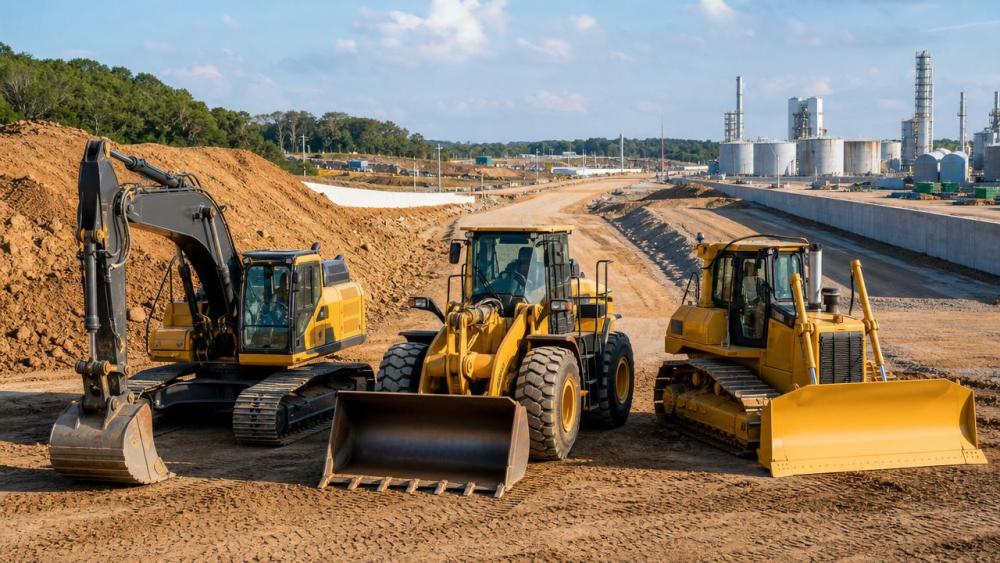
For finance approvers, the real question is no longer “What is the machine price?” It is “What will this asset do to utilization, operating expense, residual value, and compliance risk over five to eight years?” That shift is changing how fleets are planned across excavation, loading, grading, dozing, and compact site support.
Heavy construction equipment now sits at the intersection of capital budgeting, emissions policy, digital control systems, operator productivity, and supply chain variability. A crawler excavator with stronger hydraulic performance may reduce cycle time, but it may also require a different maintenance skill set, software support contract, and telematics framework.
This is why fleet planning has become a strategic discipline rather than a simple procurement exercise. EMD follows this change closely by connecting machine performance data, infrastructure investment cycles, regulatory transitions, and commercial equipment intelligence into one decision lens. That is especially valuable when budget holders must justify large asset commitments under uncertain project pipelines.
- Fuel and energy costs can swing faster than depreciation assumptions in the original approval model.
- Maintenance intervals and component life increasingly depend on duty cycle, operator behavior, and machine software calibration.
- Emissions compliance can accelerate replacement timing even when mechanical life remains acceptable.
- Autonomy-ready and grade-control-enabled machines can improve productivity, but they also change training, integration, and data management costs.
Which cost categories matter most beyond purchase price?
When reviewing heavy construction equipment, finance teams need a cost map that extends beyond acquisition. The table below summarizes the core cost categories that most often alter total cost of ownership and fleet planning assumptions.
The practical takeaway is simple: heavy construction equipment costs should be modeled in layers. A lower upfront price can be offset by higher fuel burn, slower cycles, more undercarriage replacement, or weaker residual value. In capital approval terms, the cheapest machine can become the most expensive fleet decision.
How different machine classes shift the cost equation
Cost behavior differs sharply by machine type. Crawler excavators often carry high hydraulic and attachment-related maintenance sensitivity. Wheel loaders are heavily exposed to fuel use and tire wear. Motor graders increasingly involve software, sensors, and precision calibration. Bulldozers add significant undercarriage and tractive-force wear considerations. Skid steer loaders may look smaller on capex sheets, but attachment ecosystems can expand ownership cost quickly.
EMD’s sector focus helps financial teams compare these categories in operational context rather than in isolation. That matters when one fleet includes mixed duty profiles across mining support, municipal roadwork, infrastructure grading, quarry loading, and dense urban utility work.
How should finance approvers compare equipment options across the fleet?
A useful comparison framework for heavy construction equipment should combine cost, utilization, risk, and replacement flexibility. The following table gives finance approvers a practical side-by-side model when screening fleet options.
The best option depends on project mix and utilization discipline. If a machine will run lightly on short-term jobs, advanced technology may not pay back fast enough. If the fleet serves high-precision road construction, airport work, hazardous mine support, or high-volume excavation, the newer unit may deliver better economic value even with a higher sticker price.
Questions that improve approval quality
- What is the expected annual utilization by machine class, not just by business unit?
- How much idle time can telematics realistically remove from current operating patterns?
- Will emissions policy or project tender requirements limit where this machine can work in three years?
- Does the machine support attachments or grade-control functions that replace other rented assets?
- What is the cost of downtime during peak project windows compared with the cost premium of a more reliable unit?
Where do hidden heavy construction equipment costs usually appear?
Hidden costs usually emerge after the machine enters service. They are rarely invisible to operations teams, but they are often underestimated during budget approval because they sit across different accounts: fuel, service labor, attachments, software, transport, compliance, and lost production.
Common blind spots in fleet budgets
- Idle fuel burn on excavators and wheel loaders during queue time, warm-up periods, and fragmented site coordination.
- Undercarriage wear on bulldozers working in abrasive material or under poor track tension management.
- Sensor calibration, control software updates, and operator retraining for motor graders using GPS or laser-guided grading systems.
- Hydraulic attachment wear on skid steer loaders that switch tools frequently across demolition, utility, and landscaping tasks.
- Transport, mobilization, and storage costs when asset deployment is spread across remote or short-duration projects.
These hidden heavy construction equipment costs matter because they reduce the value of a simple payback model. A machine that appears fully utilized on paper may generate weak returns if its working hours include too much idle time, waiting time, or low-value deployment.
EMD’s intelligence approach is useful here because it links machine behavior to broader industry shifts. For example, stricter non-road emissions rules and more demanding public infrastructure specifications can turn a hidden compliance issue into a bid-eligibility problem. That is not a workshop issue alone; it is a revenue risk.
How do regulations, decarbonization, and autonomy affect cost planning?
Regulation is moving from a background factor to a central fleet-planning variable. Across regions, non-road mobile machinery rules, site safety expectations, and public project procurement standards are becoming more demanding. Even when exact local rules differ, the direction is clear: lower emissions, better data transparency, and tighter operational control.
That affects heavy construction equipment costs in at least three ways. First, older assets may face reduced work eligibility. Second, newer assets may require higher capital approval but deliver stronger future flexibility. Third, digital and semi-autonomous features may shift labor economics, maintenance practices, and risk management at the fleet level.
Relevant compliance and planning areas
- Engine emissions frameworks for non-road equipment, which can affect resale, importability, and project access.
- Machine safety features and jobsite monitoring expectations, especially on public infrastructure and hazardous mine sites.
- Data and communication reliability for remote-control or autonomy-assisted systems where latency and system uptime influence safety and productivity.
- Documentation standards that support tender qualification, asset traceability, and service records during audits.
Financially, this means replacement strategy should not be based only on age and repair history. It should also account for future work access, carbon-related project requirements, and the economic value of automation-ready systems. EMD’s coverage of electro-hydraulic controls, hydrostatic efficiency, and remote-system architecture helps decision-makers understand where technology upgrades create real asset value rather than just added complexity.
What procurement model reduces risk for finance approvers?
The most effective procurement model for heavy construction equipment is staged, data-led, and scenario-based. It does not treat every fleet renewal as a bulk purchase event. Instead, it ranks machines by operational criticality, cost volatility, and compliance urgency.
A practical approval workflow
- Segment the fleet by machine class, site role, and annual utilization rather than by department alone.
- Build a lifecycle cost model that includes fuel, service, downtime risk, attachments, transport, and resale assumptions.
- Stress-test the model under different scenarios: high fuel prices, lower utilization, delayed projects, and tighter emissions rules.
- Prioritize replacements where downtime cost, compliance pressure, or productivity loss is highest.
- Review technology packages separately to confirm whether 3D grading, telematics, or assist functions create measurable return.
This workflow helps finance leaders move from reactive approvals to capital discipline. It also supports mixed strategies such as buying core high-utilization excavators, leasing specialized grading equipment, or extending the life of low-hour support units where regulation and productivity demands remain moderate.
FAQ: what financial decision-makers ask about heavy construction equipment
How should we evaluate heavy construction equipment when project volume is uncertain?
Use a utilization-sensitive model. Start with base, low, and peak workload scenarios. Then compare ownership, lease, and mixed-fleet options for each machine class. Uncertainty does not mean delaying all purchases; it means matching asset commitment to the confidence level of future work and the strategic importance of each machine.
Which machines usually create the biggest hidden cost overruns?
Crawler excavators and bulldozers often generate large overruns through hydraulic stress, undercarriage wear, and downtime during critical earthmoving windows. Motor graders can also create surprise costs if software calibration, sensing systems, and operator capability are not budgeted properly. The answer depends on duty severity, not just asset class.
When does newer technology justify a higher approval amount?
It usually pays off when the machine works in precision-sensitive, fuel-intensive, or compliance-sensitive environments. Examples include airport grading, hazardous mining support, large-volume excavation, and public infrastructure contracts with stricter reporting or emissions expectations. In these cases, better controls and data visibility can improve both productivity and bid competitiveness.
What is the biggest mistake in fleet replacement planning?
The biggest mistake is replacing based only on age or recent repair spend. A financially sound replacement plan must also consider future job eligibility, operator efficiency, energy cost exposure, parts lead times, and residual value trends. Machines do not become uneconomic for only one reason.
Why choose us for heavy construction equipment intelligence and planning support?
EMD supports financial decision-makers who need more than general market commentary. Our coverage connects crawler excavators, wheel loaders, motor graders, bulldozers, and skid steer loaders with the economic forces that shape real fleet outcomes: infrastructure cycles, emissions transitions, hydrostatic and electro-hydraulic performance trends, autonomy pathways, and global equipment demand signals.
If you are reviewing heavy construction equipment for capital approval, you can consult us on specific questions that influence budget quality and timing.
- Parameter confirmation for machine classes used in excavation, loading, grading, dozing, and compact urban work.
- Equipment selection support based on utilization targets, project type, and ownership horizon.
- Delivery-cycle considerations and market timing insights when supply conditions affect purchase strategy.
- Customized cost comparison frameworks for standard units versus technology-enabled alternatives.
- Compliance and certification discussion points relevant to emissions, safety, and tender-readiness requirements.
- Quotation planning support that aligns commercial review with lifecycle cost logic rather than unit price alone.
For finance approvers, better decisions begin with better visibility. If your team is comparing replacement timing, total ownership cost, technology options, or regulatory exposure, EMD can help structure the right questions before capital is committed.