
Related News
- 00
0000-00
How to size heavy-duty loaders for North American mining operations - 00
0000-00
How altitude affects mining excavator performance in Latin America - 00
0000-00
Caterpillar Launches New Cat 6060 and Upgraded Autonomous Mining System - 00
0000-00
When does eco-friendly construction equipment pay for itself? - 00
0000-00
Will a wheel loader quick coupler fit your existing attachments?
In 2026, autonomous construction is moving from pilot hype to boardroom math. For enterprise decision-makers, the real question is no longer whether autonomy matters, but where measurable ROI is emerging across excavators, loaders, graders, and dozers. This article examines how data-driven operations, precision control, and lower-emission equipment are reshaping asset utilization, labor efficiency, and competitive advantage in global infrastructure markets.
Autonomous construction is entering a measurable phase
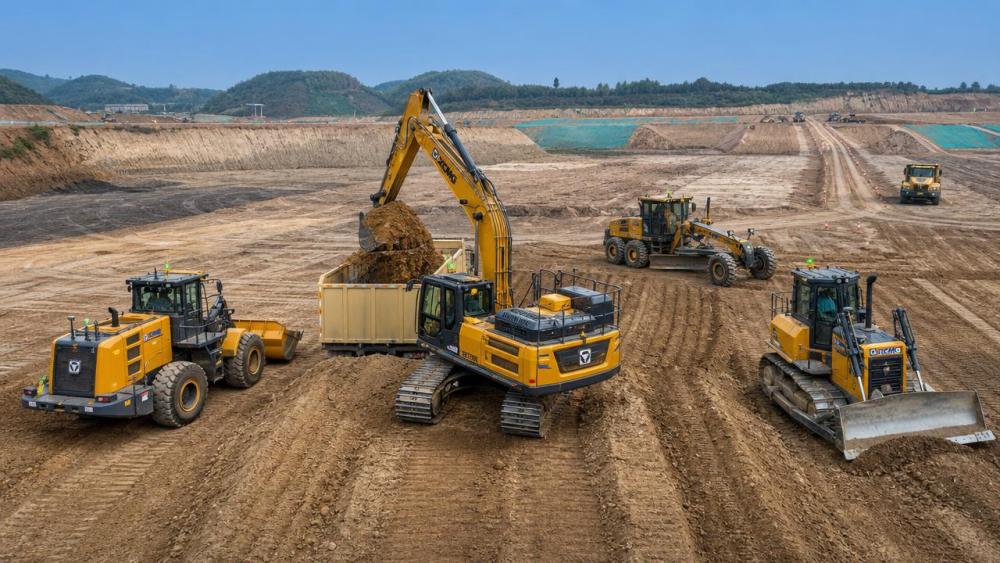
For years, autonomous construction was discussed as a future capability. In 2026, it is increasingly evaluated as an operating model with trackable financial outcomes.
The shift matters because capital budgets are tighter, labor availability remains uneven, and infrastructure deadlines are less forgiving across global markets.
That combination is pushing autonomy beyond experimentation. It is now judged by cycle times, rework reduction, fuel savings, uptime, and safety performance.
This is especially relevant in earthmoving, where crawler excavators, wheel loaders, motor graders, and bulldozers generate huge cost swings from small operational inefficiencies.
EMD observes that autonomous construction creates value when software, hydraulics, sensing, and fleet intelligence are stitched into daily execution, not isolated demos.
The strongest trend signals are visible on repetitive, precision-heavy jobs
The best ROI in autonomous construction is not appearing everywhere at once. It is clustering around tasks with repeatable motion, clear boundaries, and measurable output quality.
Examples include trenching, bulk loading, haul-assist coordination, road base grading, slope shaping, and controlled dozing in mines or large civil works.
These environments allow sensors and control systems to perform consistently. They also make before-and-after benchmarking easier for asset owners and contractors.
Autonomous construction also gains traction where operator variability has historically created overcut, underfill, extra passes, or unnecessary idle time.
In those conditions, even partial autonomy can improve machine utilization and reduce expensive corrections downstream.
Why the economics look different in 2026
Several signals explain why autonomous construction now looks more investable than it did two or three years ago.
- Sensor prices are improving relative to capability, especially in vision, GNSS, inertial systems, and machine health monitoring.
- 3D jobsite models are becoming more common, giving autonomy systems cleaner digital references for execution and validation.
- Electro-hydraulic control has become more responsive, enabling finer machine behavior during digging, grading, and blade control.
- Remote supervision architectures have matured, reducing the need for one-to-one human intervention.
- Decarbonization pressure is raising interest in fuel-efficient, low-idle, high-precision machine operation.
What is driving autonomous construction ROI across machine categories
The ROI case for autonomous construction is different by machine type. The common theme is not labor replacement alone. It is output consistency.
This pattern shows why autonomous construction succeeds first in heavy equipment with clear production metrics and digitally verifiable outputs.
The biggest gains come from utilization, not just headcount reduction
One common misunderstanding is that autonomous construction pays back only by reducing labor dependency. That is too narrow for 2026 conditions.
In many projects, the largest economic benefit comes from higher asset utilization. Expensive machines spend less time waiting, idling, or repeating avoidable work.
A grader that finishes in fewer passes frees resources earlier. An excavator that digs to grade accurately reduces trucking, fill correction, and schedule drag.
Autonomous construction also helps stabilize output across shifts. That consistency matters where project penalties, fuel budgets, and material costs are closely monitored.
The result is a broader ROI equation that includes productivity, machine health, energy efficiency, and downstream quality assurance.
Where hidden value often appears
- Reduced wear from smoother electro-hydraulic inputs
- Lower claims risk from digital work records
- Faster onboarding for mixed-experience crews
- Stronger scheduling confidence in multi-machine sequences
- Better emissions performance through lower idle time and optimized engine load
Autonomous construction is changing how project risk is managed
The impact of autonomous construction goes beyond equipment productivity. It also changes exposure to safety, compliance, and execution risk.
Hazardous mines, unstable slopes, remote sites, and night operations are strong use cases. In these settings, remote or semi-autonomous workflows reduce human exposure.
Digital logs improve traceability. Project teams can compare design intent, machine behavior, and completed surface results with greater precision.
That visibility supports faster root-cause analysis when costs rise or progress lags. It also strengthens confidence in cross-border project reporting.
For the broader industry, autonomous construction is becoming part of resilience planning, not only a technology upgrade.
The next competitive gap will come from data discipline
Not every autonomy investment produces strong returns. Results depend on data quality, process design, and how well the machine stack connects to site decisions.
Autonomous construction performs best where organizations track baseline cycle times, fuel burn, pass counts, rework rates, and maintenance events before deployment.
Without that baseline, even good technology can look uncertain. With it, gains become visible and scalable across regions or equipment classes.
EMD’s sector view suggests that future leaders will combine machine intelligence with strategic intelligence. The winning edge will come from integrated interpretation.
Key points that deserve close attention
- Map ROI by task, not by generic autonomy branding.
- Prioritize machine classes with high rework or high idle loss.
- Validate communication latency for remote and hazardous operations.
- Link autonomy targets to emissions, uptime, and maintenance metrics.
- Use digital grade control and fleet analytics together, not separately.
A practical framework for judging where autonomous construction fits next
A structured review helps separate promising use cases from expensive distractions. The goal is to evaluate fit by operational evidence.
What to do now as autonomous construction matures
The most effective next step is not a full autonomous rollout. It is a disciplined selection of high-friction workflows where precision and consistency matter most.
Start with one machine category, one repeatable task, and one measurable performance gap. Build evidence before broad expansion.
Use autonomous construction as a business system, not a standalone feature. Connect machine behavior to asset utilization, project quality, and emissions outcomes.
For organizations tracking the future of excavators, loaders, graders, and dozers, the 2026 signal is clear. ROI is becoming measurable where execution is digital, repeatable, and operationally disciplined.
That is where autonomous construction moves from impressive possibility to durable competitive advantage.