
Related News
- 00
0000-00
How to size heavy-duty loaders for North American mining operations - 00
0000-00
How altitude affects mining excavator performance in Latin America - 00
0000-00
Caterpillar Launches New Cat 6060 and Upgraded Autonomous Mining System - 00
0000-00
When does eco-friendly construction equipment pay for itself? - 00
0000-00
Will a wheel loader quick coupler fit your existing attachments?
For procurement teams managing short-duration earthmoving or site-preparation work, heavy equipment rental often delivers greater financial and operational flexibility than ownership. From crawler excavators to wheel loaders and graders, renting helps control capital expenditure, reduce maintenance risk, and match machine capability to project scope. Understanding when heavy equipment rental beats buying is essential for improving asset efficiency, supplier strategy, and overall project ROI.
In practical procurement terms, the decision is rarely about machine preference alone. It is about utilization rate, project duration, cash preservation, transport complexity, operator availability, and the risk of holding an underused asset after the job ends.
For buyers sourcing crawler excavators, wheel loaders, motor graders, bulldozers, or skid steer loaders, short projects typically fall into the 2-week to 9-month range. In that window, heavy equipment rental can outperform ownership on both cost control and execution speed.
Why Rental Often Wins on Short-Duration Earthmoving Projects
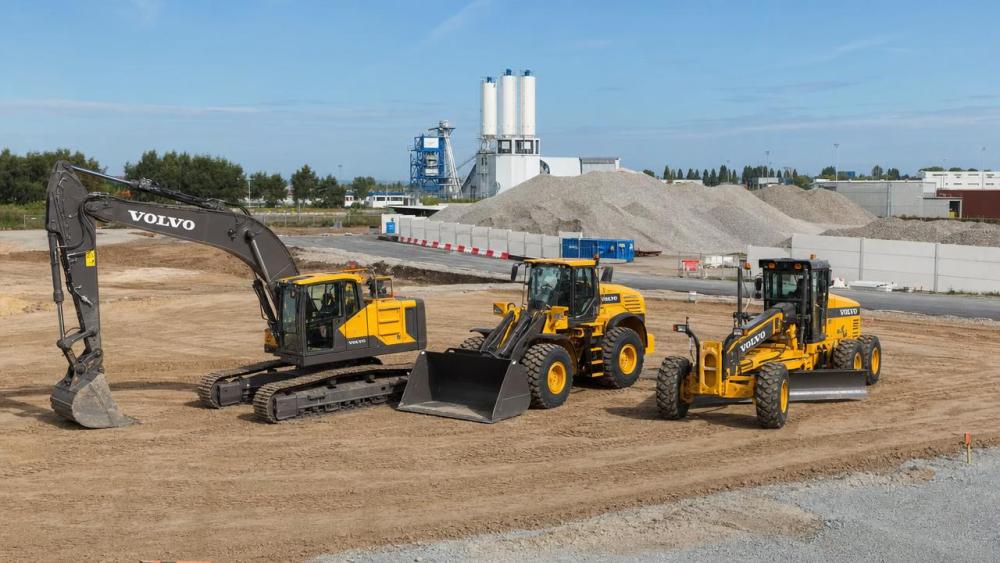
Short projects create a different economics model from fleet building. When equipment is needed for trenching, grading, stripping, loading, or material handling for only 20 to 180 working days, the total cost of ownership is often diluted by low utilization.
A purchased machine may remain idle for 40% to 70% of the year if project sequencing is irregular. Procurement teams then carry financing costs, storage obligations, insurance, preventive maintenance, and asset depreciation long after the revenue-generating phase has ended.
The Utilization Threshold That Changes the Decision
For many contractors and industrial users, buying becomes more attractive only when a machine can be deployed at a sufficiently high annual utilization rate. A common internal benchmark is 60% to 70% productive use across 10 to 11 months.
If a 20-ton excavator is required for one drainage project lasting 8 weeks, followed by uncertain demand, heavy equipment rental avoids locking capital into an asset that may not return to work for another quarter.
Key financial drivers for procurement
- Lower upfront cash commitment in the first 30 days
- Better alignment between cost and project billing cycle
- Reduced exposure to residual value swings over 12 to 36 months
- Fewer internal maintenance and parts inventory obligations
- Faster replacement if the machine is oversized or undersized
The comparison below shows why rental frequently becomes the smarter sourcing route for projects with narrow schedules, changing scope, or uncertain follow-on work.
The most important takeaway is that heavy equipment rental converts asset risk into project-tied cost. That is particularly valuable when procurement is judged on budget discipline, uptime, and delivery against a tight milestone plan.
Where Rental Fits Best Across Core Machine Categories
Not every machine category behaves the same way. Procurement teams should assess application intensity, transport burden, and attachment needs before assuming ownership is cheaper over the short term.
Typical short-project use cases
- Crawler excavators for foundation digging, trenching, demolition support, and utility installation over 15 to 90 days
- Wheel loaders for stockpile movement, aggregate handling, and plant support during seasonal peaks of 1 to 4 months
- Motor graders for road shoulder shaping, access roads, and airport surface prep where precision work may last only 3 to 8 weeks
- Bulldozers for land clearing, pad building, and push work in early-stage site development
- Skid steer loaders for urban worksites requiring multiple attachments within limited space
In all five categories, rental also helps match specification to scope. A buyer can source a standard bucket one month, then shift to a hydraulic breaker, GPS-ready grader, or low-ground-pressure dozer on the next mobilization without owning every configuration.
How Procurement Teams Should Evaluate Rental Versus Purchase
The right decision framework should go beyond day rate versus purchase price. Procurement needs a 4-part evaluation model: duration, utilization, support risk, and strategic fleet relevance. This helps avoid false savings based on incomplete cost comparisons.
Build a Total Project Cost View
A proper ownership comparison should include at least 8 cost lines: acquisition, financing, transport, fuel, operator training, routine service, unplanned repairs, and end-of-project idle time. In many short jobs, idle time alone can erase any apparent purchase advantage.
For example, if a wheel loader works only 240 hours on a 6-week project but remains in the yard for another 5 months, ownership economics weaken quickly. Rental keeps the cost clock closer to the real production window.
A practical evaluation checklist
- Confirm planned operating period in days and machine hours.
- Estimate transport frequency between sites.
- Identify whether the job needs special attachments or grade-control integration.
- Review in-house maintenance capacity within 24 to 48 hours response expectations.
- Decide whether this machine class is part of a long-term fleet strategy.
The table below can be used by procurement teams to score when heavy equipment rental is more favorable than buying.
This framework helps standardize sourcing decisions. It is especially effective for organizations balancing civil works, mining support, utilities, municipal projects, and industrial site development where demand shifts quarter by quarter.
Pay Attention to Downtime Clauses and Service Scope
Heavy equipment rental only beats buying when the contract protects uptime. Procurement should review replacement commitments, maintenance inclusion, wear-item liability, and call-out response windows. A low rate with poor support can create expensive production stoppages.
For high-intensity loading or grading work, define whether the supplier can provide field service within 24 hours, replacement within 48 to 72 hours, and operator familiarization before first shift. Those terms matter more than a small discount on paper.
Common contract points to negotiate
- Delivery lead time, often 2 to 7 days for standard units
- Backup machine availability in peak construction season
- Metered-hour limits and overuse charges
- Responsibility for routine consumables and damage assessment
- Documentation for emissions compliance or site entry requirements
Risk Control, Equipment Fit, and Supplier Strategy
Procurement value does not end at price comparison. The stronger outcome comes from combining heavy equipment rental with disciplined risk control. That includes machine fit, supplier depth, logistics planning, and technical compatibility with project conditions.
Avoid the Most Common Sizing and Scope Errors
One of the biggest mistakes on short projects is selecting equipment by availability instead of production need. An oversized excavator may increase transport cost by 15% to 30%, while an undersized loader can extend cycle time across the entire shift.
Procurement should validate at least 6 fit points: operating weight, bucket or blade capacity, reach, ground condition, attachment interface, and haul route restrictions. These factors directly affect whether the rental delivers true cost advantage.
Fit-for-purpose questions before issuing a PO
- Is the site soft, rocky, sloped, or confined?
- Will the machine work 1 shift or 2 shifts per day?
- Does the task require precision grading within tight tolerance bands?
- Are specialized attachments needed for less than 30% of job hours?
- Will emissions rules or low-noise limits apply on urban or regulated sites?
These questions are increasingly relevant as projects move toward lower-emission fleets, telematics monitoring, and more precise jobsite control. Renting gives buyers access to newer specifications without forcing frequent asset replacement.
Use Rental to Support Decarbonization and Technology Transition
Across the earthmoving sector, buyers are under pressure to align equipment choices with stricter non-road emissions requirements, safer remote operation, and improved fuel efficiency. Heavy equipment rental can serve as a low-risk path to test compliant or upgraded machines before long-term fleet commitment.
For example, a procurement team can rent a grader with 3D control support for a 12-week pavement project or source a newer excavator platform with improved hydraulic efficiency for a high-cycle trenching package. This reduces technology adoption risk while preserving optionality.
Strategic supplier selection criteria
- Coverage across multiple machine classes, not only one fleet segment
- Transparent maintenance history and pre-delivery inspection process
- Ability to support attachments, telematics, and site-specific compliance documents
- Regional service network capable of supporting 2 to 3 simultaneous projects
- Commercial flexibility for extension, early return, or machine swap
Frequently Asked Procurement Questions About Rental Decisions
Short projects generate recurring sourcing questions. The answers below help procurement teams create faster internal alignment between operations, finance, and project management.
When does buying make more sense?
Buying becomes more attractive when a machine is expected to run consistently over several years, usually above 1,200 to 1,500 hours annually, with stable specification needs and strong in-house service capability. At that point, ownership can lower long-run hourly cost.
What if the project schedule may be extended?
That is a common reason to choose heavy equipment rental. A well-negotiated agreement can allow 30-day extensions, unit swaps, or revised rates after an initial minimum term. This is safer than buying based on an uncertain forecast.
Is rental still competitive for high-intensity applications?
Yes, provided the contract clearly defines maintenance responsibility, hour limits, and service response. For loaders, dozers, and excavators working in severe duty, procurement should inspect service support with the same rigor used for price analysis.
How can procurement reduce total rental cost?
Bundle transport, attachments, and extension options upfront. Confirm utilization forecasts before selecting machine size. Coordinate site readiness to avoid paying for 3 to 5 idle days at the start of the contract. These operational details often produce larger savings than rate negotiation alone.
For procurement professionals managing temporary earthmoving demand, heavy equipment rental is often the better decision when projects are short, utilization is uncertain, specifications may change, or capital must remain available for other priorities. It offers a practical route to faster deployment, lower maintenance exposure, and better alignment between machine cost and project revenue.
If your team is evaluating crawler excavators, wheel loaders, motor graders, bulldozers, or skid steer loaders for upcoming work packages, a structured rental-versus-buy review can improve both supplier strategy and asset efficiency. Contact us to discuss your project requirements, request a tailored sourcing framework, or learn more solutions for heavy equipment procurement.