
Related News
- 00
0000-00
How to size heavy-duty loaders for North American mining operations - 00
0000-00
How altitude affects mining excavator performance in Latin America - 00
0000-00
Caterpillar Launches New Cat 6060 and Upgraded Autonomous Mining System - 00
0000-00
When does eco-friendly construction equipment pay for itself? - 00
0000-00
Will a wheel loader quick coupler fit your existing attachments?
Buying heavy construction equipment is a high-stakes decision where the purchase price is only the beginning.
Hidden cost risks can emerge from fuel use, maintenance exposure, parts access, emissions rules, resale value, financing, and downtime.
Before approving a crawler excavator, wheel loader, motor grader, bulldozer, or skid steer, total ownership impact must be tested.
This guide explains the cost risks to check before buying heavy construction equipment, with practical questions for stronger asset decisions.
Heavy Construction Equipment Cost Risks to Check Before Buying
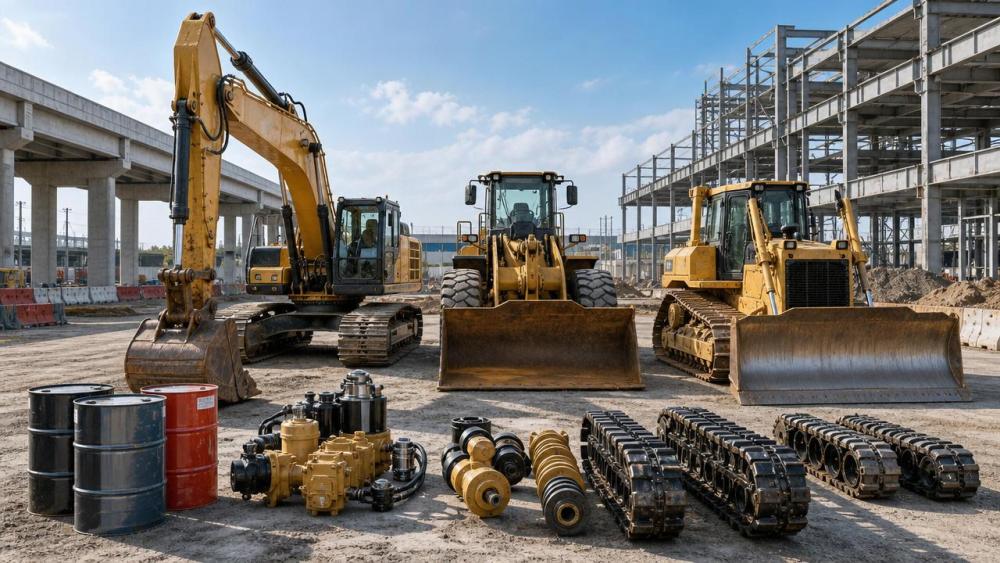
Heavy construction equipment cost risk starts with a simple truth: the machine must earn more than it consumes.
A low purchase price can hide weak hydraulic efficiency, poor telematics support, limited parts coverage, or unstable residual value.
Modern earthmoving assets also face changing emission standards, electrification pressure, and tighter productivity expectations on infrastructure sites.
The first question is not only “Can it perform?” but “Can it perform profitably for years?”
What should total cost of ownership include?
Total cost of ownership measures the real financial burden of heavy construction equipment across its operating life.
It includes acquisition, fuel, maintenance, tires or undercarriage, insurance, financing, operator training, downtime, compliance, and disposal value.
Crawler excavators may expose cost through pumps, cylinders, swing systems, and track wear under demanding digging cycles.
Wheel loaders often reveal ownership pressure through tire wear, transmission load, fuel burn, and bucket matching errors.
Motor graders depend on blade control accuracy, articulation reliability, sensor calibration, and specialized service knowledge.
Bulldozers carry major cost exposure in undercarriage life, final drives, blade hydraulics, and high-load engine operation.
Skid steer loaders look compact, yet attachment compatibility and hydraulic flow requirements can change ownership economics quickly.
- Compare hourly ownership cost, not only machine price.
- Estimate utilization under realistic jobsite conditions.
- Check warranty exclusions before relying on quoted protection.
- Calculate resale value using comparable local market data.
How can fuel efficiency become a hidden heavy construction equipment cost?
Fuel is often the most visible operating expense, but its risk is rarely limited to liters consumed.
Poor matching between powertrain, work mode, hydraulic demand, and task cycle can multiply operating cost.
Heavy construction equipment should be evaluated through duty cycles, not showroom specifications or ideal test conditions.
An excavator trenching all day has different fuel behavior from one handling mixed demolition, loading, and finishing work.
A loader in quarry transfer may need power density, while urban loading may reward efficient modulation.
Fuel efficiency also depends on operator interface, idle management, cooling design, and automatic engine speed control.
What checks reduce fuel-related risk?
- Request jobsite fuel data from comparable applications.
- Test eco mode, power mode, and attachment modes separately.
- Check idle shutdown functions and telematics fuel reporting.
- Review hydraulic response under loaded, repetitive cycles.
For heavy construction equipment, even small hourly fuel differences become significant across thousands of operating hours.
Why do maintenance and parts availability matter before buying?
Maintenance risk is not only repair cost. It is also timing, access, skill, inventory, and diagnostic speed.
A machine that waits for a sensor, hose, controller, pump, or track chain can lose revenue quickly.
Heavy construction equipment works under dust, vibration, heat, shock loads, and long service intervals.
That environment makes service accessibility a financial factor, not just a mechanical convenience.
Daily inspection points should be reachable, filters should be protected, and diagnostic ports should support fast troubleshooting.
Parts availability should be checked through regional stock, lead times, component interchangeability, and emergency logistics coverage.
Which maintenance questions should be asked?
- What are the scheduled service intervals and required fluids?
- Which components usually fail before midlife rebuild?
- Are hydraulic pumps, valves, filters, and controllers locally stocked?
- Can telematics detect overheating, overload, idle waste, and fault codes?
- Does warranty coverage include travel, labor, software, and emissions systems?
The best heavy construction equipment choice often combines strong engineering with predictable maintenance support.
How do emissions rules and technology choices affect cost?
Emission compliance can reshape the economics of heavy construction equipment, especially in regulated urban and public infrastructure work.
Diesel aftertreatment systems may include DPF, DOC, SCR, DEF dosing, sensors, and regeneration controls.
These systems reduce emissions, but they also require correct fuel quality, maintenance discipline, and diagnostic capability.
Non-compliant equipment may face restricted site access, penalties, tender disadvantages, or earlier-than-planned replacement.
Electric and hybrid machines can lower local emissions, but battery cost, charging access, and utilization patterns matter.
Autonomous and remote-ready systems can improve safety and productivity, yet software support must be evaluated.
What technology risks are often overlooked?
Advanced heavy construction equipment increasingly depends on sensors, software, GNSS correction, cameras, controllers, and machine guidance tools.
These technologies can raise grading precision, digging consistency, and fleet visibility when properly supported.
However, subscription fees, calibration, connectivity limits, cyber protection, and upgrade policies should be reviewed before purchase.
For precision grading equipment, a low-cost machine without reliable positioning support may become expensive in rework.
What financing, depreciation, and resale risks should be checked?
Financing can make heavy construction equipment appear affordable while shifting cost into interest, penalties, deposits, or residual obligations.
The true comparison should include payment schedule, tax treatment, utilization risk, insurance, and end-of-term options.
Depreciation depends on brand reputation, operating hours, service records, specification demand, and regional market confidence.
A rare configuration may support niche productivity but reduce resale liquidity when the asset exits service.
A popular excavator class may hold value better because more service networks and replacement parts exist.
How can resale value be protected?
- Choose specifications with broad secondary-market demand.
- Keep digital and paper maintenance records complete.
- Avoid excessive customization unless productivity gains are proven.
- Monitor utilization and condition through telematics reports.
- Inspect structural fatigue before extending service life.
Strong resale planning turns heavy construction equipment from a simple expense into a managed capital asset.
How should downtime risk be evaluated across equipment types?
Downtime cost can exceed repair cost when schedules, crews, hauling, subcontracted work, or penalties are affected.
Heavy construction equipment should be judged by uptime probability under real workloads, not only rated horsepower or bucket size.
A crawler excavator with strong breakout force still fails financially if cooling, hydraulics, or sensors cannot endure cycles.
A bulldozer with excellent traction may lose value if undercarriage wear outpaces the expected maintenance budget.
A motor grader with advanced control needs reliable calibration support, especially for airport, highway, and drainage work.
A skid steer may be productive only if attachments, couplers, hydraulic flow, and auxiliary lines remain dependable.
What downtime signals deserve attention?
- Repeated fault codes during demonstration or trial use.
- Unclear service response commitments.
- Limited access to diagnostic software.
- Weak cooling performance in high-load applications.
- Poor parts coverage for core hydraulic components.
FAQ checklist for heavy construction equipment cost decisions
Final guidance before committing capital
Heavy construction equipment should be selected through lifecycle evidence, not only brand preference, machine size, or headline pricing.
The strongest decision connects productivity, fuel efficiency, serviceability, compliance, technology support, financing, and resale value.
Before signing, compare shortlisted machines with the same duty cycle, service assumptions, and expected operating hours.
Request verified data, inspect maintenance access, check parts networks, and model worst-case downtime scenarios.
For complex fleets, structured intelligence can reveal risks that standard quotations overlook.
A disciplined review helps heavy construction equipment support reliable production, stronger utilization, and long-term asset value.