
Related News
- 00
0000-00
How to size heavy-duty loaders for North American mining operations - 00
0000-00
How altitude affects mining excavator performance in Latin America - 00
0000-00
Caterpillar Launches New Cat 6060 and Upgraded Autonomous Mining System - 00
0000-00
When does eco-friendly construction equipment pay for itself? - 00
0000-00
Will a wheel loader quick coupler fit your existing attachments?
For aftersales maintenance teams, every idle excavator, loader, grader, dozer, or skid steer represents lost productivity, frustrated customers, and rising lifecycle costs. Yet many downtime events are not caused by extreme jobsite conditions alone—they often begin with avoidable heavy equipment maintenance mistakes, from inconsistent inspections to ignored hydraulic warning signs. Understanding these errors helps service teams protect asset utilization, improve repair planning, and strengthen customer trust in demanding earthmoving operations.
Why Small Maintenance Mistakes Become Expensive Downtime Events
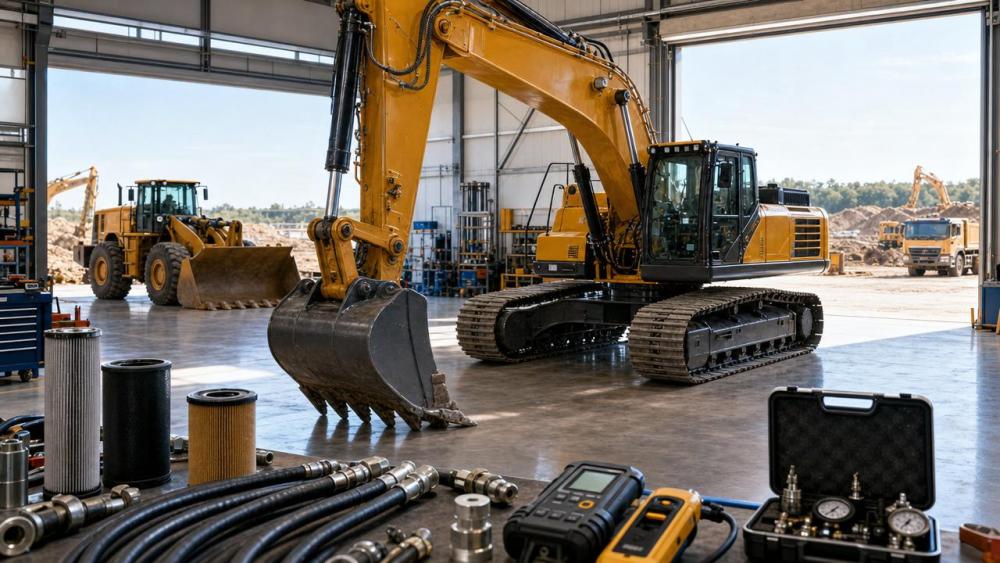
Heavy earthmoving machines fail in systems, not in isolated parts. A clogged breather can contaminate hydraulic oil, stress pumps, slow cycle times, and damage valves.
For aftersales maintenance personnel, the challenge is rarely only technical. It is also planning, parts availability, customer expectation management, and evidence-based troubleshooting.
Crawler excavators, wheel loaders, graders, bulldozers, and skid steers operate with different duty cycles, but all punish delayed heavy equipment maintenance.
Where downtime cost usually accumulates
- Lost production hours when a machine cannot dig, load, grade, push, or handle attachments during scheduled jobsite windows.
- Emergency freight charges for filters, hoses, sensors, seals, undercarriage parts, or electronic control components.
- Secondary damage when operators continue working after alarms, abnormal noise, overheating, or reduced hydraulic response.
- Customer dissatisfaction when repair timelines change because fault data, maintenance history, or component specifications are incomplete.
EMD views reliability through asset utilization. The right maintenance decision protects uptime, reduces avoidable replacement, and supports decarbonized, data-driven equipment operation.
Mistake 1: Treating Inspections as Paperwork Instead of Failure Prevention
Daily inspections often become routine signatures. That is dangerous because most serious failures begin as visible leaks, unusual wear, or small performance changes.
Effective heavy equipment maintenance turns inspections into structured observation. The goal is not checking boxes; it is detecting deviations before they become breakdowns.
The following inspection priorities help aftersales teams standardize field communication across mixed fleets and demanding jobsite conditions.
This table shows why inspection quality matters. A consistent method gives technicians better evidence and helps planners prioritize parts before machines stop.
Mistake 2: Extending Service Intervals Without Considering Duty Cycle
Service intervals written for normal duty do not always match demolition dust, mine haul roads, wet clay, cold starts, or continuous breaker work.
A common heavy equipment maintenance mistake is treating every fleet hour equally. One hour of high-impact loading can be harsher than several light-duty hours.
Duty-cycle signals that justify tighter service planning
- Frequent hydraulic hammer, ripper, or cold planer use, especially on compact carriers and crawler excavators.
- Long idle time followed by sudden high-load operation, which stresses lubrication and aftertreatment systems.
- High airborne dust, corrosive materials, wet aggregates, or fine mineral particles entering filters and cooling packs.
- Repeated travel on slopes or abrasive ground that accelerates track, tire, brake, and final drive wear.
Aftersales teams should compare telematics, operator notes, fuel burn, hydraulic temperature, and oil analysis trends before approving interval extensions.
EMD’s intelligence approach connects machine category, work severity, and lifecycle economics. That helps maintenance teams defend service recommendations with practical evidence.
Mistake 3: Overlooking Hydraulic Warning Signs on Earthmoving Machines
Hydraulics define digging force, lifting performance, blade control, steering response, and attachment productivity. Small hydraulic problems quickly become customer-visible downtime.
Good heavy equipment maintenance requires technicians to link symptoms with operating context, not simply replace a noisy pump or leaking hose.
Hydraulic symptoms that should trigger escalation
- Excavator boom, arm, or bucket drift becomes measurable under similar load and oil temperature conditions.
- Wheel loader lift cycle time increases while engine speed and operator technique remain unchanged.
- Motor grader blade response becomes inconsistent during precision grading with GPS or laser guidance.
- Skid steer attachments stall, chatter, or overheat when auxiliary flow demand rises.
Technicians should verify oil cleanliness, pressure readings, temperature, filter differential indicators, electronic proportional valve signals, and attachment requirements.
Replacing components before confirming contamination or control issues may create repeat failures. It also weakens customer confidence in aftersales service judgment.
Mistake 4: Buying Parts on Price Alone Instead of Total Downtime Risk
Budget pressure is real. However, the cheapest hose, filter, seal kit, or sensor may become expensive if it causes repeat downtime.
Procurement decisions should support heavy equipment maintenance reliability, especially when machines operate in mining, roadbuilding, quarrying, and urban infrastructure projects.
Before selecting a part or service option, aftersales teams should compare cost, availability, warranty handling, traceability, and operating severity.
The lowest purchase price is not always the lowest lifecycle cost. Downtime cost, customer penalties, technician travel, and repeat labor must be included.
Mistake 5: Separating Operator Behavior from Maintenance Planning
Operators influence component life every shift. Aggressive travel, abrupt lever movement, excessive idle time, and poor warm-up habits affect reliability.
Aftersales teams often repair the damage but miss the behavior behind it. That keeps heavy equipment maintenance reactive rather than preventive.
Operator-linked patterns maintenance teams should monitor
- Excavator side loading during digging, which stresses pins, bushings, cylinders, swing components, and structures.
- Wheel loader high-speed reversing with full buckets, increasing tire, brake, axle, and driveline loads.
- Bulldozer track spinning under heavy push conditions, accelerating grouser wear and reducing tractive efficiency.
- Skid steer attachment mismatch, where flow, pressure, and duty cycle exceed the carrier’s hydraulic capacity.
Technicians can use fault history, fuel consumption, idle percentage, cycle time, and wear inspection to discuss operating habits without blaming customers.
A practical maintenance report should include corrective action, operator guidance, and evidence. This makes service recommendations easier for fleet managers to approve.
Mistake 6: Ignoring Data, Telematics, and Precision Control Signals
Modern earthmoving machines generate valuable signals. Fault codes, temperature trends, fuel burn, load factors, and location data reveal early reliability risks.
The mistake is collecting data without using it. Heavy equipment maintenance should convert alerts into work orders, parts reservations, and customer conversations.
Useful data points for aftersales teams
- Hydraulic oil temperature spikes during identical attachment tasks, indicating flow restriction, contamination, or cooling weakness.
- Repeated aftertreatment regeneration interruptions, suggesting duty-cycle mismatch, idle habits, or sensor problems.
- Grade control deviations on motor graders, which may indicate sensor calibration, blade wear, or linkage looseness.
- Battery voltage drops on autonomous or semi-autonomous systems, affecting low-latency communication and control stability.
EMD’s focus on electro-hydraulic proportional control, 3D spatial algorithms, and remote operations supports a more intelligent approach to maintenance planning.
Data does not replace field inspection. It helps maintenance teams arrive with a sharper hypothesis, the right parts, and fewer unnecessary visits.
How to Build a Maintenance Workflow That Reduces Downtime
A downtime-focused workflow links inspection, diagnosis, procurement, execution, reporting, and customer follow-up. Each step must reduce uncertainty.
The following process helps aftersales maintenance teams standardize heavy equipment maintenance across equipment categories and different site conditions.
A disciplined workflow improves repair accuracy. It also helps service managers explain why certain parts, tools, or inspections are necessary.
Compliance, Fluids, and Documentation Mistakes That Create Hidden Costs
Emission regulations, safety requirements, and fluid specifications increasingly affect maintenance decisions. Incorrect lubricants or incomplete documentation can cause expensive disputes.
Aftersales teams should treat service records as technical protection. They prove what was checked, why it was recommended, and when action occurred.
Documentation items that matter during maintenance review
- Oil grade, viscosity, fluid specification, and batch details when contamination or lubrication failure is suspected.
- Filter part number, service hour, differential pressure note, and disposal observation where applicable.
- Software version, calibration status, fault code screenshots, and sensor replacement verification for intelligent machines.
- General safety references, such as lockout procedures, lifting checks, and site access limitations during repairs.
Relevant frameworks may include ISO safety practices, regional non-road emission rules, and manufacturer-specific service instructions. Use them carefully and consistently.
Compliance-focused heavy equipment maintenance is not paperwork inflation. It reduces warranty confusion, protects technicians, and improves customer communication.
FAQ: Practical Questions from Aftersales Maintenance Teams
How often should heavy equipment maintenance intervals be adjusted?
Intervals should be reviewed when duty cycle, attachment use, environment, idle percentage, or oil analysis trends change. Severe applications usually require shorter checks.
Which machine systems deserve priority when downtime cost is high?
Prioritize hydraulics, cooling, filtration, undercarriage or tires, electrical power, sensors, and safety-critical controls. These systems often cause cascading failures.
Is predictive maintenance always better than preventive maintenance?
Not always. Predictive methods need reliable data and disciplined interpretation. Preventive schedules remain essential for filters, fluids, torque checks, and wear inspections.
What should technicians include in a customer maintenance report?
Include symptoms, measured values, photos, fault codes, parts used, risk level, recommended next action, and expected impact on downtime.
Why Choose EMD for Maintenance Intelligence and Decision Support
EMD helps aftersales teams connect field symptoms with machinery dynamics, lifecycle cost, and infrastructure operating realities across excavators, loaders, graders, dozers, and skid steers.
Our Strategic Intelligence Center follows hydraulic performance, precision grading systems, autonomous control architecture, non-road emission changes, and global equipment utilization trends.
Contact us when you need clearer maintenance decisions
- Parameter confirmation for hydraulic flow, pressure, filtration, cooling capacity, and attachment compatibility.
- Maintenance program review for mixed fleets operating under mining, road construction, quarry, or urban infrastructure conditions.
- Parts selection guidance focused on downtime risk, lifecycle cost, delivery urgency, and service documentation.
- Support in aligning heavy equipment maintenance recommendations with emission compliance, customer reporting, and reliability targets.
If your team is facing repeat failures, unclear diagnostics, tight repair windows, or difficult procurement choices, consult EMD for structured equipment intelligence.
Visioning Earthmoving Dynamics, Intelligence Reshaping the Earth means helping every machine work longer, fail less unexpectedly, and deliver stronger asset utilization.