
Related News
- 00
0000-00
How to size heavy-duty loaders for North American mining operations - 00
0000-00
How altitude affects mining excavator performance in Latin America - 00
0000-00
Caterpillar Launches New Cat 6060 and Upgraded Autonomous Mining System - 00
0000-00
When does eco-friendly construction equipment pay for itself? - 00
0000-00
Will a wheel loader quick coupler fit your existing attachments?
Choosing among construction equipment manufacturers is no longer a simple matter of comparing purchase prices.
The real decision lies in lifecycle value, machine reliability, hydraulic performance, digital control capability, parts availability, emissions readiness, financing flexibility, and resale strength.
As infrastructure projects demand higher productivity and lower risk, construction equipment manufacturers must support uptime, safety, decarbonization, and future autonomy.
The Market Is Moving Beyond Sticker Price
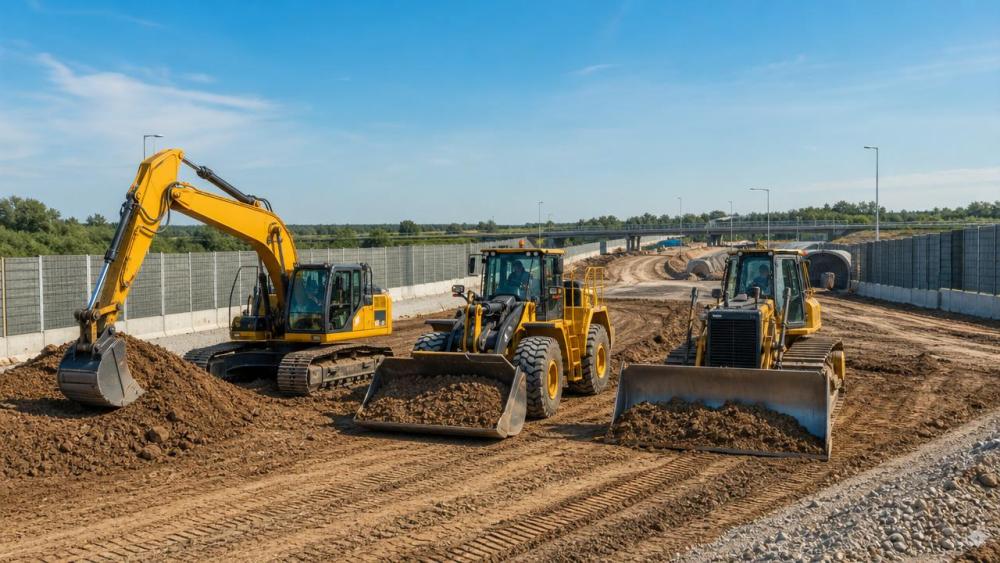
Heavy equipment selection now reflects a broader industrial shift.
Projects face tighter schedules, stricter emissions rules, labor shortages, and higher expectations for data-driven performance.
In this environment, construction equipment manufacturers compete through reliability, electrification pathways, autonomy readiness, and operating intelligence.
A low purchase price can quickly disappear through downtime, fuel waste, slow diagnostics, or weak parts coverage.
A higher-priced machine may deliver stronger value when it protects uptime and holds resale value.
The trend is especially visible in crawler excavators, wheel loaders, motor graders, bulldozers, and skid steer loaders.
Each category now depends on advanced hydraulics, sensors, telematics, and software support.
Trend Signals Reshaping Supplier Evaluation
Several signals show why construction equipment manufacturers must be judged through a performance-based framework.
- Emission standards are accelerating demand for cleaner engines, hybrid systems, and electric equipment platforms.
- Telematics has become essential for fuel tracking, maintenance planning, and fleet utilization analysis.
- Hydraulic efficiency is becoming a competitive advantage in excavation, loading, grading, and pushing tasks.
- Autonomous and remote-control capability is changing expectations in mines, ports, tunnels, and hazardous sites.
- Global supply chain volatility has made parts availability a strategic risk factor.
These signals place pressure on construction equipment manufacturers to deliver more than durable iron.
They must connect machines, data, service networks, and compliance readiness into a complete operating system.
Why Lifecycle Value Has Become the Core Metric
Lifecycle value measures the total economic result of owning and operating equipment.
It includes acquisition cost, fuel consumption, service intervals, uptime, operator productivity, warranty coverage, financing terms, and resale value.
Construction equipment manufacturers with strong lifecycle economics help reduce operational uncertainty across long infrastructure cycles.
Reliability Should Be Proven, Not Promised
Reliability remains the foundation of every serious equipment comparison.
Construction equipment manufacturers should provide field evidence, not only brochure claims.
Look for documented operating hours in comparable climates, soil conditions, duty cycles, and maintenance environments.
For crawler excavators, undercarriage durability and hydraulic sealing performance deserve close attention.
For wheel loaders, evaluate transmission heat control, axle strength, brake performance, and loading cycle consistency.
For bulldozers, track life, blade structure, final drives, and cooling systems directly influence ownership economics.
Reliable construction equipment manufacturers make service data transparent enough to support confident long-term planning.
Hydraulic Performance Reveals Engineering Depth
Hydraulic performance separates average machines from highly productive machines.
A strong hydraulic system balances power, precision, response speed, and fuel efficiency.
Construction equipment manufacturers with advanced hydraulic engineering can improve digging force without sacrificing controllability.
This matters in trenching, mine stripping, road grading, demolition, quarry loading, and tight urban work.
The evaluation should include pump capacity, electronic control logic, hydraulic oil temperature stability, and multi-function response.
For motor graders, smooth blade movement and precise slope control are more valuable than raw power alone.
For skid steer loaders, attachment flow quality determines versatility across buckets, breakers, trenchers, and sweepers.
Digital Control Is Becoming a Strategic Differentiator
Digital capability is now central to heavy equipment competitiveness.
Construction equipment manufacturers increasingly integrate telematics, grade control, machine health analytics, and remote diagnostics.
These systems reduce guesswork and help identify performance losses before they become costly failures.
The value lies in actionable data, not in dashboards alone.
- Can the system show fuel burn by task and operator behavior?
- Can maintenance alerts connect with parts ordering and service scheduling?
- Can grade control integrate with 3D design files and site positioning systems?
- Can remote updates improve performance without extended downtime?
Construction equipment manufacturers that treat software as core infrastructure are better positioned for autonomous operations.
Aftermarket Strength Can Decide Real Uptime
A machine is only as dependable as the support system behind it.
Construction equipment manufacturers with dense service networks reduce downtime during urgent project windows.
Parts availability should be tested through real lead times, not generic commitments.
Critical components include filters, seals, hoses, pins, bushings, sensors, controllers, pumps, and undercarriage parts.
Strong aftermarket systems also include trained technicians, mobile service units, predictive maintenance tools, and clear warranty processes.
When projects operate in remote areas, support distance becomes a financial variable.
The best construction equipment manufacturers quantify support performance through parts fill rates and response time commitments.
Emissions Readiness and Energy Strategy Matter More Each Year
Decarbonization is changing equipment investment logic across infrastructure and industrial worksites.
Construction equipment manufacturers are responding with cleaner diesel engines, hybrid drivetrains, electric compact machines, and energy management platforms.
The key question is whether the technology fits the duty cycle.
Electric skid steer loaders may suit indoor, urban, or noise-sensitive applications.
High-output crawler excavators may still depend on efficient diesel power in remote heavy-duty conditions.
Evaluate fuel economy, charging infrastructure, battery serviceability, emissions compliance, and future regulatory exposure.
Forward-looking construction equipment manufacturers will publish practical transition paths instead of forcing one universal answer.
Financing, Warranty, and Resale Shape the Final Economics
Financial terms can significantly change the attractiveness of comparable machines.
Construction equipment manufacturers often differ in leasing options, maintenance packages, extended warranties, buyback programs, and certified used equipment channels.
Resale value is especially important for fleets that renew equipment on predictable cycles.
Strong resale usually reflects brand trust, parts availability, known durability, and active secondary markets.
Warranty quality should be judged by coverage clarity, claim speed, exclusions, and dealer accountability.
A generous warranty with slow execution may still create project disruption.
Construction equipment manufacturers that align financing with service reduce ownership complexity and budget uncertainty.
How Different Business Areas Feel the Impact
Equipment choices influence more than capital spending.
They affect project scheduling, maintenance workload, safety culture, fuel planning, compliance reporting, and asset rotation.
Construction equipment manufacturers with integrated support can reduce friction across these business areas.
- Operations gain higher productivity through faster cycle times and fewer breakdowns.
- Maintenance teams benefit from diagnostics, predictable service intervals, and accessible components.
- Finance teams gain clearer lifecycle cost projections and stronger residual value assumptions.
- Compliance functions receive better emissions data and documentation support.
- Technology teams gain platforms ready for automation, connectivity, and digital workflows.
This explains why construction equipment manufacturers should be assessed as long-term performance partners.
Key Points to Watch Before Shortlisting Suppliers
A practical comparison framework should combine technical evidence, economic modeling, and future readiness.
- Define expected duty cycles, site conditions, annual hours, and productivity targets.
- Compare fuel consumption under realistic work patterns, not isolated test figures.
- Verify hydraulic response, machine balance, visibility, comfort, and operator control quality.
- Measure service coverage using response times, parts inventory, and technician certification.
- Assess digital tools for diagnostics, grade control, fleet tracking, and reporting.
- Review emissions compliance for current markets and future operating regions.
- Estimate resale strength using auction data, dealer networks, and brand demand.
This approach keeps construction equipment manufacturers comparable across measurable performance factors.
A Practical Decision Matrix for the Next Phase
The next step is to turn qualitative impressions into weighted judgment.
Different projects may weight productivity, fuel economy, service access, or emissions readiness differently.
This matrix helps compare construction equipment manufacturers with discipline and consistency.
Turning Supplier Comparison Into Strategic Advantage
The strongest decisions come from viewing equipment as a productivity platform.
Construction equipment manufacturers should be compared through uptime evidence, hydraulic depth, software maturity, service reach, and transition readiness.
Price still matters, but it should never dominate the full evaluation.
A disciplined comparison reveals which machines can handle today’s workload while preparing for tomorrow’s infrastructure demands.
To move forward, build a shortlist, request verified operating data, run lifecycle cost modeling, and test machines in real conditions.
EMD continues tracking construction equipment manufacturers as electrification, autonomy, hydraulic intelligence, and global infrastructure cycles reshape the sector.
Use that intelligence to make equipment decisions based on value, resilience, and measurable performance.