
Related News
- 00
0000-00
How to size heavy-duty loaders for North American mining operations - 00
0000-00
How altitude affects mining excavator performance in Latin America - 00
0000-00
Caterpillar Launches New Cat 6060 and Upgraded Autonomous Mining System - 00
0000-00
When does eco-friendly construction equipment pay for itself? - 00
0000-00
Will a wheel loader quick coupler fit your existing attachments?
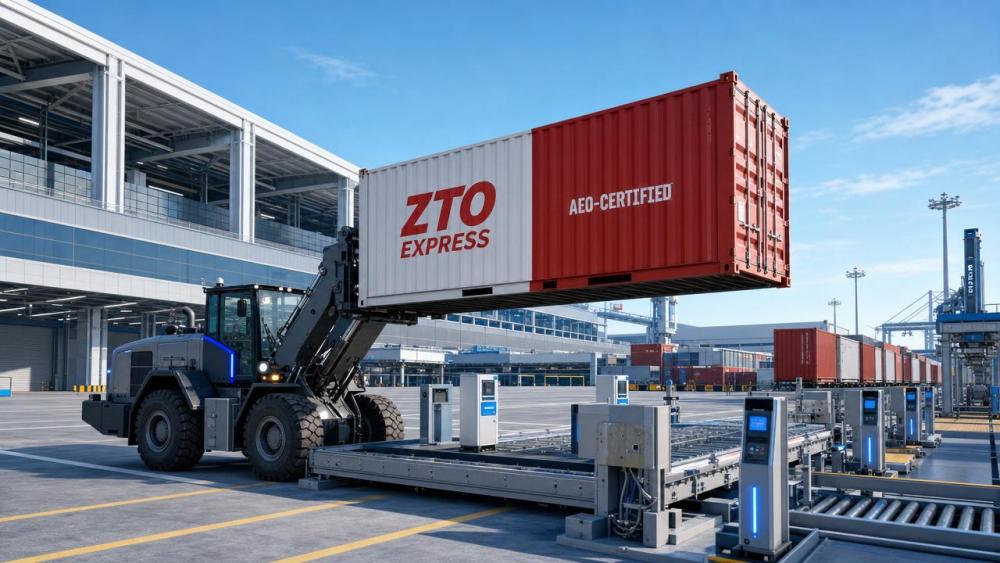
ZTO Express completed a share repurchase of 222,000 shares on May 27, 2026, for USD 4.9955 million, while simultaneously announcing deepened strategic cooperation with three leading domestic suppliers of intelligent weighing systems for construction machinery—including the top two providers in the Smart Weighing Loaders segment. This initiative targets cross-border logistics efficiency, specifically enabling automated gross weight verification per export container and integration with AEO Advanced Certification workflows starting Q3 2026. Export-oriented equipment manufacturers, customs brokers, logistics technology integrators, and AEO-certified enterprises should monitor developments closely—this move signals tightening alignment between physical logistics infrastructure, real-time data capture, and regulatory compliance systems.
Event Overview
On May 27, 2026, ZTO Express repurchased 222,000 shares at a total cost of USD 4.9955 million. The company disclosed it is strengthening strategic partnerships with three domestic leaders in intelligent weighing systems for engineering machinery, including the top two providers in the Smart Weighing Loaders category. These collaborations aim to build a cross-border logistics–equipment weighing–customs data direct-connect platform. Implementation is scheduled to support automated per-container gross weight verification and AEO Advanced Certification linkage beginning in Q3 2026.
Industries Affected by Segment
Export-Oriented Equipment Manufacturers
These firms face new operational dependencies: accurate, real-time container-level gross weight data will be required to trigger AEO-compliant clearance workflows. Impact arises from potential delays or rejections if legacy manual weighing or paper-based verification fails to meet the new platform’s automated validation standards.
Customs Brokers and Trade Compliance Service Providers
Brokers handling machinery exports must adapt documentation and data submission protocols to accommodate machine-readable weighing inputs. Impact centers on system readiness—integration with ZTO’s forthcoming platform (or compatible third-party interfaces) may become prerequisite for AEO-linked fast-track processing.
Logistics Technology Integrators
Providers of warehouse management systems (WMS), transport management systems (TMS), or IoT-enabled load monitoring solutions may see increased demand for API-level interoperability with weighing hardware and customs data gateways. Impact lies in near-term RFP requirements shifting toward certified data handoff capabilities—not just internal visibility.
AEO-Certified Enterprises (Non-Manufacturers)
Firms holding AEO status but not directly exporting heavy equipment may experience indirect effects through supply chain partners’ adoption timelines. Impact includes potential upstream pressure to standardize weighing data formats or share calibrated sensor outputs—even when not acting as exporter—due to shared certification accountability in consolidated shipments.
What Relevant Enterprises or Practitioners Should Monitor and Act On
Track official rollout communications from ZTO and partner weighing-system vendors
Current disclosures confirm intent and timeline (Q3 2026), but technical specifications, API documentation, data schema requirements, and certification criteria for connected devices remain unannounced. Monitoring vendor webinars, integration white papers, and pilot program announcements is advised over relying solely on high-level press statements.
Identify exposure by shipment type and destination market
The initiative explicitly targets export equipment; impact is not uniform across all cargo categories. Firms shipping construction machinery, power generation units, or other high-gross-weight industrial goods to AEO-reciprocal markets (e.g., EU, UK, Singapore, South Korea) should prioritize assessment. Low-value or non-AEO-eligible routes may see delayed or no platform integration.
Distinguish between policy signal and operational readiness
This collaboration reflects a coordination effort across private logistics infrastructure and national trade facilitation goals. However, mandatory enforcement—such as customs rejection for non-platform-submitted weight data—is not confirmed. Current implementation appears voluntary and incentive-aligned (e.g., faster AEO processing), not regulatory compulsion.
Assess current weighing infrastructure and data pipelines
Manufacturers and 3PLs should audit whether existing load cells, terminal software, or EDI configurations can support structured, timestamped, container-level gross weight transmission. Preemptive calibration validation and gap analysis against anticipated platform requirements—rather than waiting for final specs—can reduce later integration friction.
Editorial Perspective / Industry Observation
Observably, this development is best understood as an infrastructure alignment signal—not yet an operational mandate. It reflects growing convergence between logistics service providers, industrial hardware vendors, and trade compliance frameworks. Analysis shows that ZTO’s dual action (share repurchase + supply chain integration announcement) underscores strategic emphasis on vertical capability control beyond parcel delivery. From an industry perspective, the focus on *container-level* gross weight (not just vehicle or consignment level) suggests tightening scrutiny on volumetric compliance and safety-critical data integrity in heavy-equipment exports. The timing—Q3 2026 rollout—coincides with expected updates to China’s AEO mutual recognition arrangements, making sustained observation of related customs circulars essential.
Conclusion
This initiative does not introduce new regulation, but rather advances a coordinated, private-sector-led mechanism to enhance data reliability and process speed within existing AEO and cross-border logistics frameworks. Its significance lies less in immediate compliance obligation and more in signaling a shift toward embedded, hardware-informed data flows in international trade operations. Currently, it is more appropriately interpreted as an early-stage infrastructure coordination effort—one requiring attention not for urgency, but for its implications on future interoperability expectations across manufacturing, logistics, and customs technology ecosystems.
Source Attribution
Main source: Official disclosure by ZTO Express dated May 27, 2026.
Points requiring ongoing observation: Technical specifications of the cross-border logistics–weighing–customs data platform; formal inclusion of platform-generated data in AEO certification assessments; scope expansion beyond initial equipment categories or destination markets.