
Related News
- 00
0000-00
How to size heavy-duty loaders for North American mining operations - 00
0000-00
How altitude affects mining excavator performance in Latin America - 00
0000-00
Caterpillar Launches New Cat 6060 and Upgraded Autonomous Mining System - 00
0000-00
When does eco-friendly construction equipment pay for itself? - 00
0000-00
Will a wheel loader quick coupler fit your existing attachments?
The European Commission has officially launched a targeted review of the transitional implementation of the Non-Road Mobile Machinery (NRMM) CE Regulation (EU) 2016/1628, effective 28 May 2026. This review focuses specifically on electric construction equipment—including electric excavators, wheel loaders, and skid-steer loaders—and assesses progress on type-approval requirements, electromagnetic compatibility (EMC), battery safety, and mandatory remote diagnostic data interfaces. Exporters of electric construction machinery from China—and other third countries—should closely monitor this development, as it signals a material increase in technical compliance complexity and testing costs for EU market access.
Event Overview
On 28 May 2026, the European Commission initiated a formal review of the transitional application phase of Regulation (EU) 2016/1628 concerning non-road mobile machinery. The review is explicitly scoped to evaluate implementation progress for electric NRMM, with emphasis on type-approval procedures, EMC compliance, battery safety assessments, and the enforcement of standardized remote diagnostic data interfaces. No final regulatory amendments or deadlines have been published as part of this review; it remains an assessment phase.
Industries and Stakeholders Affected
Export-oriented manufacturing enterprises (e.g., Chinese OEMs of electric excavators and loaders): These firms face heightened technical documentation, testing, and certification burdens before placing products on the EU market. Impact manifests primarily in extended time-to-market, increased third-party test lab fees (especially for battery thermal runaway, EMC immunity, and cybersecurity-relevant data interface validation), and potential redesign cycles if legacy platforms lack compliant diagnostics architecture.
Component suppliers (e.g., battery pack integrators, BMS developers, telematics module vendors): Their subsystems must now align with evolving EU-specific conformity expectations—not only functional performance but also interoperability, data schema compliance, and traceability under the new remote diagnostic mandate. Suppliers may see revised qualification requirements from OEM customers ahead of full regulatory enforcement.
CE certification bodies and testing laboratories: Demand for specialized NRMM e-mobility testing capacity—particularly for combined EMC + battery safety + software-defined interface verification—is expected to rise. Labs accredited under EN 50637, EN 62133-2, and future harmonized standards referenced in upcoming Commission guidance will be prioritized by applicants.
What Relevant Enterprises or Practitioners Should Monitor and Do Now
Track official Commission communications and delegated acts
The review itself does not introduce new legal obligations—but it precedes potential delegated acts or updated guidance documents. Stakeholders should subscribe to the EU’s Official Journal notifications and monitor updates from the Joint Research Centre (JRC) and the Standing Committee on NRMM.
Map current product portfolios against the four reviewed domains
Specifically audit: (1) existing type-approval scope for electric variants; (2) EMC test reports against latest EN 55032/EN 61000-6-3 editions; (3) battery safety documentation per UN GTR 20 and EN 62133-2; and (4) remote diagnostic interface implementation against ISO 11783-12 and any forthcoming EU-specific annexes.
Distinguish policy signal from enforceable requirement
As of 28 May 2026, no new conformity deadlines or amended Annexes have entered into force. The review is an evaluation step—not a rule change. Companies should avoid premature re-certification unless already scheduled; instead, prioritize gap analysis and readiness planning.
Engage early with notified bodies on interpretation and roadmap alignment
Notified bodies are currently calibrating internal assessment protocols in anticipation of Commission feedback. Early technical dialogue—especially regarding diagnostic data interface validation methodology and battery system integration boundaries—can help clarify expectations before formal submissions begin.
Editorial Perspective / Industry Observation
Observably, this review functions primarily as a policy signal—not yet an operational constraint. It reflects the Commission’s growing attention to the systemic implications of electrification beyond emissions reduction, particularly around digital interoperability and embedded hardware safety. Analysis shows that the focus on remote diagnostics and battery safety suggests a shift toward lifecycle-based conformity, where software-defined functionality and energy storage integrity become inseparable from mechanical type-approval. From an industry perspective, this marks the beginning of a multi-year alignment process—not a sudden regulatory cliff. Continued monitoring is warranted because outcomes of this review are likely to inform both technical guidance and potential legislative proposals post-2027.
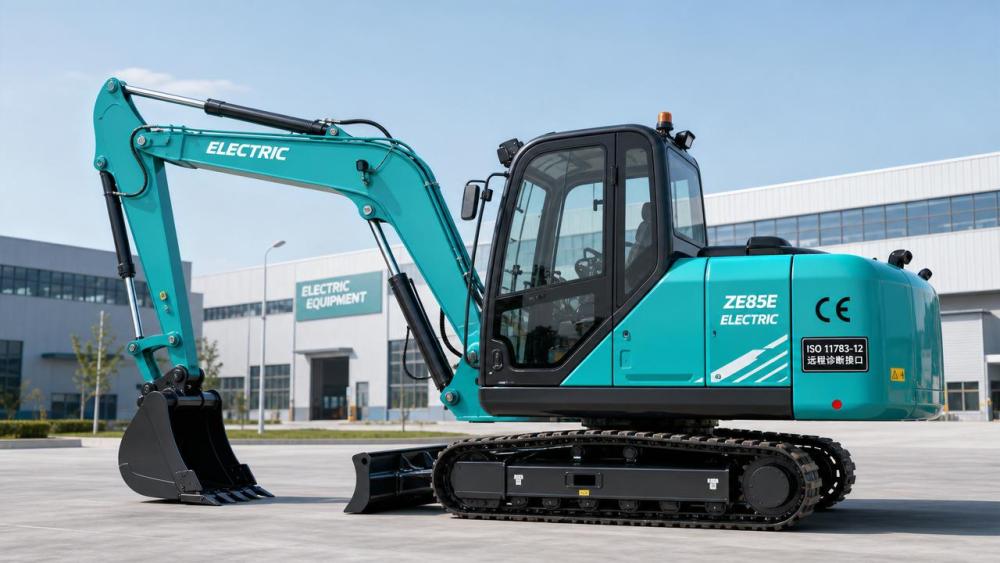
In summary, the EU’s 28 May 2026 review of the NRMM CE transition period is a procedural milestone indicating tightening technical expectations for electric non-road machinery—not an immediate compliance trigger. Its significance lies in confirming that certification for electric construction equipment in the EU is evolving from a powertrain-focused exercise to a holistic assessment spanning hardware, software, data, and safety systems. Current stakeholders are better advised to treat this as an early-stage calibration opportunity rather than an imminent deadline-driven action item.
Source: European Commission official announcement, 28 May 2026; Regulation (EU) 2016/1628 on non-road mobile machinery; EU Commission Working Document SWD(2026) 142 (reference number assigned upon publication).
Note: Specific delegated acts, updated harmonized standards, or enforcement timelines remain pending and are subject to ongoing observation.