
Related News
- 00
0000-00
How to size heavy-duty loaders for North American mining operations - 00
0000-00
How altitude affects mining excavator performance in Latin America - 00
0000-00
Caterpillar Launches New Cat 6060 and Upgraded Autonomous Mining System - 00
0000-00
When does eco-friendly construction equipment pay for itself? - 00
0000-00
Will a wheel loader quick coupler fit your existing attachments?
Effective June 1, 2026, the first phase of U.S.-China tariff reductions on 12 categories of specialty steel—key materials for construction and mining machinery—comes into force, lowering import duties from 9.8% to 2.0%. The move, confirmed under the U.S.-China Economic and Trade Consultations Joint Statement, directly impacts global supply chains for high-performance hydraulic and structural components used in earthmoving equipment.
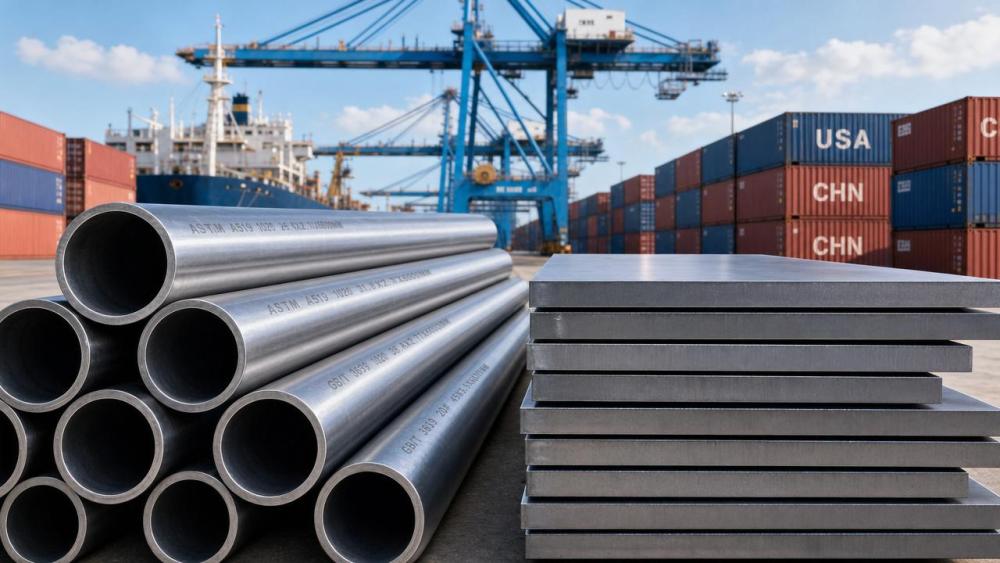
Tariff Adjustment Confirmed Under Bilateral Agreement
Pursuant to the U.S.-China Economic and Trade Consultations Joint Statement, tariffs on 12 designated specialty steel products—including high-strength wear-resistant structural steels and seamless steel tubes for hydraulic systems—will be reduced from 9.8% to 2.0%, effective June 1, 2026. These materials are integral to critical components such as crawler excavator undercarriage frames, large mining bulldozer cutting edges, and laser calibration brackets for 3D GPS-enabled motor graders. The adjustment applies specifically to imports destined for final assembly or integration into heavy machinery systems.
Impact Across Supply Chain Roles
Direct trading enterprises
Exporters and importers handling cross-border shipments of these 12 steel categories will experience immediate duty savings, improving margin visibility and pricing flexibility. Customs classification accuracy—and alignment with the updated Harmonized System (HS) subheadings for each designated item—becomes essential to qualify for the preferential rate.
Raw material procurement organizations
Buyers sourcing specialty steel billets, slabs, or tubes for downstream fabrication must reassess landed cost models. The revised tariff level affects total cost of ownership calculations, especially for just-in-time procurement strategies tied to overseas OEM delivery schedules.
Manufacturing enterprises
Producers of structural assemblies and hydraulic subsystems—particularly those supplying international OEMs—may see improved competitiveness in global tenders where landed cost is a key evaluation criterion. However, documentation traceability (e.g., mill test reports, heat number logs) must support origin and specification claims to avoid customs delays.
Supply chain service providers
Logistics, customs brokerage, and compliance verification firms face increased demand for tariff classification advisory services, origin certification support (e.g., Certificate of Origin Form A), and pre-shipment conformity checks aligned with updated U.S. and Chinese regulatory expectations.
Key Operational Priorities for Enterprises
Verify HS code alignment and origin documentation
Confirm that product-specific HS codes match the 12 listed categories and that origin declarations comply with bilateral rules of origin requirements—not merely country-of-shipment, but country-of-manufacture and value-add thresholds.
Update procurement timelines and supplier qualification protocols
Adjust lead time assumptions for imported steel inputs, particularly for long-lead items like precision-drawn seamless tubes. Re-evaluate supplier certifications (e.g., ISO 9001, ASME SA-179/SA-213) to ensure continued conformance with end-use performance specifications.
Align technical documentation with revised import conditions
Ensure mill test reports, chemical composition certificates, and non-destructive testing records explicitly reference applicable standards (e.g., ASTM A514, EN 10025-6) and reflect the physical forms covered by the tariff reduction (e.g., cold-drawn seamless tubes, quenched-and-tempered plates).
Industry Perspective: Beyond Cost Savings
Analysis shows this tariff reduction should not be interpreted solely as a short-term cost relief measure. Rather, it signals a recalibration of technical trade governance—where material-level harmonization (e.g., grade equivalency between ASTM and GB/T standards) and certification interoperability are becoming prerequisites for market access. Observably, manufacturers investing in dual-standard process validation and digital traceability systems are better positioned to leverage the policy shift without compromising quality assurance or audit readiness.
Strategic Implications for Global Machinery Sourcing
This phased tariff adjustment marks a concrete step toward stabilizing high-precision component trade flows between the two largest machinery markets. While the immediate effect is lower landed costs for select structural and hydraulic steel parts, its longer-term significance lies in reinforcing standardized material specifications and transparent compliance pathways—both essential for scaling cross-border co-engineering and modular supply arrangements.
Source Attribution & Monitoring Guidance
This article synthesizes information provided in the user-submitted briefing: title, effective date (June 1, 2026), and summary description. Specific official source links were not provided in the input and should be verified continuously. Stakeholders are advised to monitor upcoming updates from U.S. Customs and Border Protection (CBP), China’s General Administration of Customs (GACC), and bilateral working groups on implementation guidelines, classification rulings, tender specification revisions, and industry feedback on real-world application.