
Related News
- 00
0000-00
How to size heavy-duty loaders for North American mining operations - 00
0000-00
How altitude affects mining excavator performance in Latin America - 00
0000-00
Caterpillar Launches New Cat 6060 and Upgraded Autonomous Mining System - 00
0000-00
When does eco-friendly construction equipment pay for itself? - 00
0000-00
Will a wheel loader quick coupler fit your existing attachments?
The 2026 Construction Equipment Technology Festival — scheduled for June 15–18 in Changsha — has entered its final 30-day countdown. While the exact event date of this announcement was not specified, the festival’s technical agenda signals a pivotal shift in industry-wide expectations for electric excavators, particularly concerning battery safety and aftermarket interoperability. These developments directly affect global supply chains, service ecosystems, and regulatory alignment across heavy equipment markets.
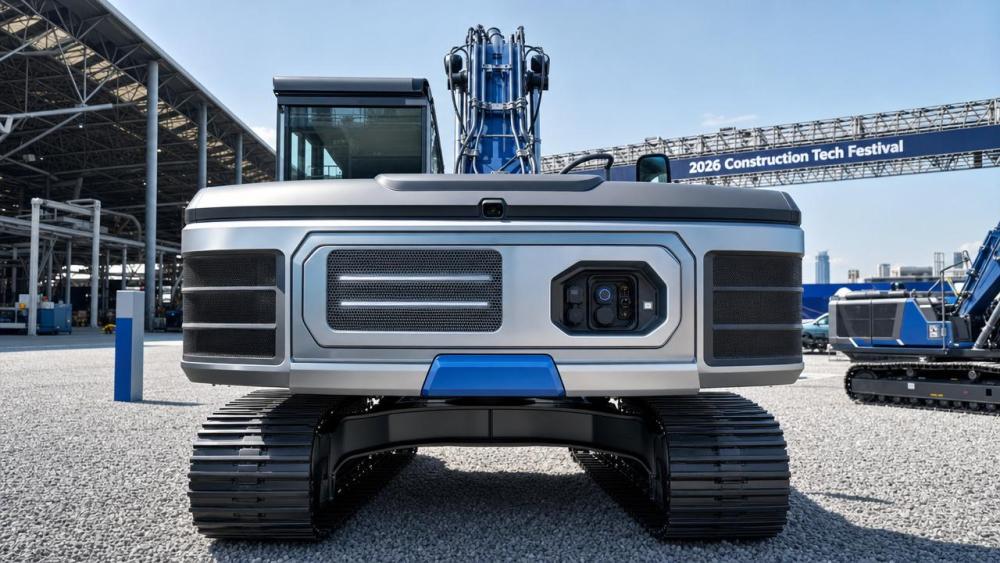
Confirmed Technical Milestones Ahead of the Festival
The organizers confirmed that the 2026 festival will spotlight two interoperable technical enablers for electric excavators: (1) a liquid-cooled battery pack thermal runaway early-warning system with sub-200 ms response time; and (2) a standardized remote diagnostic API interface, openly released to global distributors. This API is compliant with ISO 15118-20 and SAE J1939-71, and has received pre-certification from 12 international OEMs including Caterpillar and JCB. It enables unified connectivity of multi-brand equipment to centralized aftermarket cloud platforms.
Impact Across Supply Chain Roles
Direct Trading Enterprises
These firms face revised technical eligibility criteria when bidding on distributor agreements or warranty service contracts. The API standardization means compatibility verification — not just brand-specific integration — will become a mandatory precondition for market access in key regions.
Raw Material Procurement Firms
Suppliers of thermal interface materials, high-conductivity coolant formulations, and battery cell packaging components may see accelerated demand validation cycles. Specifications tied to the
Manufacturing Enterprises
OEMs and Tier-1 subsystem integrators must now align production test protocols with both the thermal warning latency requirement and the API’s message structure. Factory-level firmware validation will need to include cross-OEM diagnostic command simulation per SAE J1939-71 Annex D.
Supply Chain Service Providers
Fleet management platform operators and telematics-as-a-service vendors must adapt their data ingestion layers to support the new API schema. Legacy gateways lacking ISO 15118-20 session-handling capabilities risk obsolescence in certified service networks.
Strategic Priorities for Enterprise Readiness
Validate API Integration Against Pre-Certified OEM Profiles
Enterprises should conduct conformance testing using the documented message sets and error codes published by the 12 pre-certified OEMs — not generic J1939 templates — to avoid post-deployment interoperability gaps.
Review Battery Pack Qualification Documentation
Thermal runaway response time (
Update Aftermarket Cloud Architecture for Multi-Brand Data Normalization
Cloud platforms must implement dynamic schema mapping to reconcile variant parameter IDs across Caterpillar, JCB, and other OEM implementations while preserving diagnostic traceability per ISO 15118-20 security logging requirements.
Industry Observation: Standardization as a De Facto Compliance Threshold
Analysis shows that the pre-certification status granted by 12 major OEMs effectively elevates the API standard into a de facto compliance benchmark — even absent formal regulation. From an industry perspective, this signals a transition where interoperability is no longer a competitive differentiator but a baseline entry requirement for service network participation. What deserves closer attention is the compressed timeline: with only 30 days until the festival launch, manufacturers face urgent alignment pressure across R&D, certification, and procurement functions — especially for thermal management subsystems where qualification lead times typically exceed 90 days.
Toward Interoperable Electrification Infrastructure
This initiative marks more than a technology showcase: it represents an industry-coordinated step toward harmonizing safety-critical performance metrics and service data architecture across electric construction equipment. Its significance lies not in regulatory enforcement, but in shaping practical compliance expectations across commercial partnerships, tender evaluations, and lifecycle service delivery — making technical alignment as consequential as regulatory adherence.
Source Transparency Statement
This article synthesizes information provided in the user input — including the event title, timing note (“not specified”), and factual summary. Specific official source links were not provided in the input and should be verified continuously. Stakeholders are advised to monitor upcoming festival documentation releases, OEM implementation guidelines, and potential updates to national type-approval frameworks referencing ISO 15118-20 or SAE J1939-71 in electric off-road machinery contexts.