
Related News
- 00
0000-00
How to size heavy-duty loaders for North American mining operations - 00
0000-00
How altitude affects mining excavator performance in Latin America - 00
0000-00
Caterpillar Launches New Cat 6060 and Upgraded Autonomous Mining System - 00
0000-00
When does eco-friendly construction equipment pay for itself? - 00
0000-00
Will a wheel loader quick coupler fit your existing attachments?
In 2026, earthmoving machinery downtime is no longer just a maintenance issue—it is a direct threat to project timelines, fleet utilization, and service profitability.
For after-sales maintenance operations, every stopped excavator, loader, grader, bulldozer, or skid steer creates cost, delay, and reputational pressure.
The causes of earthmoving machinery downtime are also changing.
Mechanical wear still matters, but software faults, sensor instability, emissions complexity, and supply chain disruption now play larger roles.
Understanding these causes helps reduce repeat failures, improve service planning, and raise machine availability across demanding infrastructure and mining environments.
Understanding earthmoving machinery downtime in 2026
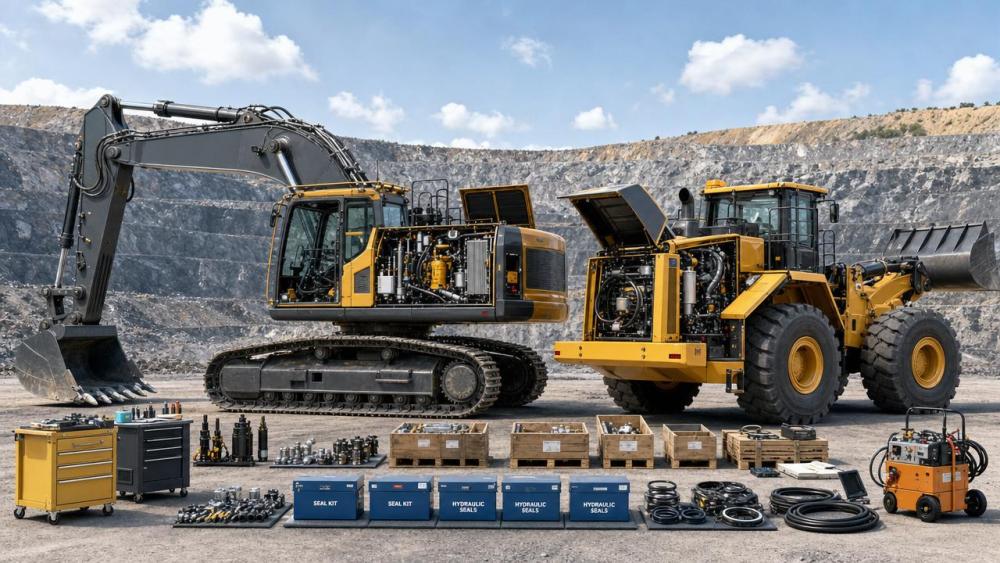
Earthmoving machinery downtime refers to any period when equipment cannot perform planned work at expected productivity and safety levels.
This includes full breakdowns, derated operation, forced idling, and waiting time caused by missing parts or unavailable technical support.
In earlier years, most downtime centered on engines, pumps, tracks, and structural fatigue.
In 2026, failure patterns are broader because modern earthmoving machinery combines hydraulics, electronics, telematics, automation aids, and stricter emissions systems.
As a result, downtime analysis must connect physical loads with digital control layers.
This is especially important in fleets using crawler excavators, wheel loaders, motor graders, bulldozers, and skid steer loaders across mixed job conditions.
Industry signals shaping downtime risk
Several 2026 trends are increasing exposure to earthmoving machinery downtime across the broader industrial machinery landscape.
- Higher machine utilization leaves less room for preventive stoppages.
- Emission controls add thermal and sensor sensitivity.
- Semi-autonomous features depend on reliable calibration and connectivity.
- Remote worksites complicate field service access and parts delivery.
- Mixed operator skill levels increase misuse and inconsistent inspection routines.
The combined effect is clear.
Earthmoving machinery now fails through interacting causes rather than isolated component defects.
Key causes of earthmoving machinery downtime
Hydraulic stress and fluid contamination
Hydraulic systems remain a leading source of earthmoving machinery downtime.
High breakout force, repeated shock loads, and heat buildup accelerate pump wear, hose fatigue, seal failure, and valve response problems.
Contaminated oil worsens the issue by damaging precision components and destabilizing electro-hydraulic control.
Sensor faults and electrical instability
Modern earthmoving machinery depends on pressure sensors, angle sensors, NOx sensors, harnesses, and controllers.
A small electrical fault can trigger warnings, limp modes, or complete shutdowns.
Moisture ingress, vibration, connector corrosion, and poor grounding are frequent hidden causes.
Operator misuse and workload mismatch
Improper warm-up, aggressive travel behavior, overload cycles, and wrong attachment use continue to drive avoidable earthmoving machinery downtime.
Machines designed for one duty profile often fail sooner when moved into harsher applications without setup changes.
Undercarriage, tire, and ground-contact wear
Tracked and wheeled equipment both suffer when terrain, material abrasiveness, and daily inspection discipline are underestimated.
Misalignment, tension errors, impact damage, and uneven wear create downtime that builds gradually, then arrives suddenly.
Delayed parts and weak service planning
Some earthmoving machinery downtime no longer starts with the fault itself.
It starts when the correct filter, sensor, seal kit, pump, or control module is unavailable at the right time.
Repair duration expands when diagnosis, dispatch, stock visibility, and field authorization are disconnected.
Why downtime matters beyond maintenance
Earthmoving machinery downtime affects much more than workshop workload.
It reduces equipment utilization, disrupts sequencing, increases subcontracting costs, and weakens confidence in the service network.
For high-value machines, one repeated failure can damage lifecycle economics far more than a single repair invoice suggests.
Downtime also distorts data.
If stoppage records are vague, organizations may replace the wrong parts, miss recurring root causes, and overestimate machine reliability.
- Lost productive hours increase cost per ton and cost per cubic meter.
- Unexpected stoppages create idle labor and transport inefficiency.
- Repeated failures reduce resale confidence and planning accuracy.
- Poor uptime weakens long-term service profitability.
Typical downtime patterns by machine category
Different machine types show different downtime signatures.
Recognizing these patterns helps prioritize inspection, stocking, and technician training.
Practical steps to reduce earthmoving machinery downtime
Reducing earthmoving machinery downtime requires a structured approach, not isolated repair effort.
- Track root causes by failure mode, not only by replaced part.
- Set fluid sampling and contamination thresholds for high-load hydraulic assets.
- Standardize pre-shift inspections with photo-based reporting.
- Maintain critical spare kits for recurring downtime components.
- Use telematics alerts to detect heat, pressure, and derating trends early.
- Review whether machine configuration matches actual jobsite duty.
- Train field teams to distinguish electrical symptoms from hydraulic symptoms.
It is also useful to classify events into quick-reset faults, planned repairs, and mission-critical failures.
That simple separation improves response speed and parts allocation.
Operational considerations for 2026 service strategies
The most effective downtime strategy combines engineering insight with execution discipline.
For earthmoving machinery, this means linking machine data, inspection history, and parts planning into one workflow.
Shorter diagnosis time often matters as much as repair time.
When fault codes are interpreted without context, unnecessary part replacement increases and repeat downtime follows.
A stronger 2026 approach includes three priorities:
- Build failure libraries around real operating conditions.
- Align stocking with machine population and seasonal workload peaks.
- Use recurring downtime reviews to improve design feedback and service routines.
Next-step focus for uptime improvement
In 2026, earthmoving machinery downtime is best addressed as an operational intelligence issue, not a narrow repair problem.
The key causes are clear: hydraulic stress, sensor and electrical faults, operator misuse, wear at the ground interface, and delayed parts support.
The next practical move is to audit recent downtime events by machine family, failure type, repair delay, and repeat frequency.
That review quickly reveals where earthmoving machinery loses availability and where service processes need redesign.
With disciplined root-cause tracking and better readiness, uptime can improve even in harsher, smarter, and more regulated operating environments.