
Related News
- 00
0000-00
How to size heavy-duty loaders for North American mining operations - 00
0000-00
How altitude affects mining excavator performance in Latin America - 00
0000-00
Caterpillar Launches New Cat 6060 and Upgraded Autonomous Mining System - 00
0000-00
When does eco-friendly construction equipment pay for itself? - 00
0000-00
Will a wheel loader quick coupler fit your existing attachments?
On May 25, 2026, Indonesia’s Ministry of Industry issued a new regulation requiring all imported wheeled skid steers and medium-duty wheel loaders to embed a remote diagnostic API compliant with the national Industrial Cloud Platform standard—effective July 1, 2026. This development directly impacts equipment exporters, OEMs, distributors, and after-sales service providers operating in or supplying to Indonesia’s infrastructure and construction machinery markets.
Event Overview
The Indonesian Ministry of Industry announced the regulation on May 25, 2026. It stipulates that, starting July 1, 2026, all imported wheeled skid steers and medium-duty wheel loaders must be pre-equipped with a remote diagnostic API interface aligned with Indonesia’s national Industrial Cloud Platform specifications. The interface must support Bahasa Indonesia language display and native SIM card connectivity for local network access.
Industries Affected
Equipment Exporters (Especially from China)
Exporters supplying wheeled loading equipment to Indonesia will face immediate compliance requirements before customs clearance. Non-compliant units risk rejection at port or mandatory retrofitting—adding cost, delay, and uncertainty to shipments.
OEMs and Tier-1 Suppliers of Smart Telematics Systems
OEMs integrating telematics hardware or software into wheel loaders must verify API architecture compatibility with Indonesia’s national cloud platform. This includes authentication protocols, data schema, and firmware-level language localization—not just UI translation.
Distributors and After-Sales Service Providers
Distributors handling warranty, maintenance, or uptime contracts will need to operate within the national cloud ecosystem. Their existing remote monitoring dashboards and diagnostic workflows may require integration or replacement to maintain service continuity.
Local System Integrators and Telecom Partners
Partners providing SIM-enabled connectivity, edge-to-cloud data routing, or localized cloud hosting services in Indonesia may see increased demand—but only if their infrastructure meets the interoperability criteria defined by the national platform.
What Stakeholders Should Monitor and Do Now
Track official technical specifications and certification pathways
The regulation confirms the requirement but does not yet publish full API documentation, conformance testing procedures, or authorized certification bodies. Stakeholders should monitor updates from the Ministry of Industry and the National Standardization Agency (BSN) for implementation guidance.
Identify affected product lines and assess firmware readiness
Manufacturers should audit current models scheduled for Indonesian shipment between July and December 2026. Priority attention is needed for units where remote diagnostics rely on proprietary cloud backends or lack embedded multilingual UI logic.
Distinguish policy intent from near-term enforcement capacity
Analysis shows the regulation reflects Indonesia’s broader industrial sovereignty agenda—not merely a technical update. However, observably, initial enforcement may focus on new import registrations rather than retroactive audits of existing fleets. Compliance planning should therefore prioritize new shipments over legacy unit upgrades—at least through Q3 2026.
Engage local partners early on SIM integration and language localization
Hardware-level SIM slot compatibility, APN configuration, and Bahasa Indonesia string localization must be validated in-country. Relying solely on overseas engineering teams risks misalignment with local telecom standards (e.g., Telkomsel or Indosat Ooredoo network profiles) and regulatory expectations for user-facing content.
Editorial Perspective / Industry Observation
This regulation is better understood as a strategic signal than an isolated technical mandate. From an industry perspective, it marks Indonesia’s deliberate shift toward asserting data governance and service control over imported capital equipment—especially in sectors critical to its infrastructure acceleration program. Observably, similar API-localization requirements are emerging across ASEAN for smart construction and agricultural machinery, suggesting this may be a regional template rather than a one-off national rule. Current enforcement remains procedural, but the underlying policy direction signals growing expectations for embedded digital sovereignty in high-value industrial imports.
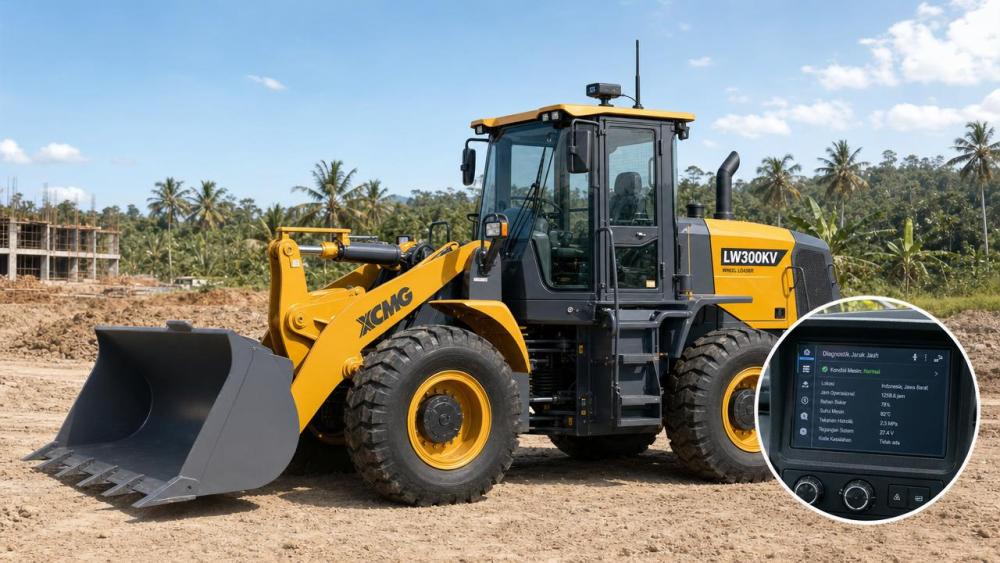
Conclusion: This regulation does not represent an immediate operational crisis, but rather a structural inflection point for manufacturers and service providers engaged in Indonesia’s construction equipment supply chain. It underscores that digital interoperability—specifically cloud API alignment, local language UX, and domestic network integration—is now a non-negotiable component of market access. Stakeholders are advised to treat it as a foundational compliance requirement, not a temporary certification hurdle.
Source: Indonesian Ministry of Industry official announcement, dated May 25, 2026. Technical implementation details—including API specification documents, certification process, and list of accredited testing labs—remain pending and are subject to further official release. Continuous monitoring is recommended.