
Related News
- 00
0000-00
How market insight content shapes equipment demand forecasts - 00
0000-00
When does stainless steel bulk material transfer equipment prevent contamination? - 00
0000-00
How an earthmoving equipment portal helps vet factory capabilities - 00
0000-00
How to assess equipment specifications against applicable standards - 00
0000-00
How Middle East climate conditions should shape heavy equipment selection
Project planning for 2026 is no longer only about volume, timelines, and bid competitiveness. Infrastructure equipment now sits at the center of productivity strategy, emissions compliance, digital control, and lifecycle risk.
That shift matters across public works, mining support, road building, airport expansion, utilities, and urban redevelopment. Equipment decisions made early in the planning cycle increasingly shape cost stability, schedule certainty, and asset performance years later.
For organizations tracking earthmoving and grading markets, the signal is clear: crawler excavators, wheel loaders, motor graders, bulldozers, and skid steer loaders are being evaluated less as isolated machines and more as connected infrastructure equipment systems.
Why infrastructure equipment strategy is changing
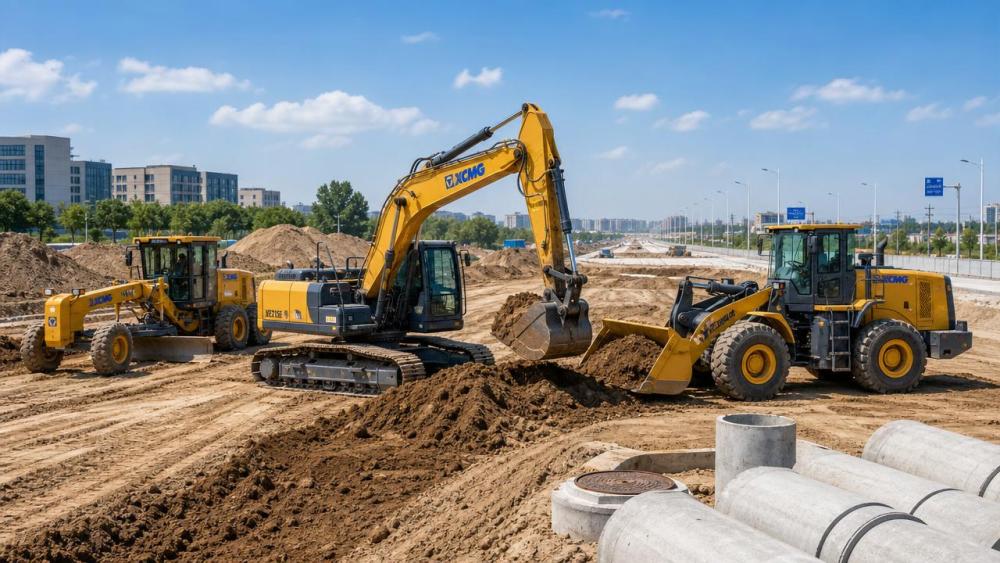
The immediate driver is project complexity. Contractors and asset owners face tighter environmental rules, labor constraints, volatile fuel costs, and more pressure to prove output with fewer delays.
At the same time, machine technology is advancing quickly. Hydraulic efficiency, electro-hydraulic controls, 3D grade guidance, remote operation, and machine health monitoring are moving into mainstream planning conversations.
This is where infrastructure equipment intelligence becomes practical. Market observers such as EMD focus on how force, precision, autonomy, and decarbonization converge across heavy earthmoving fleets.
In simple terms, 2026 planning is being shaped by a broader question: which machines will still fit operating, regulatory, and productivity requirements over the next investment cycle?
What the market now means by smarter fleets
Smarter infrastructure equipment does not only mean adding screens or sensors. It refers to machines selected and configured around measurable outcomes such as cycle time, grade accuracy, uptime, fuel burn, and operator consistency.
A crawler excavator, for example, is no longer judged only by breakout force. It is also assessed by hydraulic responsiveness, attachment compatibility, telematics visibility, and readiness for future emissions or automation upgrades.
The same applies to wheel loaders in bulk handling, graders in roadwork, bulldozers in mass push applications, and skid steers in dense urban sites. Each platform is becoming part of a data-enabled production chain.
The shift from unit price to total project value
This trend changes procurement logic. Lower upfront cost can quickly lose appeal when maintenance exposure, idle time, fuel consumption, or weak digital integration disrupt project economics.
As a result, infrastructure equipment planning increasingly weighs ownership models, service support, software compatibility, and resale outlook alongside purchase price.
Five equipment trends shaping 2026 planning
Several trends stand out because they affect both equipment selection and project execution. They are visible across large infrastructure programs and smaller, high-precision construction environments.
1. Decarbonization is moving from policy to specification
Emissions rules for non-road equipment are becoming more demanding in many markets. That pressure now reaches fleet planning, tender language, and financing discussions.
For some projects, the answer is electrification. For others, it is cleaner diesel platforms, better idle management, optimized hydraulics, or mixed-energy fleet strategies.
2. Precision control is expanding beyond premium projects
GPS, laser sensing, and 3D spatial algorithms are becoming more common in grading and excavation. Precision is no longer treated as a niche add-on for exceptional sites.
Motor graders especially benefit from this shift, but excavators and dozers are also gaining from guided workflows that reduce rework, survey dependency, and material waste.
3. Remote and autonomous readiness is a planning factor
Full autonomy will not define every 2026 project. Still, low-latency communications, remote-control capability, and operator-assist functions are becoming relevant in hazardous, remote, or labor-constrained environments.
Infrastructure equipment that supports staged automation offers a practical hedge. It creates room for future upgrades without forcing an all-at-once transition.
4. Compact versatility is gaining value
Urban redevelopment and secondary city growth are boosting demand for compact, flexible machines. Mini-excavators and skid steer loaders fit tight sites, utility work, and fast-changing task profiles.
Their appeal comes from attachment flexibility, transport convenience, and lower site disruption. In many mixed-use projects, that versatility directly improves scheduling agility.
5. Reliability data is becoming a competitive asset
Uptime has always mattered, but 2026 planning demands stronger evidence. Buyers increasingly want service interval data, component durability trends, and alerts that reduce unplanned stoppages.
This is especially important for heavy-duty infrastructure equipment operating in mines, harsh weather, or extended project schedules where downtime multiplies across the entire jobsite.
How these trends affect core machine categories
The broad trends look different when applied to specific equipment classes. Planning improves when each category is linked to the production role it serves.
This category view explains why infrastructure equipment decisions are now tied to application fit rather than broad brand preference alone. The right machine must match the production logic of the site.
Planning questions worth asking before budgets are fixed
A useful 2026 review starts with project conditions, then works backward into fleet design. That approach avoids buying capability that looks impressive but adds little operational value.
- Which tasks demand precision, and which demand brute force or continuous material handling?
- How exposed is the project to emissions restrictions, fuel volatility, or reporting requirements?
- Where could machine data improve dispatching, maintenance timing, or subcontractor coordination?
- Which infrastructure equipment assets need future-ready controls for automation or remote support?
- How much value comes from machine versatility versus single-purpose specialization?
These questions help separate strategic fleet investments from short-term purchases. They also make vendor comparisons more disciplined and easier to defend internally.
Why intelligence matters as much as hardware
Infrastructure equipment is increasingly shaped by information quality. Market cycles, regional regulations, hydraulic innovation, and software architecture all influence whether a fleet choice ages well.
That is why specialized industry intelligence has become more valuable. EMD’s perspective on excavators, loaders, graders, bulldozers, and compact equipment reflects this wider decision framework.
Its focus on decarbonization, autonomy, transmission efficiency, electro-hydraulic response, and remote-control systems mirrors the real factors now shaping project planning, tender competitiveness, and asset utilization.
A practical way to move into 2026
The strongest equipment plans for 2026 will likely be the ones that connect machine choice with production metrics, compliance exposure, and upgrade flexibility from the start.
Rather than treating infrastructure equipment as a late-stage procurement item, it makes sense to review fleet roles early, compare digital capabilities carefully, and test decisions against realistic site scenarios.
A useful next step is to map upcoming projects by earthmoving intensity, grading precision, site constraints, and emissions sensitivity. That simple framework often reveals which equipment gaps, replacement priorities, and technology upgrades deserve closer attention.