
Related News
- 00
0000-00
How a supplier solution database reduces sourcing risk - 00
0000-00
How market insight content shapes equipment demand forecasts - 00
0000-00
When does stainless steel bulk material transfer equipment prevent contamination? - 00
0000-00
How an earthmoving equipment portal helps vet factory capabilities - 00
0000-00
How to assess equipment specifications against applicable standards
In 2026, earthmoving technology is no longer a background consideration in heavy equipment planning. It is shaping how projects control fuel use, labor exposure, cycle times, rework, and uptime across infrastructure, mining, utilities, and urban construction.
What matters now is not only machine size or rated power. The real shift comes from connected controls, automation layers, low-emission drivetrains, and data systems that turn equipment into measurable production assets.
That is why the latest earthmoving technology trends deserve close attention. They influence fleet strategy, bid competitiveness, asset utilization, and the ability to deliver consistent output under tighter regulatory and cost pressure.
Why jobsite efficiency is being redefined
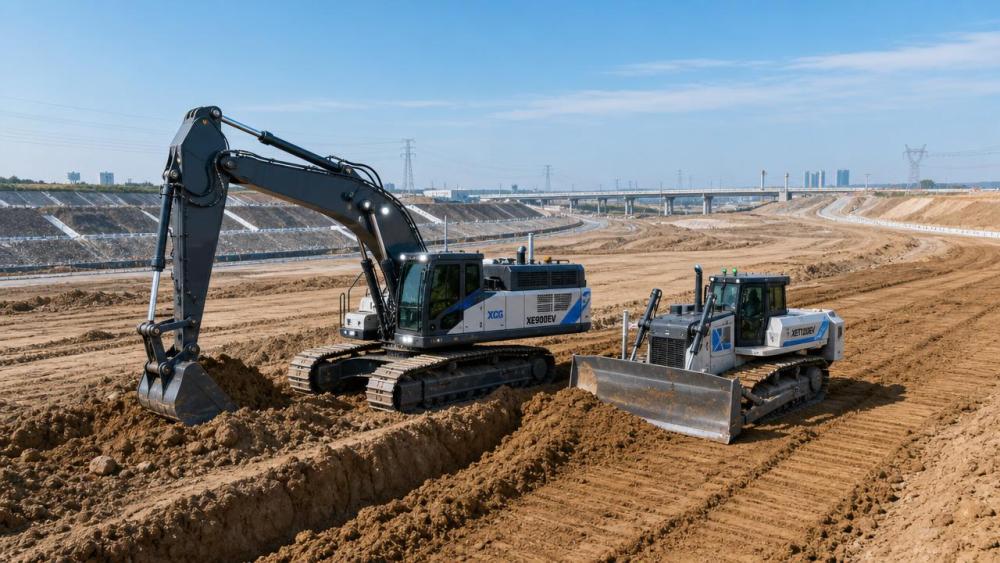
Jobsite efficiency once meant moving more material per hour. That still matters, but the 2026 standard is broader. Efficiency now includes grading accuracy, idle reduction, maintenance predictability, operator support, and carbon performance.
This change is especially visible in the machine categories tracked closely by EMD. Crawler excavators, wheel loaders, motor graders, bulldozers, and skid steer loaders are all gaining intelligence that changes how value is measured.
A crawler excavator with refined electro-hydraulic control may cut overdig and improve fuel efficiency in the same shift. A grader using 3D guidance may reduce passes while meeting tighter surface tolerances. A dozer with machine control may shorten finish cycles and lower rework costs.
In other words, earthmoving technology now affects both production speed and production quality. That combination is what makes it strategically important.
The core trends shaping 2026
Several developments are moving from pilot projects into mainstream fleet decisions. They are not equal in every market, but together they define the direction of modern earthmoving technology.
Autonomy and assisted operation
Full autonomy remains selective, especially in controlled mining or hazardous environments. However, assisted digging, return-to-grade functions, obstacle awareness, and semi-automated blade control are becoming practical efficiency tools.
These features reduce dependency on perfect operator consistency. They also help new crews reach acceptable performance faster, which matters where labor availability remains uncertain.
Precision guidance and 3D spatial control
High-precision GPS, laser sensing, and 3D terrain modeling are expanding beyond finish work. They are increasingly used earlier in excavation, roadbuilding, site prep, and material balance planning.
For motor graders and dozers, this means tighter control over slope, elevation, and final surface condition. For excavators, it means cleaner trenching, safer digging near utilities, and fewer correction cycles.
Low-emission and alternative power systems
Decarbonization is no longer limited to urban pilot fleets. It is influencing purchasing logic across regions through emissions rules, fuel volatility, and customer sustainability requirements.
Battery-electric compact equipment, hybrid architectures, engine efficiency upgrades, and smarter idle management all play a role. The most suitable solution depends on duty cycle, charging access, and machine class.
Connected machine intelligence
Telematics has matured from location tracking into operational intelligence. The next layer combines machine health, utilization data, operator behavior, and production metrics into decision-ready dashboards.
This is where earthmoving technology becomes a management system, not just a hardware upgrade. Better data supports maintenance planning, attachment matching, shift balancing, and replacement timing.
How these changes affect different equipment classes
The same trend creates different value depending on machine type. A practical reading of earthmoving technology starts with the job each asset performs.
This equipment-level view is important because technology value is rarely universal. It depends on whether the constraint is finish accuracy, haul coordination, operator variability, or emissions compliance.
What deserves closer attention in real operations
Not every innovation creates immediate business value. In practice, the best earthmoving technology decisions come from matching capabilities to measurable operational pain points.
- If projects lose margin through rework, prioritize grade control, 3D guidance, and material tracking.
- If uptime is unstable, focus on predictive maintenance, parts visibility, and remote diagnostics.
- If labor consistency is the issue, evaluate assisted control systems and interface simplicity.
- If fuel and compliance costs are rising, compare hybrid, electric, and advanced engine options by duty cycle.
- If sites are hazardous or remote, assess low-latency communication for remote-controlled workflows.
This is also where a strong intelligence source becomes useful. EMD’s perspective on hydraulic response logic, hydrostatic transmission efficiency, and remote-control architecture helps connect technical claims with operational outcomes.
That connection matters because product brochures often describe features well, but not the conditions under which those features actually improve productivity.
The broader business value behind earthmoving technology
The discussion is not only about equipment modernization. Earthmoving technology affects bidding strategy, financing logic, project scheduling, and even brand positioning in competitive tenders.
A fleet with stronger machine intelligence can estimate output more accurately. It can also document emissions performance, idle time, and utilization with more confidence. That supports better internal planning and stronger external credibility.
On complex infrastructure jobs, precision can be more valuable than raw horsepower. On urban projects, compact electrified machines may unlock access where noise and emissions restrictions are tightening. In mining support, remote operation may improve both safety and continuity.
Seen this way, earthmoving technology is becoming a portfolio decision. It shapes how assets perform individually, and how fleets perform as a coordinated system.
A practical framework for evaluating the next move
The most effective next step is usually not a full fleet overhaul. A more disciplined approach starts with a clear baseline and a narrow test window.
Start with measurable constraints
Identify where productivity leaks are happening today. Common examples include over-excavation, unplanned downtime, idle-heavy loading cycles, and grading rework.
Compare technology by workflow, not by headline
A machine may look advanced on paper yet deliver little benefit in a poorly matched application. Review site conditions, attachment needs, data integration demands, and maintenance readiness before assigning value.
Test interoperability early
Connected equipment only creates full value when telematics, machine control, and project data flow together. Fragmented systems often hide costs until deployment.
Use short pilots with hard metrics
Evaluate cycle time, fuel per cubic meter, pass count, maintenance events, and operator adoption. These indicators reveal whether new earthmoving technology is solving a real operational problem.
Where the market is heading next
The direction is becoming clearer. More machines will combine precision sensing, software-guided control, and lower-emission power systems. Data platforms will increasingly connect field performance with planning, procurement, and lifecycle decisions.
The winners will not necessarily be those with the largest fleets. They will more likely be those that understand which layer of earthmoving technology creates the highest operational return in each segment of work.
That makes 2026 a useful moment to review assumptions. Revisit how excavators, loaders, graders, dozers, and compact machines create value. Reassess whether current data, controls, and powertrain choices are aligned with future project demands.
A practical path forward is to map priority jobsites, define the efficiency metrics that matter most, and track which technology signals are proving durable. With that foundation, earthmoving technology becomes easier to judge as a business lever rather than a moving trend.