
Related News
- 00
0000-00
How an earthmoving equipment portal helps vet factory capabilities - 00
0000-00
How to assess equipment specifications against applicable standards - 00
0000-00
How Middle East climate conditions should shape heavy equipment selection - 00
0000-00
Can an industrial equipment sourcing supplier directory improve vendor selection? - 00
0000-00
How earthmoving equipment is applied in canal construction
Autonomous construction is moving from concept to operating discipline. Its first wins are appearing in repetitive cycles, controlled work zones, and high-risk environments where consistency matters more than spectacle.
That shift is especially visible across earthmoving. Excavators, loaders, graders, bulldozers, and compact equipment now generate enough machine data to support guided autonomy with measurable business value.
For infrastructure-heavy operations, the question is no longer whether autonomous construction will arrive. The more practical question is where it reduces waste, improves safety, and protects margin first.
Where autonomous construction starts paying back
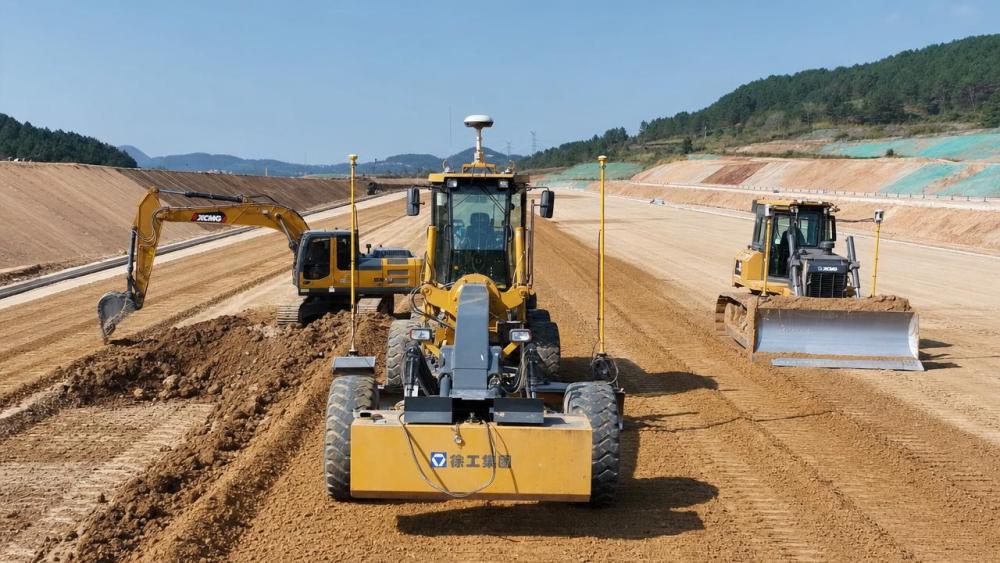
Early value does not come from replacing an entire site with driverless machines. It comes from narrowing variability in tasks that already follow a clear pattern.
Haul cycles in mines, finish grading on road projects, trenching with known design coordinates, and remote dozing in unstable ground are good examples.
In these settings, autonomous construction supports three priorities at once. It reduces operator exposure, tightens execution, and turns more machine hours into productive output.
That is why the topic matters now. Cost pressure, labor constraints, emissions targets, and tighter project schedules are pushing automation from experimentation into capital planning.
What the term really means on active job sites
In practice, autonomous construction covers a spectrum. It includes machine guidance, operator-assist features, remote control, supervised autonomy, and, in limited cases, full task automation.
That distinction matters because the business case depends on scope. A grader that holds design elevation automatically may create faster value than a fully autonomous mixed-fleet deployment.
The strongest programs combine hardware, software, and site process. Sensors, GNSS, inertial measurement, hydraulic controls, fleet connectivity, and digital terrain models must work as one system.
EMD’s perspective is useful here. The portal tracks how hydraulic force, electro-hydraulic control logic, 3D spatial algorithms, and low-latency communications are converging inside heavy equipment.
Viewed this way, autonomous construction is less about futuristic branding and more about orchestrating machines, workflows, and data so assets perform with less friction.
Equipment classes where value appears first
Not every machine reaches the same autonomy threshold at the same time. Repetition, path predictability, and tolerance requirements determine where deployment becomes practical.
Motor graders and precision finishing
Motor graders are among the clearest early winners. Their work is highly dependent on repeatable blade control, geospatial accuracy, and millimeter-level surface outcomes.
Autonomous construction in grading improves pass efficiency, minimizes rework, and creates better documentation for quality assurance on roads, airport aprons, and logistics yards.
Crawler excavators in defined digging tasks
Excavators deliver value when design intent is well modeled. Trenching, slope shaping, and repetitive bench work benefit from assisted boom, arm, and bucket movements.
The bigger gain often comes from consistency. Better control of overdig, cycle time, and fuel burn can outperform headline claims about full autonomy.
Bulldozers in hazardous or remote zones
Dozers are strong candidates for remote and semi-autonomous operation in unstable slopes, contaminated ground, and mine edge conditions where risk exposure is unacceptable.
Here, autonomous construction creates value by moving people away from danger without stopping production. Safety improvement becomes an operational result, not just a compliance line.
Loaders and compact machines in structured cycles
Wheel loaders and skid steer loaders tend to benefit in stockyard, plant, and urban support tasks where routes, loading points, and attachment behavior are predictable.
These machines also show how autonomy connects with electrification. Short-cycle duty patterns and digital control layers often make integration easier.
Why the current industry focus is intensifying
Several forces are making autonomous construction more relevant across the broader industrial landscape, even outside mining and mega-project segments.
- Skilled labor remains difficult to secure in many regions, especially for night shifts and remote sites.
- Project owners expect tighter schedule certainty and more transparent progress tracking.
- Fuel, maintenance, and idle-time costs continue to pressure operating margins.
- Emission regulations are steering fleets toward smarter control and better energy management.
- Digital design data is improving, making closed-loop execution more realistic on site.
EMD’s research focus reflects the same pattern. Autonomy is no longer a standalone theme. It is linked with decarbonization, machine reliability, hydraulic efficiency, and site-wide intelligence.
How to judge business value without chasing hype
The best autonomous construction decisions begin with task economics, not technology theater. A credible evaluation asks where variability is expensive and where digital control can remove it.
A useful takeaway is simple. Autonomous construction pays back fastest where a machine repeats a task often, mistakes are costly, and the digital map of work is dependable.
Common barriers behind delayed returns
Many pilot programs underperform for avoidable reasons. The problem is rarely the machine alone.
- Poorly maintained design files create inaccurate guidance and unnecessary rework.
- Disconnected fleet systems prevent operators, dispatch teams, and managers from using the same information.
- Hydraulic performance drift reduces repeatable control, especially in harsh duty cycles.
- Weak communications architecture undermines remote or supervised operation in large sites.
- Autonomy is introduced without redesigning workflows, shift planning, or maintenance routines.
This is where an intelligence-led approach matters. Understanding machine physics, control response, and site conditions is often more valuable than chasing the highest automation label.
A practical roadmap for the next decision cycle
A measured approach usually outperforms an all-at-once rollout. Start by isolating one task family with high repeatability and clear performance metrics.
Then check whether the supporting stack is ready. That includes terrain data quality, control system compatibility, network reliability, and service capability in the field.
It also helps to compare equipment classes by role, not by novelty. A grader with mature automation may deserve priority over a more complex autonomous excavator program.
For organizations following EMD’s market lens, the strongest signal is convergence. Precision guidance, remote operation, electrification, and fleet intelligence are becoming part of the same investment logic.
Autonomous construction delivers value first where the work is structured, the risks are real, and the data can guide every movement with confidence.
The next step is not to ask whether every site should automate. It is to identify which workflows, machines, and control layers can produce reliable gains with the least operational disruption.