
Related News
- 00
0000-00
How to size heavy-duty loaders for North American mining operations - 00
0000-00
How altitude affects mining excavator performance in Latin America - 00
0000-00
Caterpillar Launches New Cat 6060 and Upgraded Autonomous Mining System - 00
0000-00
When does eco-friendly construction equipment pay for itself? - 00
0000-00
Will a wheel loader quick coupler fit your existing attachments?
Fleet planning for 2026 is no longer a matter of replacing old machines with newer ones. Earthmoving equipment now sits at the intersection of infrastructure spending, emissions policy, digital jobsite control, and tighter return-on-asset expectations.
That shift matters across construction, mining support, roadbuilding, urban works, and industrial site development. A fleet that looked balanced three years ago may now be underpowered in data capability, oversized for local demand, or exposed to fuel and compliance risk.
The most important change is strategic. Earthmoving equipment is being evaluated less as standalone iron and more as a connected operating system for productivity, precision, uptime, and decarbonization over the full equipment life cycle.
Why 2026 marks a turning point
Global investment in transport corridors, energy projects, logistics hubs, and urban redevelopment continues to support demand. At the same time, capital discipline is sharper, and utilization targets are rising.
This creates a more complex buying environment. Decision quality now depends on how well a fleet aligns machine type, duty cycle, operator availability, emissions obligations, and digital workflow compatibility.
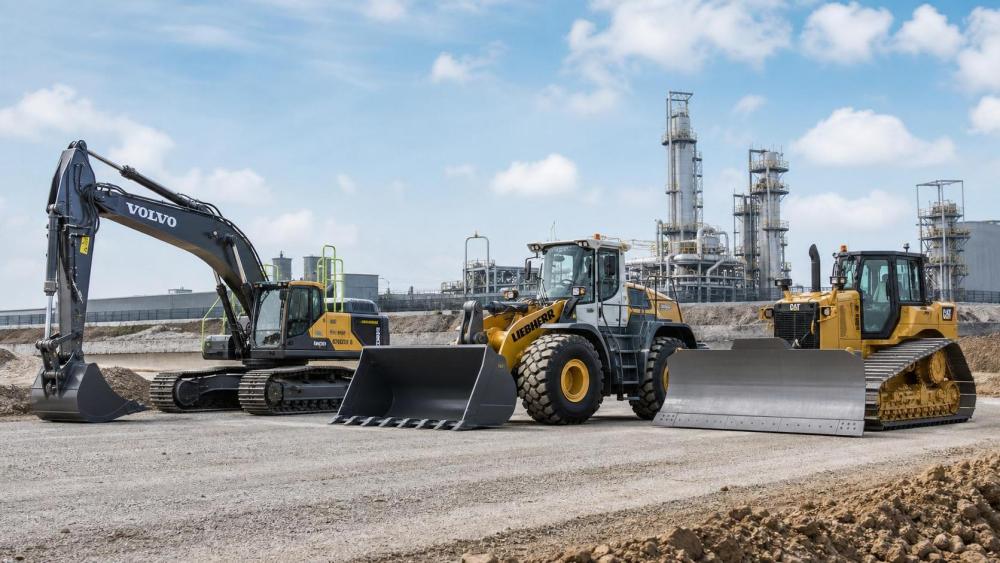
EMD tracks this transition closely across crawler excavators, wheel loaders, motor graders, bulldozers, and skid steer loaders. The common pattern is clear: performance expectations are broadening beyond breakout force, payload, or pushing power alone.
In practical terms, earthmoving equipment is judged by three layers at once: mechanical capability, software-enabled control, and long-term operating resilience.
What is changing inside modern earthmoving equipment
The hardware is still central, but the machine itself is evolving. Electro-hydraulic controls, telematics, onboard diagnostics, and grade-control integration are becoming baseline expectations in more fleet categories.
Crawler excavators remain the productivity anchor for heavy digging and trenching. Yet their competitive edge increasingly depends on control smoothness, fuel efficiency, attachment intelligence, and remote service visibility.
Wheel loaders are being chosen more carefully by pass-match strategy, cycle time data, and material flow design. In many operations, one loader specification error can distort truck loading efficiency across an entire site.
Motor graders are gaining value from precision. GPS, laser, and 3D guidance reduce rework, improve finish tolerance, and help road and airfield projects meet tighter quality standards with fewer correction passes.
Bulldozers are moving toward smarter traction management and improved hydrostatic efficiency. Skid steers, especially in urban and compact sites, benefit from attachment versatility and fast task switching rather than pure machine size.
The machine is now part of a data loop
A modern fleet generates information on idle time, fuel burn, cycle counts, slip, load factors, and maintenance behavior. That data affects specification decisions long before the next purchase order is issued.
This is where intelligence platforms such as EMD add value. Market signals, technology tracking, and regulatory analysis help translate machine trends into procurement timing and fleet mix decisions.
The five trends reshaping fleet decisions
Several forces are now influencing earthmoving equipment planning at the same time. They do not affect every region equally, but they increasingly shape global fleet economics.
- Electrification is expanding first in compact and predictable duty cycles, especially where noise, indoor use, or local emissions policy creates direct operational benefits.
- Autonomy and remote control are moving from pilot projects into selected production environments, particularly hazardous mines, repetitive loading zones, and controlled site layouts.
- Precision control systems are reducing material waste, over-excavation, and grading errors, making technology adoption easier to justify on margin-sensitive projects.
- Fleet standardization is returning as a priority because mixed systems can increase service complexity, software friction, and spare-parts exposure.
- Regional demand is shifting toward compact, agile machines in urban redevelopment, while mega-projects continue to sustain demand for high-output heavy earthmoving equipment.
More worth noting is that these trends interact. A lower-emission machine with weak telematics may still lose out to a conventionally powered unit that delivers superior uptime and production transparency.
How equipment categories influence planning priorities
Not all earthmoving equipment should be evaluated through the same lens. The right planning model depends on production role, terrain, site constraints, and the cost of downtime.
This comparison shows why a fleet review should begin with production logic, not catalog features. The same machine can be either a margin improver or a cost trap, depending on jobsite context.
What matters most in real business conditions
In real operations, the best earthmoving equipment decision is rarely the cheapest unit or the most advanced specification. The strongest fleets are designed around controllable outcomes.
Look beyond acquisition price
Fuel profile, service intervals, wear component life, software support, and residual value can outweigh purchase price differences. That is especially true in high-hour fleets.
Measure utilization honestly
Many fleets carry underused machines because planning still relies on peak demand memories. Usage data often reveals that a smaller, more flexible fleet could perform better.
Treat compliance as an operating variable
Non-road emissions rules are tightening in many markets. A machine that cannot align with future site access or tender requirements may lose value faster than expected.
Plan for software and support maturity
Advanced features only matter when they work in the field. Connectivity stability, dealer capability, update cycles, and response speed are now part of equipment due diligence.
Where the strongest opportunities are emerging
Some of the most attractive opportunities sit in areas that combine repeatable work, rising precision requirements, and pressure to decarbonize. These conditions reward better-matched earthmoving equipment.
Urban renewal favors compact excavators and skid steers with low-noise, high-access capability. Mining support and quarry work still demand robust loaders and dozers, but increasingly with remote monitoring.
Road and airport programs continue to raise the value of graders with dependable guidance systems. Large civil packages keep crawler excavators central, especially where attachment flexibility improves fleet utilization.
EMD’s broader market view suggests another pattern: premium orders increasingly go to fleets that can prove precision, uptime discipline, and technology readiness rather than scale alone.
A practical framework for the next fleet review
A useful 2026 review starts with a simple question: which machines truly create production leverage, and which only add ownership complexity?
- Map equipment by duty cycle, not by legacy department ownership.
- Compare machine classes against real utilization and idle patterns.
- Assess where precision technology removes rework or labor constraints.
- Review emissions exposure by region, customer requirement, and project type.
- Test whether service coverage and digital support match fleet ambition.
- Use external market intelligence to validate timing, category demand, and technology maturity.
The next step is not necessarily to buy more equipment. In many cases, it is to redefine fleet composition, standardize platforms, and build clearer decision thresholds for future additions.
For 2026, the advantage will go to fleets that connect earthmoving equipment selection with asset utilization, compliance resilience, and jobsite intelligence. That is the basis for stronger planning, better bids, and more durable operating performance.