
Related News
- 00
0000-00
How to size heavy-duty loaders for North American mining operations - 00
0000-00
How altitude affects mining excavator performance in Latin America - 00
0000-00
Caterpillar Launches New Cat 6060 and Upgraded Autonomous Mining System - 00
0000-00
When does eco-friendly construction equipment pay for itself? - 00
0000-00
Will a wheel loader quick coupler fit your existing attachments?
As capital costs rise and project demands become more data-driven, understanding construction equipment trends is essential for smarter fleet investment in 2026.
The strongest decisions now connect machine capability, utilization patterns, energy strategy, digital visibility, and residual value across diverse operating environments.
For earthmoving, grading, loading, and heavy site development, construction equipment trends are no longer abstract forecasts.
They directly influence equipment selection, replacement timing, risk control, and long-term competitiveness in infrastructure and industrial projects.
Against this backdrop, EMD tracks the signals shaping crawler excavators, wheel loaders, motor graders, bulldozers, and skid steer loaders.
The goal is clear: turn market intelligence into practical fleet choices that protect uptime, improve efficiency, and support future-ready operations.
Why construction equipment trends matter more in mixed project environments
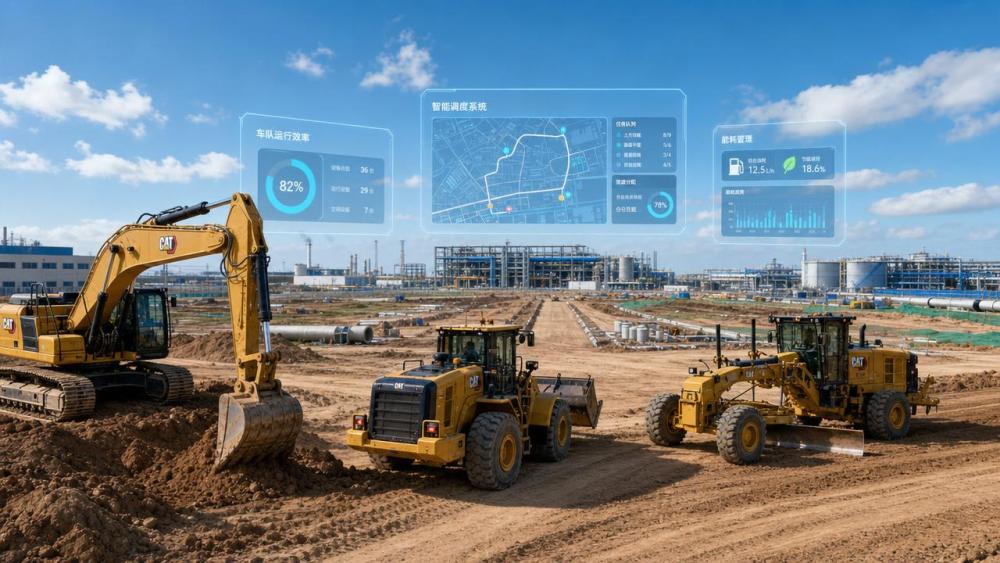
Not every jobsite values the same machine strengths.
A quarry expansion prioritizes breakout force, fuel burn, and structure durability, while urban redevelopment values compact footprints, attachment flexibility, and emissions compliance.
That is why construction equipment trends must be interpreted by scenario, not just by headline technology.
In 2026, five market pressures are reshaping fleet decisions across sectors:
- Higher financing and ownership costs
- Tighter emissions and reporting expectations
- Greater demand for telematics-backed utilization data
- Skilled labor shortages driving automation interest
- More scrutiny on lifecycle value and resale outlook
These construction equipment trends affect both new purchases and fleet restructuring.
The best investment path often depends on where machines work, how often they idle, and what future regulations or digital requirements are likely to apply.
Scenario 1: Heavy earthmoving sites need durability, telematics, and fuel discipline
Large infrastructure, mine stripping, and mass excavation projects still depend on high-output crawler excavators, bulldozers, and wheel loaders.
In these settings, construction equipment trends favor machines that combine structural strength with live performance visibility.
Fuel efficiency now matters as much as peak horsepower.
Machines with optimized hydraulic systems, load-sensing controls, and idle management can lower operating cost without sacrificing production.
Telematics also changes the investment equation.
Live data on idle time, operator behavior, fault codes, and cycle efficiency supports better replacement timing and more accurate asset utilization planning.
Key judgment points for heavy-duty fleet expansion
- Hydraulic efficiency under sustained high load
- Undercarriage wear rate and service access
- Remote diagnostics and predictive maintenance support
- Fuel burn per productive hour, not per shift
- Resale strength in the secondary market
Scenario 2: Urban and confined projects reward compact, low-emission flexibility
Secondary urbanization, utility upgrades, and tight redevelopment zones are reshaping demand for compact machines.
Here, construction equipment trends strongly support mini excavators, compact wheel loaders, and skid steer loaders with versatile attachment ecosystems.
Space limits, local noise rules, and frequent task changes increase the value of machines that switch quickly between digging, lifting, trenching, sweeping, and material handling.
Electrification is most commercially realistic in these scenarios.
Battery-electric compact equipment can reduce emissions exposure, improve operator comfort, and align with municipal sustainability expectations when charging is practical.
However, battery adoption should be matched to duty cycle, charging windows, and climate conditions.
What to verify before choosing compact or electric models
- Attachment compatibility and hydraulic flow range
- Battery runtime during peak daily usage
- Charging infrastructure at temporary or rotating sites
- Transport ease between multiple small jobs
- Compliance with low-emission urban access rules
Scenario 3: Precision grading and linear infrastructure depend on smart control readiness
Road building, airport construction, and large industrial pads demand repeatable surface accuracy.
In these environments, construction equipment trends center on grade control integration, sensor accuracy, and operator-assist systems.
Motor graders and dozers with factory-ready GPS, IMU, and laser compatibility can shorten setup time and reduce rework.
The productivity benefit is not only technical.
Better grading precision reduces wasted material, lowers pass counts, and improves schedule confidence across multi-stage infrastructure programs.
Construction equipment trends also show a rising premium on software openness.
Equipment that integrates with common site modeling and fleet platforms creates more value than isolated control systems.
How scenario needs differ across major equipment applications
Practical fleet adaptation strategies shaped by construction equipment trends
The most resilient strategies avoid one-size-fits-all buying.
Instead, they align machine categories with work profiles, digital maturity, and regulatory direction.
- Audit current utilization by machine class, site type, and idle behavior.
- Separate core production assets from flexible support machines.
- Prioritize telematics-ready replacements where data gaps are largest.
- Test electrified compact equipment in predictable urban duty cycles.
- Choose grade-control-ready platforms for future software scalability.
- Compare purchase cost against service access, uptime support, and resale value.
These actions turn construction equipment trends into measurable investment logic.
They also reduce the risk of overbuying specification that never improves actual site productivity.
Common misreads that weaken 2026 fleet investment decisions
A frequent mistake is treating automation as immediate autonomy.
Many construction equipment trends point first toward operator assist, remote diagnostics, and semi-automated control, not full driverless deployment.
Another misread is focusing only on purchase price.
Machines with stronger telematics, better hydraulic efficiency, or easier maintenance may deliver lower total cost even when acquisition cost is higher.
Electrification can also be overestimated or underestimated.
It is highly attractive in certain compact, regulated, and repetitive applications, but less mature in nonstop heavy production cycles.
Finally, fleet planning often overlooks software compatibility.
Disconnected systems limit the value of machine data, especially when operations span mixed brands and multiple jobsite types.
Turning construction equipment trends into the next investment move
The most valuable construction equipment trends for 2026 are those tied to real operating scenarios.
Fuel discipline, telematics visibility, compact electrification, precision control, and lifecycle value all matter, but not equally in every environment.
A stronger next step is to map each equipment category against project mix, duty cycle, compliance pressure, and digital readiness.
That process reveals which assets should be upgraded, where technology pilots make sense, and which machines still have room to perform.
EMD supports this decision path through continuous intelligence on excavators, loaders, graders, bulldozers, and compact equipment.
With sharper scenario analysis, construction equipment trends become a practical tool for smarter fleet investment rather than a moving target.