
Related News
- 00
0000-00
How to size heavy-duty loaders for North American mining operations - 00
0000-00
How altitude affects mining excavator performance in Latin America - 00
0000-00
Caterpillar Launches New Cat 6060 and Upgraded Autonomous Mining System - 00
0000-00
When does eco-friendly construction equipment pay for itself? - 00
0000-00
Will a wheel loader quick coupler fit your existing attachments?
Autonomous construction equipment is moving from pilot projects to active jobsites, promising fewer struck-by incidents, improved consistency, and tighter control over high-risk earthmoving tasks. Yet for quality control and safety managers, the shift also introduces new exposure points: sensor blind spots, software validation gaps, human-machine interface failures, and unclear accountability during remote or semi-autonomous operation. This article examines where autonomous construction can deliver measurable safety gains—and where deployment risks must be controlled before machines operate at scale.
For crawler excavators, wheel loaders, bulldozers, motor graders, and skid steer loaders, autonomy is not a single feature. It is a layered operating model involving perception sensors, geofencing, hydraulic actuation, GNSS positioning, remote supervision, and jobsite governance.
Quality control teams need repeatable grading, digging, loading, and compaction outcomes. Safety managers need predictable machine behavior within a controlled work zone. Autonomous construction can support both goals, but only when deployment is treated as an engineered system rather than a plug-in upgrade.
Where Autonomous Construction Delivers Practical Safety Gains
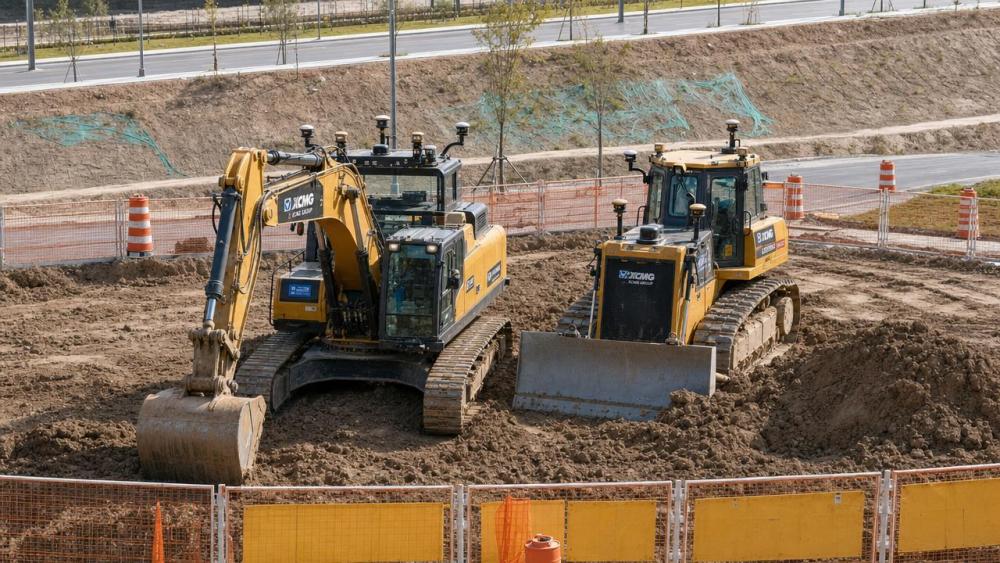
The strongest safety case for autonomous construction appears in repetitive, high-exposure tasks. These include haul road dozing, stockpile loading, trench excavation support, mine stripping, and precision grading near traffic corridors.
In these environments, risk often concentrates around 3 factors: blind spots, unstable ground, and human proximity to moving machinery. Autonomy can reduce exposure by separating operators, spotters, and survey personnel from machine danger zones.
Reduced Struck-By and Caught-Between Exposure
Heavy earthmoving machines frequently operate with limited visibility, especially when buckets, blades, ripper frames, or dump bodies block sightlines. Autonomous construction platforms can combine LiDAR, radar, cameras, ultrasonic sensors, and GNSS boundaries to detect people and obstacles.
A practical system should define at least 3 safety zones: a warning zone, a slow-down zone, and an emergency stop zone. The exact radius depends on machine mass, travel speed, slope, and stopping distance.
More Consistent Execution of High-Risk Tasks
Human operators may perform thousands of repeated movements during a 10-hour shift. Fatigue can affect bucket positioning, blade angle, loading rhythm, and situational awareness after only several hours in harsh conditions.
Autonomous construction systems can follow defined work paths, bucket cycles, slope limits, and grade targets with less variation. For quality control, that consistency supports fewer rework passes and more predictable material movement.
The following table summarizes safety gains that are realistic when autonomous construction is deployed with clear operating rules, supervised commissioning, and verified sensor coverage.
The key conclusion is that autonomous construction improves safety most clearly when it removes people from predictable hazard zones. It does not remove the need for supervision, inspection, or documented operating limits.
Why Safety Managers Should Start with Bounded Workflows
A bounded workflow has limited machine travel, repeatable task geometry, and clear stop conditions. Examples include a 300-meter haul segment, a controlled stockpile bay, or a prepared grading lane.
These conditions make autonomous construction easier to validate because the machine encounters fewer unknowns. They also allow safety teams to measure near misses, stop events, manual overrides, and rework rates over 2–4 weeks.
Deployment Risks That Quality and Safety Teams Must Control
The risk profile of autonomous construction changes as control shifts from direct human operation to software-mediated decision-making. A machine may behave correctly in 95% of routine situations yet fail at the edge cases that matter most.
For quality control and safety managers, the most important question is not whether autonomy works in a demonstration. It is whether the system remains safe during dust, vibration, rain, communication loss, mixed traffic, and incomplete site data.
Sensor Blind Spots and Environmental Degradation
Perception systems depend on sensor placement, cleaning, calibration, and fusion logic. Mud on a camera, dust across LiDAR, or reflective surfaces near metal structures can reduce detection reliability.
A robust autonomous construction plan should require daily walkaround inspection, pre-shift sensor checks, and documented cleaning intervals. On dirty sites, camera and LiDAR surfaces may need inspection every 2–3 operating hours.
Software Validation and Version Control
Software updates can change braking behavior, obstacle classification, hydraulic response, or route planning. Without version control, a site may unknowingly operate 2 machines with different logic under the same work permit.
Quality managers should treat software like a controlled production variable. Every release should be logged, tested in a restricted zone, and linked to acceptance criteria before full autonomous construction operation resumes.
Human-Machine Interface Failures
Many failures occur at the boundary between people and automation. A remote operator may assume the system has detected a worker. A ground supervisor may misunderstand whether the machine is in standby, assisted, or autonomous mode.
Clear interface design matters. Status lights, alarms, control room dashboards, and machine-side indicators should use consistent states such as “manual,” “supervised autonomous,” “remote control,” and “safe stop.”
Accountability During Semi-Autonomous Operation
Semi-autonomous operation can create uncertainty. If a grader follows a 3D model but the supervisor approves the work zone, who owns the risk when the design file is outdated?
Before deployment, sites should define 4 responsibilities: machine authorization, work area release, software approval, and emergency intervention. These roles must be assigned by shift, not assumed informally.
- Confirm who may start, pause, or cancel autonomous construction operations.
- Define who validates digital terrain models and daily boundary changes.
- Record who reviews stop events, warnings, and manual overrides.
- Assign emergency response authority for each active machine zone.
This level of accountability may appear procedural, but it prevents dangerous gaps during shift handovers, subcontractor entry, or unexpected site changes.
Selection Criteria for Safer Autonomous Construction Equipment
Choosing autonomous construction equipment is not only a procurement decision. It is a risk management decision involving machine capability, sensor architecture, hydraulic control precision, data governance, and service readiness.
For EMD’s core equipment categories, the evaluation must match the machine’s real duty cycle. A crawler excavator performing trench work needs different safeguards than a wheel loader cycling between a stockpile and truck queue.
Core Technical Criteria
Safety and quality teams should request evidence, not just feature descriptions. Important documents include sensor coverage maps, stop-distance tests, functional safety concepts, diagnostic logs, and maintenance procedures.
The next table provides a practical procurement checklist for comparing autonomous construction systems before pilot approval or fleet-scale purchase.
The best procurement choice is rarely the system with the longest feature list. It is the system with verifiable controls, maintainable sensors, clear diagnostics, and site-compatible operating limits.
Fit by Machine Category
Crawler excavators require precise boom, arm, bucket, and swing control. Autonomous construction risks increase near trench edges, buried utilities, and workers installing shoring or pipe sections.
Wheel loaders and skid steer loaders need strong pedestrian detection because they work in compact spaces with frequent reversing. Motor graders depend heavily on reliable 3D surface data and calibration.
Bulldozers may be ideal early candidates where the work area is isolated. However, slope stability, blade load, traction loss, and rollover risk should be assessed before autonomous construction begins.
Service Readiness as a Buying Factor
Autonomous machines require more than mechanical maintenance. Sites need sensor replacement procedures, software rollback plans, calibration tools, spare communication hardware, and trained technicians.
A realistic service-level expectation should include response windows, parts availability, update notices, and remote diagnostic support. For critical earthmoving operations, downtime longer than 24–48 hours can disrupt sequencing.
A Controlled Implementation Roadmap for Active Jobsites
Successful autonomous construction programs usually move through staged deployment. Skipping directly from demonstration to full production increases the chance of software, training, and site-control failures.
A disciplined roadmap lets quality control and safety teams prove that the system performs under local soil, weather, traffic, visibility, and productivity conditions.
Five-Step Deployment Sequence
- Site hazard mapping: identify slopes, utilities, pedestrian routes, blind corners, haul roads, and exclusion zones.
- Digital work model validation: verify 3D surfaces, GNSS control points, machine boundaries, and restricted areas.
- Restricted pilot: operate in a closed zone for 5–10 shifts while logging stops, overrides, and deviations.
- Mixed-traffic trial: introduce supervised interaction with trucks, survey teams, or compactors under written rules.
- Production release: approve autonomous construction only after acceptance criteria and emergency procedures are confirmed.
Each step should have measurable exit criteria. For example, a pilot may require no unresolved emergency stops, stable communication uptime, and documented operator intervention response within an agreed time window.
Metrics That Matter After Go-Live
After deployment, teams should track leading indicators, not only incidents. Useful metrics include stop events per shift, false detection rate, manual override frequency, route deviations, and grade rework percentage.
For quality managers, compare autonomous construction output against survey data, payload records, cycle times, and design tolerances. For safety managers, review near misses, exclusion-zone breaches, and alarm response times weekly.
Training Requirements for Supervisors and Operators
Training should include at least 3 groups: remote operators, ground supervisors, and maintenance personnel. Each group needs different competency checks before working near autonomous machines.
Remote operators need mode-control practice and emergency stop drills. Supervisors need exclusion-zone control and handover procedures. Maintenance teams need lockout steps for sensors, actuators, and communication systems.
Common Mistakes and Practical Risk Controls
Many autonomous construction failures are not caused by advanced technology defects. They result from ordinary site management gaps: unclear boundaries, dirty sensors, untrained subcontractors, or outdated digital terrain files.
The following controls help convert autonomy from an experimental feature into a reliable operating discipline for earthmoving fleets and infrastructure programs.
Mistake 1: Treating Autonomy as an Operator Replacement
Autonomous construction does not eliminate human responsibility. It changes the role from direct manipulation to supervision, exception handling, verification, and workflow design.
Sites should maintain human oversight ratios based on machine count, task complexity, and traffic density. A single supervisor monitoring several machines needs clear escalation rules and dashboard visibility.
Mistake 2: Ignoring Low-Latency Communication Needs
Remote or supervised autonomous operation depends on stable communication. Packet loss, dead zones, or delayed video can turn a controlled operation into an unacceptable hazard.
Before go-live, teams should test communication across the full machine route, including ramps, pits, stockpiles, tunnels, and laydown areas. Backup procedures should define what happens after 1, 5, and 30 seconds of signal loss.
Mistake 3: Approving Work Without Digital Change Control
Autonomous construction depends on digital instructions. If a haul route, trench boundary, grade model, or utility exclusion zone changes, the machine may continue following yesterday’s plan.
A controlled update workflow should require design file approval, timestamped release, supervisor confirmation, and machine-side verification. Even a small 2-meter boundary shift can matter near people or utilities.
Daily Field Checklist
- Inspect sensor lenses, mounts, wiring, and protective covers before the first shift.
- Confirm current software version and approved operating mode.
- Verify geofence boundaries against physical barriers and site drawings.
- Test emergency stop devices from the machine, remote station, and supervisor location.
- Review stop events, alarms, and manual overrides from the previous shift.
- Brief subcontractors on exclusion zones before they enter the work area.
This checklist is simple, but it closes the most common operational gaps. Repeating it daily also creates useful audit records for incident reviews and process improvement.
Final Guidance for Safer Autonomy at Scale
Autonomous construction can reduce exposure, improve repeatability, and support safer execution of demanding earthmoving work. The gains are strongest when machines operate in bounded, well-mapped, and actively supervised zones.
The risks are equally real. Sensor degradation, software changes, communication loss, interface confusion, and unclear accountability can turn automation into a new source of operational uncertainty.
For quality control and safety managers, the right approach is staged validation: assess the machine, verify the digital model, test the work zone, train the people, and monitor performance through measurable indicators.
Global Earth-Mover Dynamics supports decision-makers with technical intelligence on excavators, loaders, graders, bulldozers, skid steers, remote control systems, and autonomous construction deployment trends. To evaluate safer implementation paths for your fleet or project environment, contact us now to discuss product details, risk controls, and customized solutions.