
What should an OEM equipment cooperation agreement cover?
An OEM equipment cooperation agreement is the foundation for managing risk, quality, intellectual property, and commercial expectations across complex machinery partnerships.
For business evaluators in earthmoving equipment, the strongest agreements translate technical capability into enforceable duties, measurable performance, and financially credible remedies.
Before approving a partner, evaluators should ask whether the agreement protects supply continuity, product compliance, proprietary technology, and lifecycle profitability under realistic operating conditions.
Start with the commercial model and decision rights
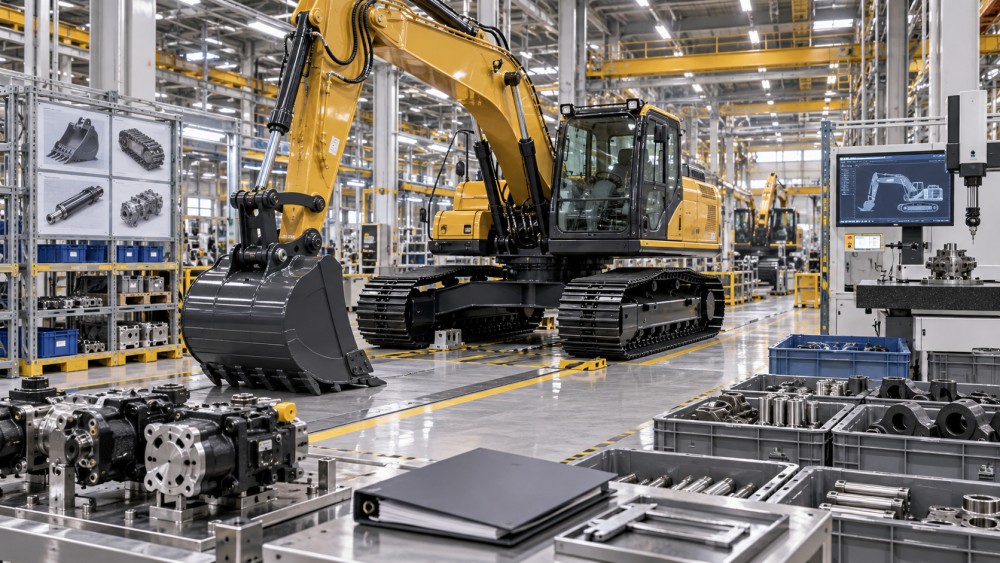
An OEM equipment cooperation agreement should first identify the relationship model: contract manufacturing, component supply, private labeling, joint development, licensed production, or regional distribution.
Those models create different obligations. A supplier producing an excavator hydraulic pump carries different risks from a partner co-developing an autonomous grading control platform.
The agreement should define each party's legal role, including manufacturer of record, importer, distributor, intellectual property owner, warranty provider, and regulatory responsible entity.
Business evaluators should reject vague language stating that parties will “cooperate closely.” Critical responsibilities must be assigned to named functions, approval stages, and accountable organizations.
For earthmoving equipment, decision rights should cover product architecture, supplier selection, design changes, plant relocation, production capacity, market release, and field-service policy.
It is equally important to specify which decisions require written approval. This prevents a supplier from changing a controller, casting source, battery module, or software interface unilaterally.
The agreement should also establish a governance structure. Typical arrangements include executive steering meetings, operational reviews, engineering change boards, and escalation contacts for urgent quality incidents.
Meeting frequency alone is insufficient. The contract should specify deliverables, voting rights, recordkeeping requirements, and deadlines for resolving disputed technical or commercial decisions.
Where one partner depends heavily on the other, evaluators should request step-in rights. These allow intervention when production, support, or regulatory obligations are seriously threatened.
Define equipment scope through controlled technical specifications
A useful OEM equipment cooperation agreement does not merely name product families. It incorporates controlled specifications that identify exactly what equipment, components, software, and documentation are included.
For crawler excavators, specifications may address operating weight, hydraulic breakout force, fuel consumption, cycle times, attachment compatibility, cab safety, telematics, and ambient operating limits.
For wheel loaders and bulldozers, the scope should include payload ratings, tractive effort, transmission performance, tire or track configurations, structural durability, and expected maintenance intervals.
Motor graders require particularly precise language around blade control, GPS compatibility, laser sensing, grade accuracy, software calibration, and support for regional road-construction standards.
The agreement should identify document hierarchy. If drawings, purchase orders, test procedures, brochures, and emails conflict, evaluators need certainty about which source governs.
Technical baselines should be version controlled. Each approved drawing, bill of materials, software release, test specification, and service manual needs an identifiable revision number.
Acceptance criteria should be measurable rather than aspirational. Terms such as “high performance” or “market-leading reliability” have little value without defined test methods and pass thresholds.
Require factory acceptance testing, prototype validation, pilot production review, and final inspection requirements where appropriate. The responsible party should bear retest costs after failure.
For connected machines, the scope must include embedded software, cloud services, application programming interfaces, over-the-air updates, diagnostic tools, and cybersecurity maintenance responsibilities.
Allocate manufacturing, quality, and supply-chain accountability
Evaluators should examine whether the proposed partner can actually deliver the agreed equipment at scale. The contract must convert capability claims into production and quality obligations.
Capacity commitments should state annual volume, ramp-up milestones, line availability, critical-tooling ownership, labor assumptions, and the response required when demand exceeds forecasts.
Minimum order quantities should be balanced against forecast flexibility. An OEM should not be trapped into excessive inventory simply because a supplier requires inflexible batch production.
Supply-chain clauses should identify critical components, approved sub-suppliers, country-of-origin requirements, lead-time targets, and notification duties for shortages or allocation risks.
Subcontracting requires explicit control. The manufacturing partner should not transfer fabrication of frames, hydraulic valves, batteries, or safety-critical electronics without prior written consent.
Quality provisions should incorporate recognized systems such as ISO 9001 while adding equipment-specific expectations. A generic quality certificate does not prove reliable heavy-machinery production.
The agreement should grant audit rights covering factories, quality records, calibration systems, supplier controls, traceability, and corrective-action performance. Remote audits may supplement, not replace, necessary site access.
Define defect classifications and response times. Safety defects, repeated hydraulic leaks, emissions failures, and software faults need faster escalation than minor cosmetic nonconformities.
Containment, root-cause analysis, corrective actions, and verification should have contractual deadlines. The agreement should specify who pays for sorting, rework, field repair, transport, and customer communication.
Build pricing mechanisms that remain workable during volatility
Price should be evaluated as a lifecycle mechanism, not a single unit figure. Heavy equipment partnerships often fail when pricing cannot absorb commodity, currency, and logistics volatility.
The contract should separate equipment price, tooling charges, engineering fees, software licenses, freight, packaging, spare parts, training, and field-service support where commercially relevant.
For major fabricated structures, pricing formulas may reference steel indexes. For electric machinery, agreements may separately address batteries, rare-earth materials, power electronics, and recycling obligations.
Any adjustment mechanism needs a baseline, index source, calculation method, review frequency, notification period, and cap. Otherwise, price escalation becomes difficult to verify or forecast.
Evaluators should confirm whether the supplier receives deposits, progress payments, milestone payments, or payment after acceptance. Payment timing directly affects leverage during late delivery or quality disputes.
Currency exposure should be assigned clearly. If purchases are made in euros but sales occur in dollars, the agreement should specify hedging expectations or agreed adjustment thresholds.
Tooling provisions deserve close attention. They should identify ownership, depreciation treatment, maintenance, storage, transfer rights, insurance, and access when the relationship ends.
Volume rebates and exclusivity incentives should be tied to reliable data. Define the relevant sales period, qualifying products, reporting process, credit timing, and treatment of returns.
A strong commercial review clause permits structured renegotiation after defined events. It should not become an unrestricted right for either party to reopen settled pricing each quarter.
Protect intellectual property, engineering data, and machine information
Intellectual property allocation is often the most strategic issue in an OEM equipment cooperation agreement, especially where equipment differentiation depends on hydraulics, automation, or telematics.
The contract should distinguish background intellectual property from newly developed intellectual property. Existing designs and know-how should not become shared merely because they are used in cooperation.
Foreground intellectual property requires more careful treatment. Evaluators should determine who owns jointly developed designs, inventions, software enhancements, test data, and technical documentation.
Joint ownership can create operational friction across jurisdictions. In many cases, defined ownership with perpetual, field-limited licenses provides a more practical commercial result.
Specify permitted use of drawings, bills of materials, firmware, diagnostic data, calibration files, and service procedures. Access should match the party's role and survive only where needed.
Reverse engineering, competitive use, and disclosure restrictions should address the reality of global machinery supply chains. Confidentiality language alone may not prevent strategic misuse of technical information.
Machine data should be treated as a separate asset. Agreements should define ownership and use rights for location data, utilization records, fault codes, operator behavior, and maintenance histories.
Data access affects aftermarket economics, predictive maintenance, fleet analytics, and customer relationships. The OEM should retain sufficient access to support machines under its brand.
Cybersecurity obligations should include vulnerability reporting, secure development practices, patch support, access management, incident cooperation, and responsibilities after an unauthorized system intrusion.
Make compliance, warranty, and field support enforceable
Earthmoving machinery is sold into diverse legal environments. The agreement should assign responsibility for emissions, safety, electromagnetic compatibility, import requirements, labeling, and technical documentation.
Compliance clauses should identify the relevant markets and standards. A machine engineered for one emissions regime may require different engines, aftertreatment systems, labels, or operator manuals elsewhere.
The manufacturer should provide evidence of conformity, including test reports, certificates, declarations, change notifications, and records needed for customs, registration, or customer tenders.
Regulatory change management matters increasingly for non-road machinery. The agreement should specify who monitors new rules, funds redesign work, and bears inventory exposure after transition deadlines.
Warranty terms should define coverage duration, hour limits, exclusions, repair authorization, labor rates, parts reimbursement, response times, and claim-administration requirements.
Do not accept a warranty that promises only replacement parts when equipment operates in remote mines, construction sites, or infrastructure corridors. Downtime labor and logistics may dominate actual losses.
Reliability obligations should include measurable targets where feasible. Examples include mean time between failures, availability percentages, repeat-repair limits, and service-parts fill-rate requirements.
Recall provisions must state decision authority, notification duties, cost allocation, customer communication controls, and access to traceability records. Safety recalls should not depend on prolonged commercial negotiation.
Training and service capability should also be contractual. Define technician training, diagnostic-tool access, technical hotline support, spare-parts stocking, and documentation update commitments.
Plan for failure, transition, and a controlled exit
Business evaluators should assess the agreement under stress, not only during normal production. The critical question is whether the OEM can keep customers supported when cooperation breaks down.
Termination rights should cover persistent quality failures, missed delivery commitments, insolvency, sanctions exposure, material compliance breaches, confidentiality violations, and unauthorized changes of control.
Each termination trigger should include a practical cure process. Some failures can be corrected quickly, while safety breaches or intentional intellectual property misuse may justify immediate action.
Transition assistance is essential for long-lived equipment. The supplier may need to continue producing parts, transfer tooling, provide drawings, support qualification of a replacement source, and maintain software access.
For excavators, loaders, graders, bulldozers, and skid steers, service obligations can last many years after final machine production. Parts availability should have a defined minimum period.
Inventory ownership and handover procedures should be clear. This includes finished machines, work in progress, service parts, raw materials, supplier-owned inventory, and customer-specific tooling.
Liability provisions should match real exposure. Liability caps may be appropriate for routine commercial losses, but should be reconsidered for fraud, confidentiality breaches, injury claims, and intellectual property infringement.
Insurance requirements should identify relevant coverage, limits, named insureds, certificate obligations, and survival periods. Product liability and recall coverage are especially important for branded machinery programs.
Finally, select governing law, dispute resolution, language priority, and venue deliberately. Cross-border agreements need procedures that remain workable when urgent injunctions, evidence preservation, or payment disputes arise.
Use the agreement as an approval tool, not a legal formality
For business evaluators, a complete agreement provides a structured way to test whether a proposed partner is commercially mature, technically credible, and operationally dependable.
A capable partner should be able to support detailed specifications, traceable quality controls, transparent pricing, realistic warranty commitments, and defensible positions on intellectual property and data.
Conversely, resistance to measurable obligations often exposes a gap between sales presentations and operating capability. That signal should influence supplier selection, not merely contract wording.
The best OEM equipment cooperation agreement balances protection with execution. It gives each party enough clarity to invest confidently while preserving remedies when performance fails.
Before approval, evaluators should test the document against likely scenarios: a delayed controller shipment, an emissions rule change, a field recall, a software vulnerability, or supplier insolvency.
When the agreement produces clear answers to those scenarios, it becomes more than a legal document. It becomes a practical operating framework for reliable, scalable equipment cooperation.