
Related News
- 00
0000-00
What determines equipment durability on airport construction sites? - 00
0000-00
How terrain and dealer support shape machinery selection in Latin America - 00
0000-00
How market insight content analysis reveals shifts in equipment demand - 00
0000-00
When do OEM heavy machinery parts justify their higher cost? - 00
0000-00
What to compare among construction equipment manufacturers in North America
What Determines Equipment Durability on Airport Construction Sites?
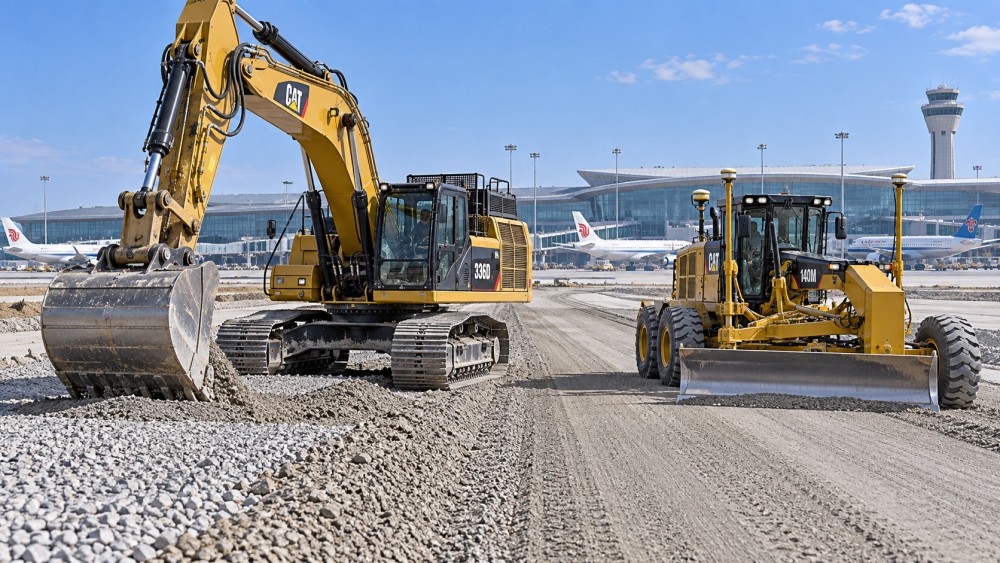
Airport work is hard on equipment in ways that ordinary commercial earthmoving often is not. A machine may spend one shift cutting through dense, abrasive fill, the next supporting drainage work in wet ground, and then be expected to hold a tight finish tolerance on a runway subgrade. It may also need to work around live operations, restricted haul routes, fuel-control rules, and a schedule with very little room for an unexpected hydraulic failure.
That is why airport construction equipment durability cannot be judged by machine age, paint condition, or purchase price alone. Durability is the ability of an excavator, loader, bulldozer, grader, or compact machine to retain safe, predictable performance after repeated exposure to the loads, contamination, vibration, heat cycles, and precision demands of an airfield project.
For project managers, the practical question is not simply, “Which machine is strongest?” It is: “Which machine will remain controllable, serviceable, and accurate through this project’s actual duty cycle?” The answer depends on structural design, drivetrain and hydraulic protection, operator behavior, maintenance access, attachment matching, and the ground conditions created by the job itself.
Durability Starts with the Real Duty Cycle, Not the Brochure
Airport packages often combine several forms of severity that are easy to underestimate during fleet planning. Large cut-and-fill operations impose sustained traction and breakout loads. Crushed aggregate accelerates wear at bucket edges, loader linkages, undercarriages, and grader moldboards. Fine dust enters cooling packs and electrical connections. Wet utility corridors create an entirely different set of risks: track packing, corrosion, unstable working platforms, and contaminated hydraulic service points.
A machine can be well suited to one of these conditions and poorly suited to another. A crawler dozer with the right undercarriage configuration may tolerate heavy pushing over uneven fill better than a wheeled unit, but it can suffer rapid wear when abrasive material is allowed to pack around rollers and sprockets. A wheel loader may move aggregate efficiently, yet repeated high-impact loading into trucks can expose looseness in pins, bushings, articulation joints, and boom structures if the bucket and operating technique are mismatched.
The most durable fleet selection begins with production assumptions that are specific: material type, haul distance, expected ground bearing conditions, daily operating hours, attachment use, grading tolerance, and access to service bays. “Heavy duty” is not a duty-cycle definition. A machine pushed near its sustained thermal or hydraulic limits for weeks will age differently from the same model used intermittently on a general site.
Structural Integrity Is More Than Thick Steel
Frames, booms, loader arms, blade circles, drawbars, and axle housings carry the accumulated consequences of poor site preparation and rushed operation. Fatigue damage usually does not begin with one dramatic overload. It builds through thousands of shock events: travelling too fast across rough haul routes, side-loading an excavator bucket, ramming stockpiles, turning a loader sharply with a loaded bucket, or using a grader blade as a pry bar.
On airfield projects, surface conditions can change quickly as proof rolling, stabilization, drainage installation, and aggregate placement move across the work zone. Equipment that repeatedly transitions between hard rock, loose granular fill, and soft wet areas sees irregular loading through its chassis. This is where weld quality, pin retention, bearing protection, articulation design, and sensible load paths become more meaningful than a headline horsepower figure.
Inspections should focus on early signals: paint cracking near high-stress joints, movement at pins, unusual boom drift, loosened fasteners, uneven tire wear, recurring blade-circle adjustment, and changes in track tension. These are not cosmetic issues. They can indicate that a component is losing alignment before it fails visibly.
For graders in particular, structural durability and grading quality are connected. A loose circle, worn side shift components, or play in steering and articulation does not merely increase repair exposure; it makes consistent finish work harder. On a runway, taxiway, or apron formation, the cost of correcting an inaccurate pass can extend well beyond the machine itself.
Hydraulics and Cooling Systems Often Decide Uptime
Modern earthmoving equipment relies on hydraulic systems that do far more than lift and curl. They manage proportional control, work modes, travel functions, blade movement, implement response, and increasingly, machine-control interfaces. On airport construction sites, a hydraulic system must remain stable while operators alternate between high-force excavation, repetitive loading, fine grading, and attachment work.
Heat is the quiet enemy. High ambient temperature, clogged cooling packs, extended low-speed high-load operation, and poor airflow around stockpiles can all raise operating temperatures. Once a machine is regularly running hot, hydraulic oil, hoses, seals, electrical components, and aftertreatment systems may all be under added stress. The dashboard warning is not the beginning of the problem; it is often the point at which several smaller issues have become visible.
Dust control deserves similar attention. Fine material from cement-treated layers, dry aggregate, and unpaved access routes can restrict coolers and contaminate filters faster than a standard maintenance interval assumes. A good service plan uses condition checks rather than treating the calendar as the only trigger. Operators should be able to report elevated temperatures, slow implement response, noisy pumps, or repeated filter warnings without being dismissed as overly cautious.
Hydraulic cleanliness is especially important for machines used in precision work. A motor grader with 3D machine control, for example, depends on dependable electro-hydraulic response as well as accurate positioning inputs. If the hydraulic system is sluggish or inconsistent, the value of the control technology is reduced. Precision systems cannot compensate indefinitely for mechanical wear or contaminated fluid.
Undercarriages, Tires, and Ground Contact Take the Daily Punishment
The undercarriage is frequently one of the largest lifecycle cost centers on tracked equipment, yet it is often inspected less carefully than the engine compartment. On an airport site, track components face abrasive fines, sharp aggregate, long travel distances, and material packing. Excessive track tension can accelerate wear; insufficient tension can increase derailment risk. Neither condition should be managed by guesswork.
For dozers and crawler excavators, project managers should ask how often the machines will travel versus work in place, whether material will pack in the track frame, and whether the chosen shoe width matches the ground condition. Very wide shoes may reduce ground pressure in soft material but are not automatically the best choice for every high-traction or side-slope application. The machine needs to be configured for the task, not merely made as wide as possible.
Wheeled machines face their own trade-offs. Tire cuts, heat buildup, sidewall damage, and uneven wear can become common when loaders or compact machines shuttle across sharp aggregate and temporary haul roads. Tire selection should reflect load, travel distance, surface type, and the need for flotation or traction. A tire that performs well in a yard may not survive repeated aggressive loading on coarse base material.
Daily cleaning is not housekeeping for its own sake. Removing packed material from undercarriages, articulation areas, steps, radiator zones, and sensor locations helps preserve access for inspection and prevents wear conditions from becoming hidden. It is a small discipline with a large effect on machine visibility and serviceability.
Precision Requirements Change the Meaning of “Durable”
Airport construction places unusual emphasis on geometry. Grading equipment may be working to tight design surfaces before pavement layers are placed, while drainage slopes and tie-ins need to remain consistent across large areas. In this environment, a durable machine is one that holds calibration, control response, and mechanical repeatability—not just one that keeps moving.
Machine-control sensors, GNSS antennas, masts, cables, and display hardware add another maintenance layer. These components should be protected from impact, vibration, theft exposure, and careless pressure washing. Their condition also needs to be verified after blade strikes, transport moves, or significant repairs. It is easy to assume a system is accurate because it powers on. That assumption can be expensive.
The experienced approach is to separate machine-control confidence from final quality assurance. Digital guidance helps operators work efficiently and reduces unnecessary passes, but it does not replace survey checks, process control, or the project’s stated tolerance requirements. A grader can follow a model faithfully while a worn cutting edge, loose linkage, or incorrect setup still affects the result.
This is one reason Global Earth-Mover Dynamics follows graders alongside crawler excavators, loaders, bulldozers, and compact equipment. The machines have different roles, but airfield productivity depends on how force, material flow, and spatial accuracy work together. A powerful dozer cannot rescue poor finish control indefinitely, and a precise grader cannot compensate for badly prepared material beneath its blade.
Operator Practice Can Preserve or Consume a Machine
Two comparable machines can emerge from the same project in very different condition. The difference is often not brand or model. It is operating practice. Harsh direction changes, unnecessary high engine speed, repeated end-stop hydraulic operation, poor warm-up behavior, overloading, and travel at inappropriate speed all convert production pressure into wear.
Airport schedules can encourage shortcuts. When paving windows, restricted access periods, or weather events compress the programme, crews may be tempted to keep working through warning signs. That is understandable, but it is rarely efficient. A controlled pause to clean a cooling pack, inspect a leaking hose, adjust a track, or replace a damaged cutting edge is generally easier to manage than a failure in the middle of a critical placement sequence.
Operators also need clarity on what “normal” looks and feels like for each machine. A brief daily walk-around is useful only when the person doing it knows to notice new seepage, damaged guards, unusual cylinder scoring, loose bucket teeth, frayed wiring, or a change in exhaust-system behavior. Reporting culture matters. If operators believe that every observation will be treated as a complaint, small defects will be reported late.
Maintenance Planning Must Match the Project’s Critical Path
A durable fleet is supported by maintenance that is planned around production reality. That means service access, filter availability, lubrication routines, clean fueling practices, and repair authority need to be addressed before the busiest phase of the job. The right question is not whether a contractor has a maintenance plan; almost every contractor does. The useful question is whether that plan still works during night shifts, remote work fronts, rain delays, and high-output earthmoving periods.
Condition monitoring can help, particularly where fleet telematics identify idle time, fault codes, temperature trends, fuel use, or excessive operating modes. But data should guide inspection rather than replace it. A telematics platform may reveal a pattern of high coolant temperature; it will not always tell the site team whether the root cause is debris buildup, a damaged fan, an overloaded duty cycle, or an operator workaround.
Parts strategy is equally practical. For an airfield project, it is sensible to identify likely wear items and failure-critical components in advance: filters, hoses, bucket teeth, cutting edges, pins, seals, sensor components, and consumables appropriate to the fleet. The exact stock level depends on project duration, dealer support, equipment age, and contractual risk, but waiting until a component fails to discover its lead time is not a durability strategy.
A Better Evaluation Method for Airport Equipment
When evaluating equipment for airport work, compare more than rated output. Review the expected duty cycle, cooling capacity and cleaning access, undercarriage or tire configuration, hydraulic responsiveness, attachment compatibility, machine-control integration, local parts coverage, and the skill level required to operate and maintain the machine properly. Then consider how a breakdown would affect the sequence of work. A compact loader used for support tasks may be inexpensive, but its failure can still delay survey support, cleanup, material handling, or utility crews.
The strongest durability decisions are usually made before mobilization. They recognize that an airfield is not one uniform jobsite and that equipment must survive both its heaviest work and its most precise work. In practice, reliable airport construction equipment durability comes from matching the machine to the material, protecting its systems from heat and contamination, enforcing disciplined operation, and responding early when wear starts to show. That is less dramatic than choosing the largest machine available, but it is usually what keeps the programme moving.