
Related News
- 00
0000-00
How to size heavy-duty loaders for North American mining operations - 00
0000-00
How altitude affects mining excavator performance in Latin America - 00
0000-00
Caterpillar Launches New Cat 6060 and Upgraded Autonomous Mining System - 00
0000-00
When does eco-friendly construction equipment pay for itself? - 00
0000-00
Will a wheel loader quick coupler fit your existing attachments?
Technical Comparison for Heavy Equipment: What Matters Beyond Engine Power
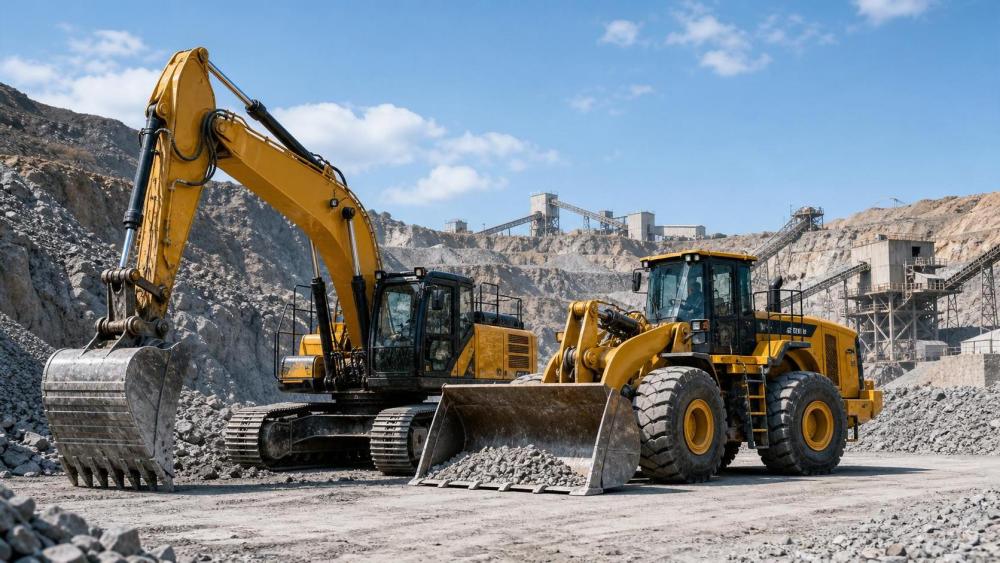
In any technical comparison for heavy equipment, engine power is only the starting point.
Rated horsepower looks simple on paper, but field performance rarely follows one headline number.
A crawler excavator, wheel loader, motor grader, bulldozer, or skid steer succeeds through system balance.
That balance includes hydraulic efficiency, breakout force, traction, precision, thermal control, uptime, and emissions behavior.
For EMD, this is where serious evaluation begins.
The strongest technical comparison for heavy equipment connects lab data with actual duty cycles.
It asks how machines dig, push, grade, load, and recover under unstable surfaces and long operating hours.
It also checks how well they support decarbonization, autonomy, and reliable fleet economics.
Why Engine Power Alone Distorts a Technical Comparison for Heavy Equipment
High engine output does matter, especially in severe digging, steep pushing, and sustained loading conditions.
Still, engine power is only potential.
The real question is how efficiently that power reaches the implements, travel system, and control functions.
An excavator with smoother electro-hydraulic tuning may outperform a higher-powered rival in trench accuracy and fuel burn.
A bulldozer with stronger torque delivery and better track-ground interaction may push more material per hour.
A motor grader can also win through blade stability and sensor integration, not raw horsepower.
This is why a technical comparison for heavy equipment should separate peak ratings from usable productivity.
Hydraulic Efficiency and Breakout Force Define Real Work Output
Hydraulics are the working muscle of heavy equipment.
In excavators and skid steers, hydraulic losses quickly reduce practical digging and lifting performance.
In loaders, hydraulic response affects bucket fill factor, cycle speed, and operator rhythm.
Breakout force deserves equal attention in any technical comparison for heavy equipment.
It indicates how effectively a machine can penetrate compacted material, sticky clay, or blasted rock fragments.
But breakout force should never be read in isolation.
Check the full hydraulic map, pump flow, pressure curve, regeneration logic, and attachment compatibility.
From recent market shifts, a clearer signal is the move toward smarter hydraulic control rather than brute force alone.
Key hydraulic checks
- Pump flow under sustained load, not only peak specification.
- Actuator response during multi-function operation.
- Bucket, blade, or lift arm breakout force at realistic working positions.
- Hydraulic oil temperature stability in long shifts.
- Auxiliary circuit performance for attachments and specialized tools.
Control Precision Is a Core Metric, Not a Premium Feature
Precision matters more as projects become tighter, faster, and more data-driven.
For graders, GPS and laser guidance shape the quality of the final surface.
For excavators, smooth metering improves trench geometry, pipe placement, and rework control.
For loaders and dozers, precision reduces tire slip, overcutting, and unnecessary passes.
This also means a technical comparison for heavy equipment should include software behavior.
Latency, joystick mapping, electro-hydraulic proportional logic, and automated assist functions all matter.
A machine that feels predictable often delivers better daily output than one with higher nominal capacity.
Practical precision indicators
- Repeatability of blade, bucket, or lift arm movement.
- Response delay between operator input and machine action.
- Quality of grade control, payload assist, and return-to-position functions.
- Accuracy retention after long operating periods and temperature rise.
Duty-Cycle Stability Separates Brochure Performance from Site Performance
A credible technical comparison for heavy equipment must reflect duty-cycle reality.
Mining benches, highway subgrade work, quarry loading, and landfill operations stress machines very differently.
What matters is stable output after six, eight, or twelve hours.
Cooling system reserve, filtration quality, undercarriage wear behavior, and structural fatigue resistance become decisive here.
A machine that derates under heat or loses responsiveness under dust will undermine production targets.
In actual operations, this usually appears before major failures do.
What to test during duty-cycle review
- Track fuel burn, hydraulic temperature, and cycle times through a full shift.
- Record any power derating, sensor faults, or reduced implement speed.
- Inspect wear zones, especially pins, bushings, cutting edges, and undercarriage contact points.
- Compare productivity at shift start and shift end.
Serviceability and Uptime Shape the True Cost of Ownership
Even a strong machine can become a weak investment if service access is poor.
This is another reason technical comparison for heavy equipment should go beyond performance claims.
Check daily inspection points, filter access, hose routing, sensor placement, and fault-code visibility.
Well-designed serviceability reduces maintenance time, contamination risk, and troubleshooting delays.
Telematics adds another layer.
Remote diagnostics, idle tracking, fault prediction, and utilization alerts improve fleet planning and spare parts readiness.
For mixed fleets, interoperability of data platforms is becoming a practical decision factor.
High-value serviceability questions
- How long do routine checks take per machine per day?
- Can common failure points be reached without major disassembly?
- Are wear parts standardized across fleet models?
- Does the OEM support fast diagnostics and software updates in the field?
Lifecycle Emissions and Energy Strategy Now Belong in Every Technical Comparison for Heavy Equipment
Emissions compliance is no longer a side note.
Stage V, Tier 4 Final, and equivalent regional requirements already influence design, maintenance, and operating cost.
More importantly, buyers are beginning to compare lifecycle carbon intensity, not just tailpipe output.
That includes fuel efficiency, idle management, hybrid functions, electrified auxiliaries, and future autonomy readiness.
For EMD, this trend is especially visible in urban equipment, quarry fleets, and regulated infrastructure tenders.
A modern technical comparison for heavy equipment should ask whether a platform can support the next compliance cycle.
That is often a smarter decision lens than focusing on present-day engine output alone.
A practical comparison table
How to Build a Better Evaluation Framework
The best technical comparison for heavy equipment uses weighted criteria instead of a single-score shortcut.
Start by matching the machine to material type, terrain, shift length, attachment mix, and emissions constraints.
Then rank metrics by project impact.
In rock excavation, breakout force and durability may dominate.
In airport grading, precision and control architecture may matter more.
In urban work, noise, compact dimensions, attachment flexibility, and low-emission operation can become the deciding factors.
That framework makes technical comparison for heavy equipment more defensible in procurement and tender review.
It also produces better long-term fleet decisions.
When comparing machines, treat engine power as the entry point, not the conclusion.
Look deeper into hydraulics, precision, durability, uptime, and emissions readiness.
That approach reflects how modern infrastructure equipment actually creates value.
For teams building sharper technical standards, EMD’s perspective is simple: compare the whole machine, under real work, across its full operating life.