
Related News
- 00
0000-00
How to size heavy-duty loaders for North American mining operations - 00
0000-00
How altitude affects mining excavator performance in Latin America - 00
0000-00
Caterpillar Launches New Cat 6060 and Upgraded Autonomous Mining System - 00
0000-00
When does eco-friendly construction equipment pay for itself? - 00
0000-00
Will a wheel loader quick coupler fit your existing attachments?
Equipment Application Reference: Choosing the Right Earthmoving Setup
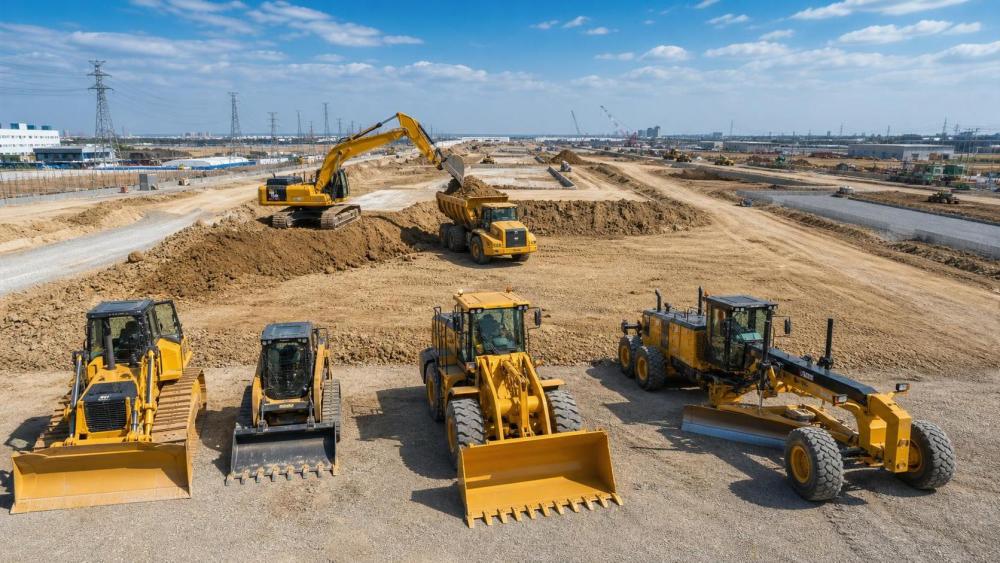
For enterprise decision-makers navigating infrastructure investment, an effective equipment application reference is more than a checklist. It is a practical decision framework.
The right earthmoving setup affects schedule certainty, fuel use, operator efficiency, maintenance exposure, and asset resale value.
That is why a strong equipment application reference should connect machine selection with job conditions, site constraints, and long-term operating strategy.
In practice, most underperforming fleets do not fail because one machine is weak. They fail because the overall setup is mismatched.
A crawler excavator may be oversized for trenching. A wheel loader may cycle well but wait on trucks. A grader may lack guidance accuracy.
This equipment application reference explains how to evaluate crawler excavators, wheel loaders, motor graders, bulldozers, and skid steers as one coordinated system.
The goal is simple: better productivity, lower lifecycle risk, and a setup that supports decarbonization and automation without hurting output.
Start with the Job, Not the Machine
A useful equipment application reference always begins with the work profile. Machine brochures come later.
Break the project into material type, haul distance, ground condition, weather pattern, finish tolerance, shift pattern, and compliance requirements.
From there, define what success means. Is the priority production volume, grading precision, turnaround time, fuel reduction, or lower labor dependency?
This step sounds basic, but it changes the setup dramatically. A quarry stripping package is not a highway shoulder package.
The same applies to urban utility work. Tight access, noise limits, and attachment flexibility often matter more than raw engine power.
- Bulk excavation: prioritize breakout force, bucket fill, swing efficiency, and truck matching.
- Road construction: prioritize grade control, surface finish, and coordinated dozing support.
- Urban infrastructure: prioritize compact dimensions, attachment range, and low disruption.
- Mine support work: prioritize uptime, harsh-condition durability, and remote-ready systems.
A serious equipment application reference turns these site realities into machine requirements before procurement discussions begin.
How Each Machine Type Fits the Setup
Once the work profile is clear, the next step is role definition. Each machine should solve a specific bottleneck.
Crawler Excavators
Crawler excavators lead in digging depth, breakout force, and controlled loading. They anchor most heavy earthmoving setups.
In this equipment application reference, key checks include arm configuration, bucket size, hydraulic response, and truck pass match.
If the excavator consistently overfills downstream capacity, cycle efficiency drops across the entire spread.
Wheel Loaders
Wheel loaders dominate when fast loading, rehandling, and stockpile movement drive economics.
A good equipment application reference compares payload target, tire condition, lift geometry, and cycle path efficiency.
Short travel distances favor loaders. Longer internal hauls may justify a different material flow plan.
Motor Graders
Graders matter when final tolerance determines project acceptance. Here, precision matters more than horsepower headlines.
This equipment application reference should assess blade control, frame balance, GPS readiness, and finish repeatability.
Bulldozers
Bulldozers bring traction, push power, and cut-and-fill support. They are essential in rough grading and difficult underfoot conditions.
The right equipment application reference weighs blade type, undercarriage wear profile, slope demand, and transmission efficiency.
Skid Steer Loaders
Skid steers serve compact, fast-changing jobs where flexibility is the real value driver.
An equipment application reference for skid steers should focus on attachment compatibility, hydraulic flow, turning space, and transport ease.
The Five Decision Filters That Matter Most
At fleet level, selection quality improves when evaluation follows a fixed structure. These five filters keep the equipment application reference grounded.
- Material behavior. Wet clay, blasted rock, granular fill, and mixed demolition spoil require different setups.
- Cycle balance. Loading speed means little if haul units queue or finish crews wait.
- Utilization profile. A machine used at 45% intensity should not be specified like one running flat out.
- Service model. Parts availability, technician reach, and telematics support affect ownership more than list price.
- Future compliance. Emissions rules, autonomous features, and electrification pathways now influence residual value.
More clearly now, the strongest setups are not always the biggest. They are the most balanced.
That is a core lesson behind every durable equipment application reference used in large infrastructure planning.
Use Lifecycle Economics, Not Purchase Price
Purchase cost is visible. Lifecycle cost is decisive.
A robust equipment application reference should compare fuel burn, wear parts, planned maintenance, operator training, downtime exposure, and resale outlook.
This matters even more when evaluating advanced systems such as 3D grade control, electro-hydraulic management, and remote diagnostics.
Those options add cost upfront, but they often reduce rework, improve consistency, and shorten operator learning time.
In actual operations, this is where many earthmoving decisions become either disciplined investments or expensive compromises.
Decarbonization and Autonomy Are Now Selection Variables
Recent market shifts make one point clearer: decarbonization is no longer separate from equipment application reference work.
Idle control, power matching, hybridization, electric compact equipment, and low-emission compliance already affect bid competitiveness.
The same goes for autonomy and remote operation. Hazardous mines, night shifts, and precision grading environments increasingly reward digital readiness.
A forward-looking equipment application reference asks whether today’s machine can support tomorrow’s control architecture.
- Can the machine integrate with telematics already used across the fleet?
- Is 3D guidance available as factory fit or only as retrofit?
- Does the powertrain support low-idle and smart energy management?
- Will local dealers support software, sensors, and connectivity issues quickly?
These are not side questions anymore. They directly shape operational resilience and financing quality.
A Practical Equipment Application Reference for Final Selection
To close the process, use a short, evidence-based equipment application reference before signing any order.
- Map project tasks by volume, surface tolerance, and working space.
- Assign the best-fit machine type to each task, not the most familiar one.
- Model cycle balance across digging, loading, hauling, spreading, and finishing.
- Score each setup on fuel, uptime, service access, and operator dependency.
- Check future readiness for emissions, automation, and digital reporting.
- Validate with field trials or production data from comparable job conditions.
The right answer is rarely a single flagship machine. It is a coordinated setup with fewer bottlenecks and stronger lifecycle returns.
That is the real value of an equipment application reference. It turns equipment buying into infrastructure strategy.
When the evaluation stays tied to site reality, production logic, and future compliance, the earthmoving setup becomes easier to justify and harder to regret.