
Related News
- 00
0000-00
How a supplier solution database reduces sourcing risk - 00
0000-00
How market insight content shapes equipment demand forecasts - 00
0000-00
When does stainless steel bulk material transfer equipment prevent contamination? - 00
0000-00
How an earthmoving equipment portal helps vet factory capabilities - 00
0000-00
How to assess equipment specifications against applicable standards
Off-Road Machinery Costs: Repair, Fuel, and Downtime Compared
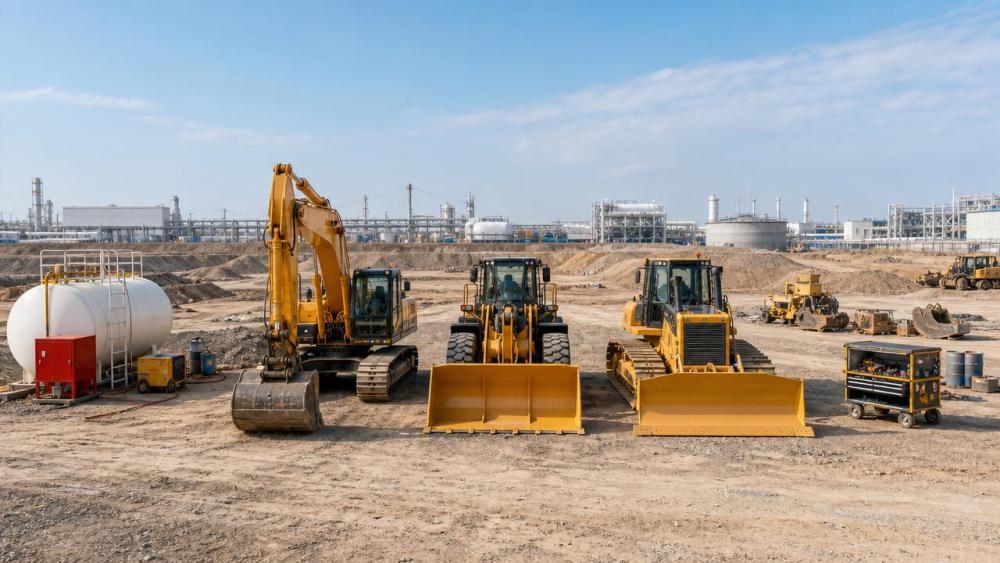
For fleet budgeting, the sticker price is only the starting point. The bigger story sits in daily operating costs, service events, and lost machine hours.
That is why off-road machinery should be reviewed through total cost of ownership, not just capital expense. A cheaper unit can become the most expensive asset on site.
Across excavators, wheel loaders, motor graders, and bulldozers, three items usually drive the fastest cost swings: repair, fuel, and downtime.
In practical terms, these three cost lines affect cash flow, project margin, and replacement timing. They also shape leasing, stocking, and maintenance strategy.
This comparison helps clarify where off-road machinery costs rise, what signals deserve attention, and how to build a more reliable approval framework.
Why Purchase Price Tells Only Part of the Story
A lower purchase price often looks attractive during procurement. However, off-road machinery costs usually spread over years, not over the first invoice.
An excavator with unstable hydraulic performance may require more hose replacements, valve work, and pump diagnostics. Those issues rarely show up in a quote sheet.
A loader with higher fuel burn may seem acceptable in a strong market. Yet fuel inflation can quickly change the economics of a fleet plan.
Downtime is even more important. When a dozer stops during site preparation, labor, trucking, and scheduling costs can move in the wrong direction together.
For that reason, off-road machinery evaluation should combine acquisition cost with operating risk. The goal is not just buying equipment. It is buying dependable production.
Repair Costs: The Most Uneven Cost Driver
Repair expense varies more sharply than many approval models assume. Two similar machines can deliver very different maintenance histories under similar workloads.
For off-road machinery, the largest repair bills often come from hydraulic systems, undercarriage wear, driveline failure, cooling systems, and electronic controls.
Where costs usually rise fastest
- Crawler excavators face expensive hydraulic and swing system repairs.
- Wheel loaders often absorb transmission, tire, and bucket linkage wear.
- Motor graders can see cost spikes in blade controls and front axle components.
- Bulldozers usually carry high undercarriage replacement risk.
Undercarriage cost is especially important in tracked off-road machinery. In abrasive soil or rocky terrain, wear can accelerate much faster than planned.
Another hidden factor is parts availability. A machine with lower list price but longer parts lead times may create larger repair-related losses later.
Serviceability matters too. Easy access to filters, pumps, and diagnostics reduces labor hours. That lowers repair bills and shortens return-to-work time.
Fuel Costs: Small Differences Become Large Annual Gaps
Fuel is usually the most visible operating expense in off-road machinery. It is measured daily, discussed often, and felt immediately in monthly reporting.
Still, fuel comparison should go beyond liters per hour. The more useful measure is fuel burned per productive unit of work.
For example, one excavator may consume more fuel per hour but move more material per shift. In that case, the higher burn rate may still produce lower unit cost.
Common reasons fuel costs drift upward
- Oversized machines running light-duty cycles.
- Excess idle time during loading or waiting.
- Poor operator habits and inconsistent work patterns.
- Weak maintenance practices affecting filters, cooling, and engine tuning.
Fuel-efficient off-road machinery increasingly relies on engine management, hydraulic optimization, and smarter work modes. These features can improve cost control when properly used.
However, the savings only appear when sites actually monitor idle rates, payload match, and cycle efficiency. Technology without discipline rarely delivers the forecast result.
Downtime Costs: Often the Most Expensive Line Item
Downtime is the cost category most often underestimated in off-road machinery decisions. It can exceed both repair and fuel impact, especially on tightly sequenced projects.
When one critical machine stops, support equipment may also sit idle. Labor utilization drops, subcontractor timing slips, and project penalties become more likely.
This is why machine uptime should be treated as a financial metric, not only a maintenance metric. Availability directly affects revenue-producing capacity.
Downtime cost sources that are easy to miss
- Rental replacement during breakdown periods.
- Crew delays while waiting for repair completion.
- Missed production targets and weaker asset utilization.
- Rush freight for critical parts and field service visits.
Tracked off-road machinery used in mining, landfill, or quarry conditions is especially exposed. Harsh environments push failure probability and recovery time upward.
Machines with remote diagnostics, better dealer coverage, and standardized parts support usually reduce this risk. That benefit may justify a higher initial purchase price.
How Different Machine Types Compare
Not all off-road machinery carries the same cost profile. The right approval decision depends on duty cycle, terrain, operator quality, and service support.
This comparison shows why off-road machinery cannot be approved using one standard benchmark. Each asset class creates a different mix of risk and return.
What to Ask Before Approving a Fleet Purchase
A solid review process should turn broad concerns into measurable checks. That makes off-road machinery approval less reactive and more evidence-based.
Use these questions during evaluation
- What is the expected fuel cost per productive hour and per output unit?
- Which components have the highest lifetime repair exposure?
- How fast can local service teams respond to critical failures?
- What is the average parts fill rate for common wear items?
- How much downtime can the project schedule absorb without margin damage?
- Is a higher-spec machine likely to reduce labor, fuel, or idle waste?
These questions reveal whether a low quote actually supports a low-cost operation. In many cases, the answer is no.
Practical Ways to Lower Off-Road Machinery Costs
Cost control does not depend on one dramatic change. It usually comes from several practical improvements working together over time.
- Match machine size to real workload, not peak assumptions.
- Track idle time and enforce operator coaching.
- Use preventive maintenance intervals based on site severity.
- Stock critical wear parts for high-impact off-road machinery.
- Review dealer support quality before comparing only equipment price.
- Monitor availability, repair frequency, and fuel burn by asset class.
From a portfolio view, it also helps to separate mission-critical machines from support units. The uptime standard should be stricter for equipment that controls site flow.
More importantly, review cost trends quarterly. Off-road machinery economics can change quickly when fuel prices, utilization, or project mix shifts.
A Smarter Cost View Leads to Better Decisions
The most effective purchase decisions treat off-road machinery as a long-term operating asset, not a short-term buying event.
Repair, fuel, and downtime should be compared together, because they influence one another. A machine that saves fuel but fails often may still destroy margin.
In the same way, a premium model with better reliability, support, and efficiency may produce the stronger financial outcome over its service life.
The clearest next step is simple: evaluate off-road machinery by total delivered productivity, total service risk, and total cost per useful hour.
That approach supports better approvals, steadier project execution, and more confident long-range fleet planning.