
Related News
- 00
0000-00
How a supplier solution database reduces sourcing risk - 00
0000-00
How market insight content shapes equipment demand forecasts - 00
0000-00
When does stainless steel bulk material transfer equipment prevent contamination? - 00
0000-00
How an earthmoving equipment portal helps vet factory capabilities - 00
0000-00
How to assess equipment specifications against applicable standards
Tags
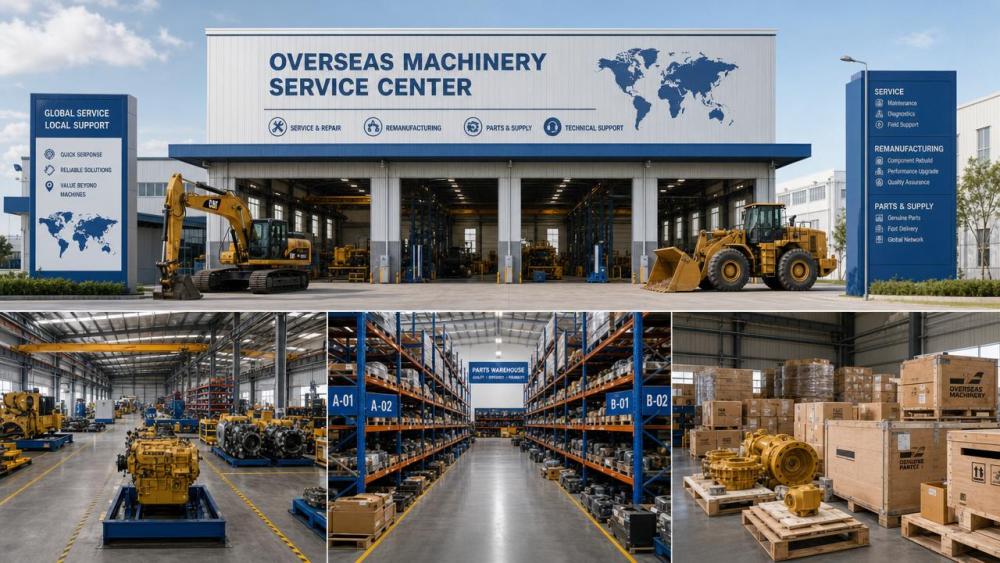
On July 1, 2026, State Council Order No. 798, the Regulation on Outbound Investment, is set to take effect and introduces a new compliance signal for engineering machinery companies expanding overseas service capacity. The confirmed change is that “overseas equipment manufacturing service entities” are now brought into the regulatory scope, and companies that set up overseas subsidiaries or factories for repair, remanufacturing, or spare parts centers must file a technology output list and localized service standards with provincial commerce authorities 60 days in advance. For equipment makers, export teams, after-sales networks, and supply chain planners, this matters because overseas factory deployment and local service rollout are no longer only commercial execution issues, but also timing and documentation matters tied to outbound investment compliance.
What the rule change confirms from July 1
The confirmed information is limited but commercially significant. State Council Order No. 798, the Regulation on Outbound Investment, will formally take effect on July 1, 2026. For the first time, it includes “overseas equipment manufacturing service entities” within its regulatory coverage.
The event summary states that companies establishing overseas subsidiaries or factories to provide repair, remanufacturing, or spare parts center functions must complete an advance filing with provincial commerce departments. The filing must be made 60 days before the setup and must cover a technology output list and localized service standards.
The same summary indicates that the new rule directly affects the pace of service network expansion by companies including Sany, Zoomlion, and Lingong in Morocco, Türkiye, and Mexico.
Where the immediate pressure may appear in operations
Overseas service expansion now links to pre-filing timing
From an industry perspective, equipment manufacturers planning overseas subsidiaries, factories, or service entities may face the most direct impact because the rule connects project timing to a 60-day advance filing requirement. The affected business links are likely to include internal approval schedules, launch sequencing for local workshops or parts hubs, and readiness of technical and service documentation before execution begins.
What deserves closer attention is not only the physical investment plan, but also whether the planned repair, remanufacturing, and spare parts functions involve technical output descriptions that must be prepared in filing materials.
After-sales and localized support teams may need tighter document control
For after-sales service operators and localized support teams, the practical issue is that service capability is specifically named in the confirmed facts. Analysis shows this may shift attention toward how localized service standards are defined, version-controlled, and aligned with actual overseas operating models.
The impact is likely to be felt in service manuals, process standards, quality traceability materials, and internal handover documents between headquarters and overseas entities. At this stage, it is more appropriate to understand this as a compliance preparation issue rather than a confirmed change in service content itself.
Supply chain and delivery planning may need earlier coordination
For supply chain service providers, procurement teams, and delivery planners supporting overseas service networks, the rule may affect project sequencing even where products themselves are unchanged. Observably, if a service center or remanufacturing site cannot move ahead until filing materials are ready, then related procurement, parts stocking, vendor onboarding, and launch schedules may also need earlier coordination.
The point to watch is whether project execution documents, technical lists, and local service standards can be assembled in time to avoid slowing deployment plans in the markets cited in the event summary.
What companies should watch before expanding service entities
Prepare the technical output list with narrower scope control
Analysis shows companies with overseas factory or service entity plans should pay close attention to how the technology output list is defined internally. Because the confirmed requirement is tied to advance filing, businesses may need clearer boundaries between equipment export, service know-how transfer, remanufacturing processes, and spare parts support materials when organizing submission documents.
Check whether localized service standards are ready for filing use
What deserves closer attention is whether localized service standards already exist in a form suitable for regulatory filing. In practice, companies may need to review whether service specifications, maintenance procedures, remanufacturing workflows, and quality control language are sufficiently consistent before they are referenced in an outbound investment context.
Reassess project calendars for overseas rollout
For companies expanding in Morocco, Türkiye, and Mexico as referenced in the event summary, a practical concern is timing. The confirmed 60-day filing requirement suggests that project launch calendars, procurement plans, and delivery milestones may need to be reviewed earlier than before. This should be treated as a planning observation, not as proof of a final execution delay in every case.
Continue watching for implementation wording and market-side responses
The available information does not provide detailed enforcement language, review criteria, or filing templates. For that reason, companies should continue to monitor later official wording, execution interpretations, tender document changes, and market feedback before treating any single compliance approach as settled practice.
Why this looks like an execution signal, not just a policy headline
Observably, this development is more meaningful as an execution signal than as a broad policy slogan. The reason is that the confirmed change does not stay at the level of general outbound investment oversight; it specifically reaches overseas service entities tied to repair, remanufacturing, and spare parts support. For engineering machinery companies, that brings compliance attention closer to the operational edge of localization.
Analysis shows the market should not read this as a completed enforcement picture yet, because the input does not provide detailed implementation rules. Even so, it is more appropriate to understand the development as a real compliance threshold for overseas service expansion planning from July 1, 2026 onward.
How this development is best understood now
At this stage, the rule change is best understood as a confirmed regulatory expansion with direct relevance to overseas factory setup and localized service compliance in engineering machinery. The known facts are enough to signal that documentation, pre-filing timing, and service standard preparation may become part of project execution discipline.
A neutral reading is that the development does not yet establish every operational outcome, but it clearly raises the importance of compliance readiness for companies building overseas repair, remanufacturing, and spare parts networks. The most reasonable current interpretation is that this is an implemented rule change with further execution details still worth close observation.
Basis of this article and what still needs verification
This article is generated from the user-provided news title, event date, and event summary. It does not rely on additional unverified facts beyond the provided information.
For developments of this type, commonly relevant source categories may include official government notices, releases from regulatory authorities, trade or commerce department information, industry association updates, standard-setting documents, and reporting by authoritative media. A specific official source link was not provided in the input, so the exact official publication path still requires follow-up verification.
Further observation is still needed on detailed implementation rules, filing interpretation, certification or compliance practice, tender document changes, industry feedback, and how affected companies carry out execution in practice.