
Related News
- 00
0000-00
How a supplier solution database reduces sourcing risk - 00
0000-00
How market insight content shapes equipment demand forecasts - 00
0000-00
When does stainless steel bulk material transfer equipment prevent contamination? - 00
0000-00
How an earthmoving equipment portal helps vet factory capabilities - 00
0000-00
How to assess equipment specifications against applicable standards
Heavy Machinery Parts That Fail First in High-Hour Fleets
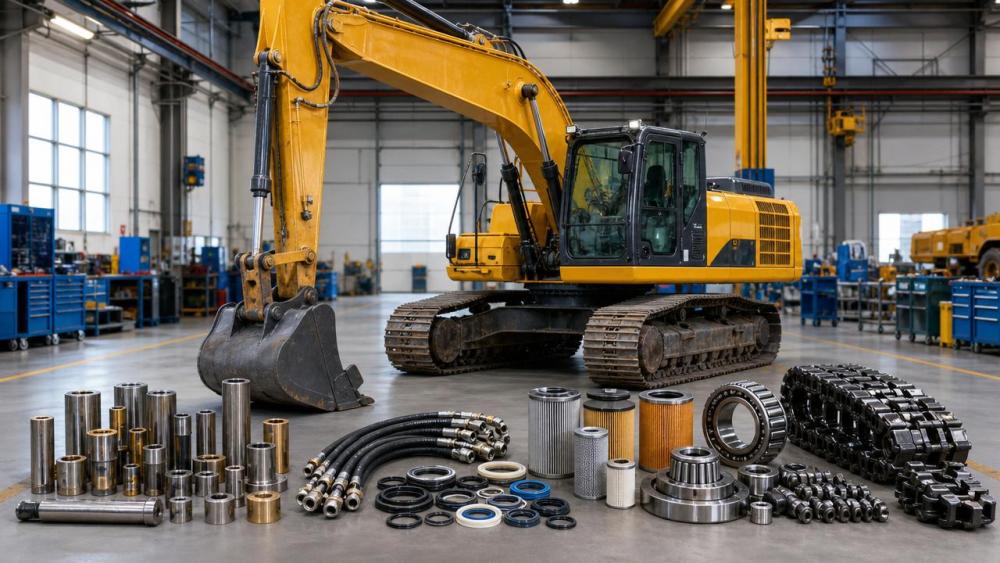
In high-hour fleets, failures usually start in the same places.
The earliest warning signs often come from heavy machinery parts under constant shock, heat, pressure, and contamination.
That matters across excavators, loaders, dozers, graders, and skid steers.
When these machines run long shifts, a few parts absorb most of the punishment.
If those parts are tracked early, downtime drops fast.
If they are missed, a small wear issue often turns into a major repair event.
At EMD, long-cycle fleet behavior shows a clear pattern.
The first heavy machinery parts to fail are rarely random components.
They are the load-bearing, motion-critical, contamination-sensitive parts that work hardest every single hour.
The good news is that most early failures are predictable.
That also means they are manageable with the right inspection routine and replacement timing.
Why High-Hour Fleets Wear Out Heavy Machinery Parts Faster
High-hour machines do not fail just because of age.
They fail because wear compounds across systems.
Hydraulic pulses affect seals.
Loose joints increase vibration.
Dirty oil accelerates valve and pump damage.
Track wear changes alignment and loading.
From a fleet perspective, the real problem is interaction.
One tired part starts stressing the next one.
That is why smart maintenance focuses on failure chains, not isolated breakdowns.
- Long idle periods raise soot, heat cycling, and seal hardening.
- Dust and moisture shorten the life of filters, pins, bushings, and bearings.
- Overloading speeds up wear in undercarriage and hydraulic heavy machinery parts.
- Operator variation creates uneven stress across the same fleet model.
More importantly, high utilization hides early symptoms.
Machines keep working while efficiency quietly drops.
The Heavy Machinery Parts That Usually Fail First
Some heavy machinery parts consistently appear at the top of early failure lists.
They deserve tighter intervals and closer visual checks.
1. Pins, Bushings, and Linkage Joints
These parts wear first because they carry motion and load together.
Excavator booms, loader linkages, dozer blades, and grader circles all depend on tight joint geometry.
Once clearance opens up, shock loads increase fast.
The visible clues are familiar.
- Grease purges with metal dust.
- Bucket or blade movement looks sloppy.
- Edge alignment changes during digging or grading.
- Operators report extra knocking at direction changes.
If ignored, these heavy machinery parts can damage bores and structural mounting points.
2. Hydraulic Seals, Hoses, and Cylinder Kits
Hydraulic heavy machinery parts fail early when heat, contamination, and pressure spikes combine.
A hose may still look acceptable from a distance.
Up close, abrasion, sweating, and hardening tell a different story.
Cylinder drift is another common signal.
It often points to internal seal wear before a full leak appears.
In real working conditions, these failures spread quickly.
One damaged hose can contaminate surrounding heavy machinery parts and stop an entire shift.
3. Filters and Breathers
Filters are inexpensive compared with the components they protect.
Yet they are still among the most neglected heavy machinery parts.
Hydraulic filters, air filters, fuel filters, and tank breathers all matter.
Once restriction rises, performance suffers.
Once bypass happens, contamination moves deeper into pumps, injectors, and control valves.
4. Undercarriage Wear Parts
For tracked fleets, undercarriage heavy machinery parts are early cost drivers.
Track chains, rollers, idlers, sprockets, shoes, and tension systems wear as a group.
The problem is that uneven wear hides inside daily production pressure.
By the time travel noise grows obvious, the repair bill is usually larger.
5. Bearings, U-Joints, and Driveline Components
On loaders, graders, and skid steers, rotating heavy machinery parts often fail before major structures do.
Lubrication loss is the usual trigger.
So are misalignment and water entry.
A small bearing noise can become hub, shaft, or gearbox damage surprisingly fast.
Early Warning Signs You Should Not Ignore
The first signs are usually subtle, not dramatic.
That is why consistent inspection language matters so much across a fleet.
The key is speed.
When warning signs are recorded early, replacement heavy machinery parts can be scheduled, not rushed.
A Practical Inspection Routine That Works
A useful inspection routine is simple, repeatable, and easy to document.
It should focus on high-failure heavy machinery parts first.
- Start cold-walk checks with leaks, hose rub points, and loose guards.
- Measure pin and bushing play at fixed hour intervals.
- Track grease condition, not just grease quantity.
- Use oil sampling on hydraulic and final drive systems.
- Record undercarriage wear by position, not as one general note.
- Log repeat complaints like drift, lag, squeal, or impact noise.
This kind of routine improves decision-making fast.
It also helps compare heavy machinery parts performance between brands, sites, and operators.
From a cost perspective, that visibility is powerful.
You stop replacing everything early and start replacing the right parts at the right moment.
How to Reduce Repeat Failures in Heavy Machinery Parts
Replacing failed parts is not enough.
The real goal is stopping the same heavy machinery parts from failing again too soon.
- Match replacement specifications to application severity, not only machine model.
- Correct root causes such as contamination, poor alignment, or over-tension.
- Standardize torque, lubrication, and hose routing practices.
- Use failure history to flag chronic weak points in each fleet group.
- Review whether duty cycles changed after a jobsite shift or attachment upgrade.
This is where better parts planning creates real value.
For example, undercarriage heavy machinery parts should be planned as a system.
The same is true for hydraulic hoses, seal kits, and filters.
Grouped planning reduces mismatch, repeat labor, and emergency freight costs.
Where Better Intelligence Makes the Biggest Difference
As fleets become more connected, maintenance decisions should become more precise.
That is especially true for high-risk heavy machinery parts.
Machine telematics, oil analysis, wear mapping, and service history can now work together.
The result is less guesswork and fewer surprise stoppages.
For organizations following EMD, the bigger shift is clear.
Maintenance is moving from reactive replacement toward intelligence-led reliability.
That change supports uptime, asset life, emissions control, and overall fleet efficiency.
Final Takeaway
In high-hour fleets, the first failures are usually predictable.
Pins, bushings, hydraulic seals, hoses, filters, undercarriage systems, and driveline heavy machinery parts deserve the closest attention.
The best results come from catching wear patterns before they become events.
Build inspections around known failure points.
Track symptoms consistently.
Plan replacement heavy machinery parts by system, not by panic.
That is the most practical way to cut downtime, protect machine value, and keep demanding fleets productive longer.