
Related News
- 00
0000-00
CBP Sets UL 62841-3-11 Filing Rule for Electric Excavators - 00
0000-00
How to Use Operating Weight for Better Equipment Selection - 00
0000-00
EU Requires EN IEC 63254-2 for Imported Electric Excavators - 00
0000-00
Construction Equipment Emissions Compliance: Key Standards, Costs, and Buying Risks - 00
0000-00
CBP Sets Fire-Test Filing Rule for Electric Excavators
Heavy Equipment Selection Mistakes That Raise Project Costs
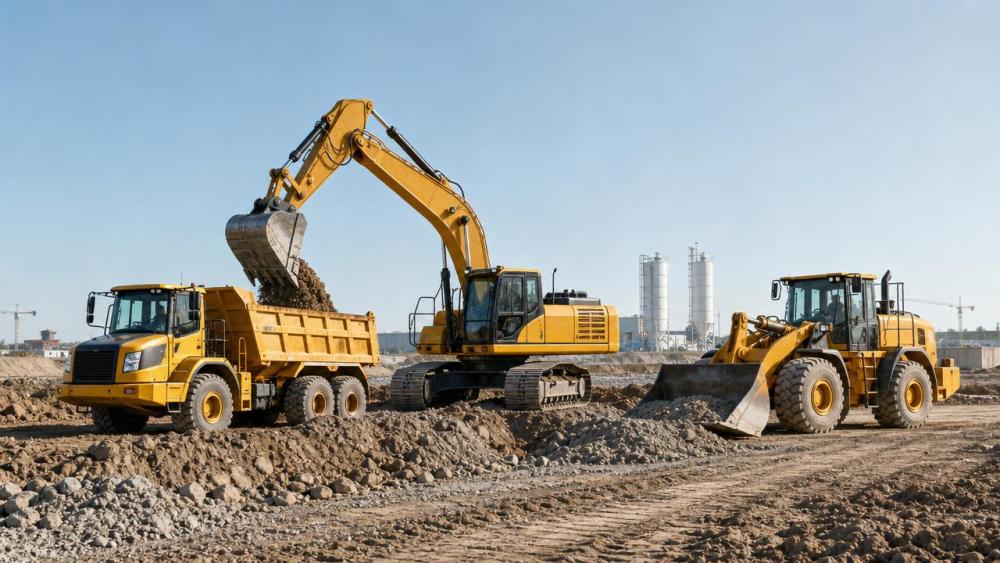
Choosing the wrong heavy equipment rarely looks dramatic on day one.
The budget leak usually starts in small, easy-to-miss ways.
Fuel burn climbs. Idle time grows. Cycle times stretch. Rework increases.
Then the bigger problems show up through delays, safety exposure, and rushed equipment swaps.
That is why heavy equipment selection is not just a procurement task.
It is a cost-control decision that shapes the entire project delivery model.
From recent market shifts, the pressure is even sharper.
Jobsites now face tighter margins, stricter emissions rules, and rising expectations around uptime and data visibility.
In practical terms, the wrong heavy equipment can lock in avoidable cost long before work reaches peak intensity.
The good news is that most selection mistakes follow familiar patterns.
Once those patterns are visible, better equipment decisions become much easier to make.
Mistake 1: Matching the Machine to Peak Demand Only
One of the most common heavy equipment mistakes is sizing for the toughest hour instead of the full project cycle.
On paper, larger machines seem safer because they promise extra capacity.
In reality, oversized heavy equipment often creates hidden inefficiency.
It may need wider haul paths, larger support trucks, and more fuel per productive hour.
It can also sit underutilized during most of the schedule.
That means capital, rental, and transport cost keep running without proportional output.
A better approach is to model average production demand, not just extreme scenarios.
Check actual cut volumes, haul distances, material density, and duty cycle variation.
If demand spikes are short, temporary support units may cost less than oversizing the core fleet.
What to verify before approval
- Peak production versus average weekly production
- Expected idle ratio during each project phase
- Trailer, access road, and site mobility constraints
- Support fleet compatibility with selected heavy equipment
Mistake 2: Ignoring Material and Ground Conditions
Heavy equipment selection often fails when teams focus on machine class but ignore what the machine will actually face.
Rocky overburden, sticky clay, wet subgrade, and abrasive aggregates all change performance.
Two excavators with similar rated power can deliver very different field results.
The same is true for wheel loaders, graders, bulldozers, and skid steer loaders.
Ground pressure, traction, breakout force, bucket configuration, and undercarriage design all matter.
When those factors are overlooked, wear rates rise fast.
That drives parts consumption, operator frustration, and more downtime than planned.
This also affects grading accuracy and finish quality.
In road and airport work, a poor fit between machine and surface condition can trigger costly rework.
Practical selection checks
- Review geotechnical data, moisture trends, and seasonal variability.
- Match attachments and edge tools to material behavior.
- Estimate wear cost, not just purchase or rental cost.
- Confirm whether tracks or tires fit the actual surface conditions.
Mistake 3: Looking at Price Instead of Total Cost of Ownership
The cheapest heavy equipment option is often the most expensive over the life of a project.
This is where many equipment decisions go off track.
A lower daily rate or purchase price can look attractive in early comparison tables.
But heavy equipment cost is shaped by far more than acquisition.
Fuel efficiency, maintenance intervals, parts availability, resale value, and operator productivity all influence the outcome.
More importantly, downtime cost can dwarf the original saving.
If a key excavator or bulldozer fails during a critical sequence, the whole workflow may stall.
Crews wait. Trucks queue. Deadlines slip. Recovery plans become expensive.
That is why strong heavy equipment selection always includes total cost of ownership.
A simple comparison frame
Mistake 4: Overlooking Operator Skill and Digital Features
Another expensive mistake is choosing heavy equipment with advanced features that the site team cannot fully use.
Modern machines offer grade control, payload monitoring, remote diagnostics, and semi-autonomous functions.
These capabilities can be valuable, but only when they match operator readiness and project needs.
If training is weak, premium features may sit unused.
Worse, complex controls can slow production in the early weeks.
On the other hand, selecting basic heavy equipment for high-precision work can also cost more.
That usually shows up through stakeout delays, manual checking, and repeated finish passes.
The key is alignment, not feature overload.
In actual operations, the best heavy equipment decision is the one the crew can translate into consistent output.
Questions worth asking
- Will operators use the machine’s digital tools from week one?
- Is vendor training included and scheduled early?
- Do grade control or payload systems solve a real site problem?
- Can the field team act on the telematics data received?
Mistake 5: Forgetting Logistics, Service, and Compliance
Some heavy equipment performs well in brochures but poorly in the real project environment.
That gap often comes from logistics and support issues.
Transport permits, delivery windows, dealer response time, field service coverage, and emissions compliance all affect cost.
The more remote or regulated the site, the more important these factors become.
A machine that arrives late or fails local compliance checks can disrupt the schedule immediately.
Service delays create another layer of risk.
If critical parts require long lead times, even a minor failure may expand into a major project issue.
This is especially relevant as more fleets move toward low-emission and connected heavy equipment platforms.
Compliance and service readiness should be screened early, not after commercial selection.
A Smarter Heavy Equipment Selection Process
Avoiding these mistakes does not require a complicated framework.
It requires a disciplined one.
Start by defining the work package clearly.
Then connect machine choice to production targets, site conditions, support capacity, and risk tolerance.
That creates a more reliable basis for equipment decisions.
Use this checklist before final selection
- Define material type, production target, and jobsite constraints.
- Compare heavy equipment options using total cost, not price alone.
- Validate attachment fit, transport needs, and support fleet balance.
- Confirm local service strength, parts access, and compliance readiness.
- Match machine technology to actual operator capability and workflow needs.
- Review utilization assumptions with field input before approval.
Strong heavy equipment selection is really about asking better questions earlier.
When the machine, site, crew, and support model fit together, project cost becomes easier to control.
That also improves utilization, schedule stability, and long-term asset value.
For any team evaluating heavy equipment, the smartest move is simple.
Do not buy or rent the biggest promise.
Choose the machine that fits the work, supports the schedule, and protects cost from the ground up.