
Related News
- 00
0000-00
How an earthmoving equipment portal helps vet factory capabilities - 00
0000-00
How to assess equipment specifications against applicable standards - 00
0000-00
How Middle East climate conditions should shape heavy equipment selection - 00
0000-00
Can an industrial equipment sourcing supplier directory improve vendor selection? - 00
0000-00
How earthmoving equipment is applied in canal construction
Construction machinery costs start with a bigger question than sticker price
Construction machinery decisions rarely fail because of one bad quote. They fail when ownership logic and project reality do not match.
That is why buy, rent, and lease should be compared through utilization, cash timing, residual value, and operating risk.
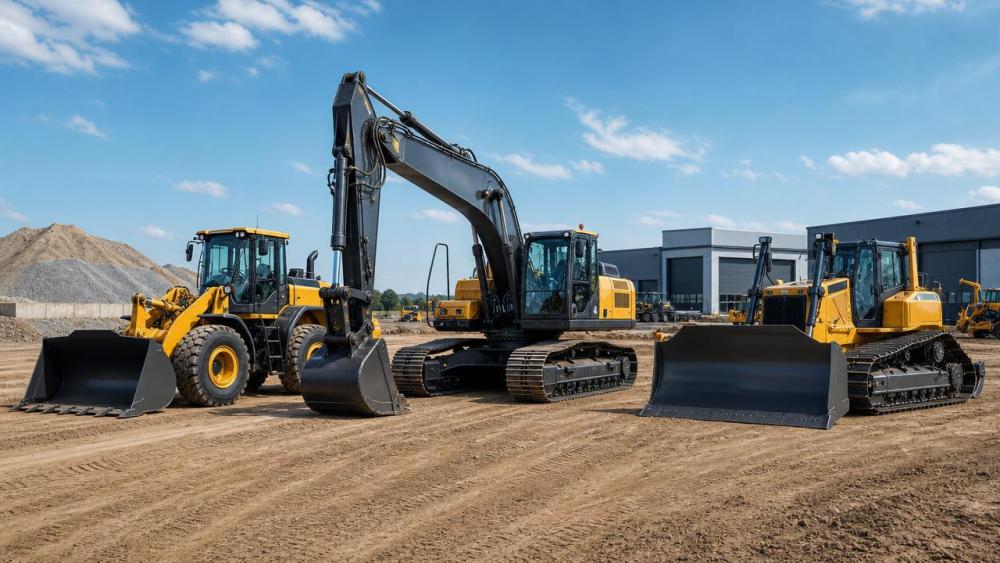
In heavy equipment categories such as crawler excavators, wheel loaders, bulldozers, motor graders, and skid steer loaders, the financial outcome can shift fast.
A machine working daily on a long pipeline program behaves very differently from one needed for six weeks of urban utility work.
EMD follows these shifts closely because construction machinery value now depends on more than steel and hydraulics.
Fuel efficiency, emissions compliance, telematics visibility, and even readiness for autonomous or remote-control functions now influence total cost.
So what is the practical way to judge the right model? Start by asking what cost sits behind the monthly payment.
When does buying construction machinery make the most financial sense?
Buying makes sense when usage is predictable, annual hours are high, and the machine fits core operations for several years.
This is common with crawler excavators on recurring earthmoving programs or bulldozers supporting permanent fleet capacity.
Ownership creates the lowest unit cost only when the machine stays productive enough to absorb depreciation, financing, insurance, and maintenance overhead.
A common mistake is assuming purchase always saves money because rental rates look expensive on a daily basis.
In reality, idle hours are expensive too. An owned machine still consumes capital even when parked.
Buying also works better when resale channels are strong. This matters in categories with active secondary demand, such as mini excavators and skid steers.
The stronger the expected residual value, the more attractive ownership becomes.
- Choose buying when annual utilization is consistently high.
- Prefer it when specifications stay relevant for years.
- Check parts support, maintenance staffing, and resale liquidity before approval.
- Model fuel burn and downtime, not just acquisition cost.
Is renting better when project demand is uncertain or seasonal?
Often, yes. Renting construction machinery is usually the cleanest answer when project timing, duration, or scope can still change.
That flexibility matters in short civil works, emergency repair programs, temporary mine stripping, or multi-site contracts with uneven machine demand.
Rental protects cash because the cost sits closer to revenue generation. It also reduces exposure to obsolescence.
This is especially relevant as construction machinery evolves toward electrification, stricter emissions rules, 3D grade control, and connected fleet management.
For example, a motor grader with advanced GPS guidance may command a premium today, yet the technology cycle may shorten its advantage window.
Renting avoids carrying that technology risk on the balance sheet for too long.
Still, rental is not automatically cheap. Peak-season rates, delivery fees, operator familiarity issues, and availability constraints can change the math.
The better question is whether flexibility is worth the premium.
A quick decision table helps frame that trade-off
If the table seems balanced, the next step is usually to examine leasing more closely.
Where does leasing fit between control and flexibility?
Leasing sits in the middle. It can preserve cash while keeping long-term access to critical construction machinery.
This often suits fleets that need newer equipment but want smoother payment profiles than outright purchase requires.
Leasing can be particularly useful for high-value machines with digital options that improve measurable productivity.
Examples include excavators with advanced electro-hydraulic controls or graders with millimeter-level guidance systems.
The appeal is clear: lower initial cash commitment, structured payment planning, and easier fleet refresh cycles.
But lease terms deserve close reading. Hour caps, return conditions, maintenance obligations, and purchase options can materially change cost.
More than one approval has gone wrong because the headline monthly figure looked efficient while the end-of-term conditions did not.
In practical reviews, leasing works best when the fleet strategy values predictability and periodic renewal.
What costs are usually missed when comparing buy, rent, and lease?
This is where many construction machinery comparisons become misleading. The visible payment is only one layer.
Several hidden or underestimated costs should be modeled before any decision is finalized.
- Mobilization and demobilization for rented equipment across dispersed jobsites.
- Operator learning curves when switching machine brands or control systems.
- Downtime losses from parts delays, especially for specialized attachments.
- Insurance, licensing, inspections, and compliance upgrades.
- Fuel variance between older and newer powertrains.
- Resale weakness if emissions standards or market preferences shift.
EMD’s coverage of non-road emissions changes and decarbonization trends makes this point hard to ignore.
A machine that appears cheaper today may become costly if it loses site eligibility, consumes more fuel, or falls behind new reporting standards.
That risk is growing in urban infrastructure, public projects, ports, and high-visibility industrial works.
A more realistic review uses these checks
- Estimate annual operating hours by machine class, not fleet average.
- Separate fixed ownership cost from variable production cost.
- Stress-test utilization at lower project volume scenarios.
- Compare expected residual value against technology replacement cycles.
- Account for maintenance capability inside the organization, not ideal assumptions.
How should the decision change by machine type and job profile?
Not all construction machinery should be financed the same way. The machine’s production role matters as much as the accounting model.
Crawler excavators often justify ownership when excavation demand is recurring and attachment flexibility supports multiple contract types.
Wheel loaders may favor buying or leasing when material handling is constant and cycle efficiency drives margin every day.
Motor graders are different. If precision grading demand is intermittent, renting advanced units may be smarter than owning underused technology.
Bulldozers usually depend on heavy, sustained workloads. Without enough pushing hours, ownership weakens fast.
Skid steer loaders are more flexible. Because they serve urban sites and varied attachments, the decision often hinges on attachment mix and transport frequency.
In other words, asset strategy should follow production behavior, not generic fleet rules.
One useful rule of thumb
Own the machines that define baseline capacity. Rent the machines that cover peaks, unusual specifications, or short-duration technical needs.
Lease the machines that need renewal discipline and predictable budgeting.
What is the smartest next step before approving construction machinery spend?
Do not start with the vendor quote. Start with a utilization map tied to actual project schedules.
Then build a side-by-side cost view covering payment structure, fuel, maintenance, downtime, compliance exposure, and expected resale or return terms.
It also helps to separate core fleet assets from surge capacity. That single step often clarifies whether buying, renting, or leasing is truly appropriate.
For construction machinery categories evolving toward automation and lower emissions, timing matters almost as much as price.
A shorter commitment can sometimes protect more value than a lower purchase figure.
The strongest approvals usually rely on three questions: how hard will the machine work, how quickly might the specification age, and what flexibility is worth.
Answer those clearly, and the buy versus rent versus lease decision becomes less subjective and far more defensible.
As a practical next move, compare one upcoming equipment need across all three models using the same utilization and risk assumptions.
That exercise usually reveals the real cost driver behind construction machinery decisions, and it gives future approvals a stronger benchmark.