
Related News
- 00
0000-00
How to size heavy-duty loaders for North American mining operations - 00
0000-00
How altitude affects mining excavator performance in Latin America - 00
0000-00
Caterpillar Launches New Cat 6060 and Upgraded Autonomous Mining System - 00
0000-00
When does eco-friendly construction equipment pay for itself? - 00
0000-00
Will a wheel loader quick coupler fit your existing attachments?
Before approving a fleet expansion, financial decision-makers need more than purchase prices and utilization forecasts. Heavy equipment investments carry hidden cost risks across financing, fuel, maintenance, emissions compliance, technology upgrades, residual value, and downtime exposure. As earthmoving fleets become more connected, automated, and regulated, every excavator, loader, grader, bulldozer, and skid steer must be evaluated as a long-term asset with measurable risk and return. This guide highlights the key cost factors to review before capital is committed.
For finance leaders, the challenge is not simply whether a new machine can win work. The harder question is whether the asset can protect margin across 5 to 10 years of changing site conditions, labor availability, energy prices, and regulatory pressure.
In earthmoving, one wrong assumption can reshape the full business case. A crawler excavator with underpriced maintenance, a wheel loader exposed to volatile fuel use, or a motor grader lacking digital control readiness can turn a growth plan into a cash-flow constraint.
Look Beyond Acquisition Cost in Heavy Equipment Expansion
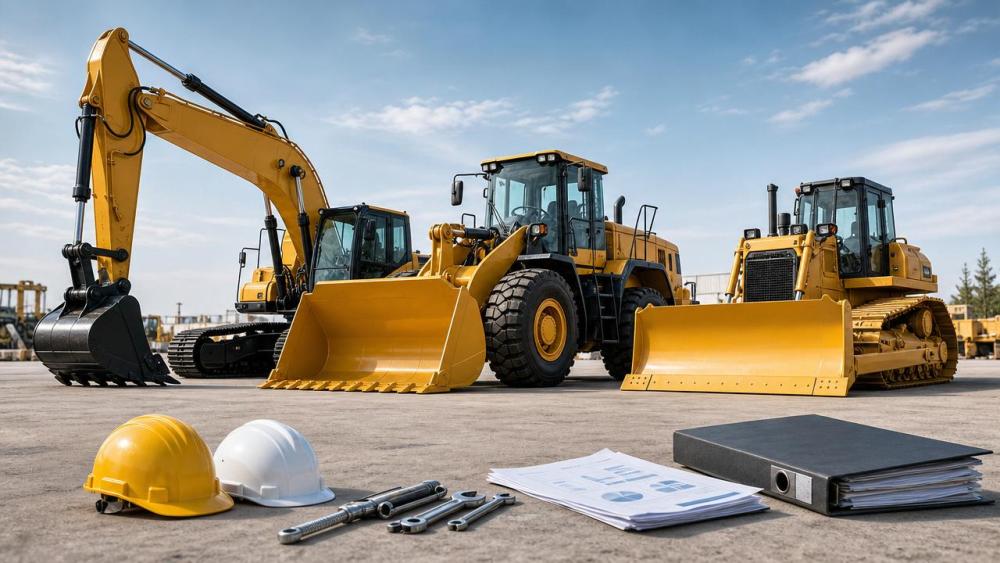
The purchase price is usually the most visible line item, yet it may represent only one part of total ownership cost. A heavy equipment investment model should include financing, transport, commissioning, operator training, attachments, telematics, insurance, taxes, and disposal planning.
For large earthmoving assets, finance teams often review a 36-month, 60-month, or 84-month horizon. Longer cycles expose the fleet to parts inflation, hydraulic component wear, emissions upgrades, and residual value changes that are difficult to reverse after approval.
Capital Structure and Cash-Flow Exposure
A fleet expansion funded through debt, leasing, or mixed capital has different risk timing. Debt increases balance sheet exposure, while operating leases may improve flexibility but can limit customization, utilization patterns, and end-of-term options.
Financial approval should test at least 3 utilization scenarios: conservative, expected, and high-demand. If the asset fails under a 15% lower utilization case, the project may need revised pricing, phased deployment, or rental support.
The following table outlines practical cost areas that should be reviewed before committing capital to excavators, loaders, graders, bulldozers, or skid steer loaders.
The key conclusion is that heavy equipment approval should use a full-cost model, not a dealer quote alone. Finance teams should require every department to own assumptions for at least 4 cost categories.
A Practical Approval Gate
Before signing, require a one-page asset case with 5 fields: expected annual hours, revenue linkage, maintenance budget, compliance status, and exit value. If any field is uncertain, delay approval or add a contingency reserve.
Operating Costs That Can Break the Business Case
Operating cost risk is often larger than expected because heavy equipment works in abrasive, uneven, and unpredictable conditions. Fuel burn, tire or track wear, hydraulic leaks, cutting edge replacement, and undercarriage service can quickly exceed spreadsheet assumptions.
A wheel loader in high-cycle quarry loading, for example, carries different exposure than a loader serving a municipal yard. A bulldozer in ripping applications may face undercarriage cost pressure within 1,500 to 3,000 operating hours.
Fuel, Energy, and Productivity Variance
Fuel is not only a consumption issue; it is a productivity issue. Two machines with similar horsepower can produce different cost per cubic meter when operator skill, haul distance, cycle time, idle time, and hydraulic efficiency vary.
- Track idle time by shift, targeting reductions of 5%–15% where telematics shows excessive waiting.
- Compare cost per hour and cost per ton, not only monthly fuel expense.
- Review engine load profiles before choosing between diesel, hybrid, or electric-ready platforms.
- Test whether remote operation or automation can reduce rework, travel, and safety downtime.
Electrification can lower site emissions and energy volatility in some urban or indoor applications, but charging infrastructure, duty cycle, and grid access must be reviewed. A 6-hour high-intensity shift may require a different plan than intermittent utility work.
Maintenance, Wear Parts, and Service Capacity
Maintenance assumptions should be specific to machine class. Excavators need hydraulic inspection, pins and bushings control, and bucket wear management. Motor graders require attention to moldboard, circle, blade edges, and grade control sensors.
Financial decision-makers should ask for service intervals, parts lead times, local technician capacity, and warranty exclusions. A 48-hour parts delay may be acceptable for one machine but costly for a production-critical loading unit.
A conservative model separates planned maintenance from failure exposure. Planned service can be scheduled every 250, 500, or 1,000 hours, while failure exposure needs probability, downtime cost, and backup equipment assumptions.
Maintenance Controls Finance Should Require
- Set an annual maintenance reserve by asset class and application severity.
- Tie preventive maintenance compliance to operator and site manager reporting.
- Track downtime hours separately from repair invoice totals.
- Review oil analysis, telematics alerts, and inspection records every 30 days.
Compliance, Technology, and Obsolescence Risks
Heavy equipment fleets are being shaped by stricter non-road emissions rules, connected jobsite systems, automated machine control, and safety expectations. A machine that meets today’s job requirements may lose competitiveness within 3 to 5 years.
Financial approval should therefore consider whether new assets can support telematics, 3D grade control, remote diagnostics, geofencing, payload monitoring, and integration with fleet management platforms already used across the business.
Emissions Exposure and Jobsite Access
Emission restrictions can affect where equipment is allowed to work. Urban infrastructure, airport projects, tunnels, ports, and public-sector contracts may require newer engine tiers, low-emission zones, or documented fuel and idle reduction practices.
If a fleet expansion relies on public infrastructure tenders, compliance risk should be priced into the bid strategy. An asset that cannot enter 20% of target projects may have a much weaker utilization profile.
Digital Readiness and Automation Payback
Digital readiness does not mean buying every feature. It means understanding which technologies protect margin. GPS guidance, laser control, and semi-autonomous functions are strongest when they reduce rework, improve grade accuracy, or lower operator dependency.
The table below provides a finance-oriented view of common technology options and the risks they help control across different earthmoving equipment types.
The best technology choice is the one tied to measurable commercial outcomes. Finance teams should require a 12-month adoption plan, not merely a feature list in the purchase proposal.
Avoiding Technology Overbuy
Overbuy occurs when the fleet pays for functions the organization cannot deploy. If operators, survey teams, and project managers are not prepared, advanced controls may become sunk cost rather than productivity leverage.
Residual Value, Downtime, and Exit Strategy
Residual value is one of the most important variables in heavy equipment economics. A stronger resale value can offset higher upfront cost, while poor documentation, excessive hours, or unpopular specifications can reduce exit proceeds.
Finance teams should model residual value at 3 points: early exit, planned replacement, and extended use. This creates visibility across 36 months, 60 months, and 8 years or more.
Downtime Cost Is More Than Repair Cost
Downtime includes lost production, standby labor, delayed subcontractors, rental substitution, liquidated damages, and customer confidence impact. For production-critical equipment, one failed machine can delay an entire earthmoving sequence.
The correct metric is not only repair cost per hour. Finance should calculate downtime cost per event, replacement capacity, and recovery time. A 2-day outage during peak work can erase weeks of expected margin.
Specification Choices That Protect Resale
Standard configurations often resell more easily than highly specialized builds. However, some specifications, such as advanced hydraulics, quick couplers, grade control readiness, or widely supported engines, can strengthen buyer demand.
- Choose attachments with secondary market demand, not only one-project usefulness.
- Keep maintenance records, fluid reports, software updates, and inspection photos.
- Avoid configurations that depend on rare parts unless the revenue premium is clear.
- Review resale channels at least 12 months before the planned replacement date.
Replacement Timing Discipline
Waiting too long can push assets into a higher repair-risk band. Replacing too early can sacrifice remaining value. The right timing depends on hour accumulation, repair trend, resale liquidity, and upcoming project commitments.
A Finance Checklist Before Capital Approval
A disciplined approval process reduces surprises after delivery. For heavy equipment fleet expansion, finance teams should combine operational data, procurement intelligence, compliance review, and asset lifecycle planning into one decision framework.
The checklist below can be used in capital committees, tender planning, or multi-asset replacement discussions. It is especially useful when comparing crawler excavators, wheel loaders, motor graders, bulldozers, and skid steer loaders across different jobsites.
Six Checks to Complete Before Approval
- Confirm utilization assumptions using recent projects, not optimistic backlog alone.
- Build a total cost model covering at least 5 years of ownership or lease exposure.
- Assign maintenance reserves by equipment class, application severity, and expected annual hours.
- Review emissions, site access, safety, and digital integration requirements for target contracts.
- Validate operator training, service support, and spare parts availability before delivery.
- Define exit timing, residual value assumptions, and resale documentation standards.
Questions Finance Should Ask Operations
Finance should ask operations for measurable answers. How many hours per month will the machine work? Which projects depend on it? What is the backup plan if it is down for 72 hours?
Procurement should also be challenged on supplier support. A lower purchase price may not be attractive if parts availability, technician coverage, software support, or resale strength is weaker than competing options.
Where EMD Intelligence Supports Better Decisions
The Global Earth-Mover Dynamics focuses on the machinery intelligence behind these decisions, including hydraulic performance, precision grading, loader productivity, bulldozer traction, skid steer versatility, decarbonization, and autonomous worksite evolution.
For financial approvers, this means stronger context before committing capital. EMD’s perspective helps connect machine capability with asset utilization, compliance exposure, technology adoption, and long-term fleet value.
Make Fleet Expansion a Measured Asset Strategy
Heavy equipment expansion should be approved only when cost risk is visible, quantified, and assigned to responsible teams. The strongest business cases combine operational need with lifecycle discipline, not just immediate capacity pressure.
Before adding excavators, wheel loaders, motor graders, bulldozers, or skid steer loaders, review financing resilience, fuel and energy exposure, maintenance reserves, emissions readiness, digital integration, downtime impact, and exit value.
If your organization is preparing a fleet expansion, EMD can support decision-makers with structured machinery intelligence, market context, and equipment risk perspectives. Contact us to discuss asset planning, compare options, or explore more heavy equipment solutions before capital is committed.