
Related News
- 00
0000-00
How to size heavy-duty loaders for North American mining operations - 00
0000-00
How altitude affects mining excavator performance in Latin America - 00
0000-00
Caterpillar Launches New Cat 6060 and Upgraded Autonomous Mining System - 00
0000-00
When does eco-friendly construction equipment pay for itself? - 00
0000-00
Will a wheel loader quick coupler fit your existing attachments?
On June 2, 2026, China’s National Development and Reform Commission clarified that the petrochemical and chemical industry will be formally included in the national carbon emissions trading market from 2027. This development deserves close attention from High-HP Mining Dozers exporters, component manufacturers, raw material buyers, and mining equipment supply-chain service providers, because carbon footprint data for key upstream materials and components is expected to become a mandatory part of lifecycle assessment disclosure for exported equipment.
Event Overview
According to the information released on June 2, 2026, the petrochemical and chemical industry will be incorporated into China’s national carbon emissions trading market from 2027.
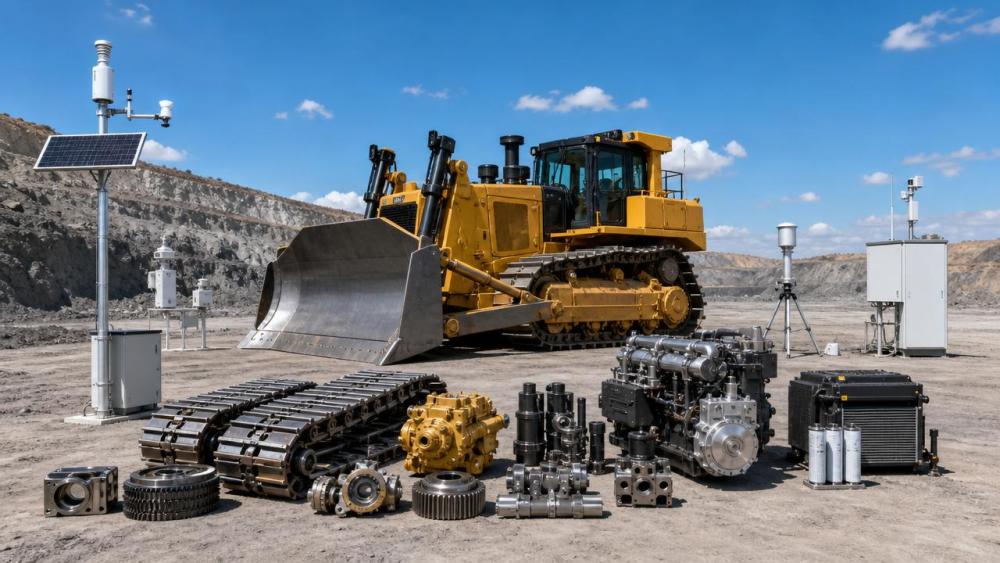
The disclosed information also indicates that, as an upstream supporting field, carbon emissions data related to special track steel, hydraulic pumps and valves, and high-power diesel engines used in large mining dozers will be included in mandatory lifecycle assessment disclosure items for exported equipment from China.
It has also been stated that mining procurement parties in Europe, the United States, Chile, and Australia have started preparation for carbon data interface alignment. At this stage, the publicly available information focuses on the policy direction, affected component categories, and export-related disclosure requirements.
Which Segments May Be Affected
Direct Export and Trade Companies
Exporters of High-HP Mining Dozers may be directly affected because lifecycle assessment disclosure is linked to exported equipment. The impact may appear in documentation preparation, buyer communication, and carbon data submission processes.
From an industry perspective, export companies may need to pay closer attention to whether carbon footprint data can be collected from upstream suppliers in a form that meets the needs of overseas mining buyers. This is especially relevant for markets where procurement parties have already begun carbon data interface preparation.
Raw Material Procurement Companies
Companies responsible for sourcing special track steel may face greater pressure to verify carbon emissions data from material suppliers. The reason is that special track steel has been identified as one of the key items connected to the lifecycle assessment disclosure of exported mining equipment.
Analysis shows that procurement work may no longer focus only on price, delivery, and technical specifications. It may also need to include whether suppliers can provide traceable carbon emissions information for export-related compliance communication.
Component Manufacturing Companies
Manufacturers of hydraulic pumps, hydraulic valves, and high-power diesel engines may be affected because these components are explicitly mentioned in the disclosed information. Their carbon emissions data may become part of the broader equipment-level lifecycle assessment disclosure.
Observably, component suppliers serving mining dozer manufacturers may need to improve the consistency and availability of carbon-related data. The impact is likely to be reflected in supplier qualification, technical documentation, and coordination with equipment manufacturers.
Equipment Manufacturing and Assembly Companies
High-HP Mining Dozers manufacturers may become the integration point for carbon footprint information across materials, hydraulic systems, engine systems, and other key upstream categories identified in the disclosure requirement.
What deserves more attention now is that equipment manufacturers may need to coordinate carbon data across multiple suppliers instead of treating lifecycle assessment disclosure as a single end-stage export document. The practical challenge may lie in data consistency across different component categories.
Channel, Distribution, and Supply-Chain Service Providers
Channel companies and supply-chain service providers involved in mining equipment export may also be affected because overseas buyers in Europe, the United States, Chile, and Australia have started preparations for carbon data interface alignment.
It is more appropriate to understand this as a potential shift in transaction support requirements. Service providers may need to help manage documentation flow, buyer-side data requests, and communication between manufacturers and procurement parties.
Key Points to Watch and Practical Responses
Track Follow-Up Official Statements and Implementation Details
Companies should continue to monitor follow-up official statements related to the inclusion of the petrochemical and chemical industry in the national carbon market from 2027. The current information confirms the policy direction, but companies still need to watch how disclosure formats, data boundaries, and implementation procedures are further clarified.
Identify Priority Components and Supplier Data Gaps
Export-oriented mining equipment companies should first review whether special track steel, hydraulic pumps and valves, and high-power diesel engines in their supply chains can provide carbon emissions data. These categories are directly named in the disclosed information and therefore should be treated as priority items for internal review.
Separate Policy Signals from Business Execution
Analysis shows that the current development is both a policy signal and a practical export preparation issue. However, companies should avoid assuming details that have not yet been publicly confirmed. A more prudent approach is to prepare data collection mechanisms while waiting for more specific disclosure requirements.
Prepare for Buyer-Side Data Interface Communication
Because mining procurement parties in Europe, the United States, Chile, and Australia have begun carbon data interface preparation, exporters and manufacturers should assess how they will communicate carbon footprint information to buyers. This may include checking internal data formats, supplier documentation readiness, and cross-border communication workflows.
Editor’s View / Industry Observation
From an industry perspective, this development suggests that carbon footprint disclosure is becoming more closely connected with heavy equipment export procedures, especially for High-HP Mining Dozers and their key upstream components.
It is more appropriate to understand this as a clear compliance-oriented signal rather than a fully completed business result. The direction has been stated, and affected categories have been identified, but detailed execution requirements may still require continued observation.
What deserves more attention now is the connection between domestic carbon market expansion and international mining procurement practices. If overseas buyers continue preparing carbon data interfaces, suppliers that lack traceable emissions data may face more communication and documentation pressure in export transactions.
Conclusion
The inclusion of the petrochemical and chemical industry in China’s national carbon emissions trading market from 2027 is not only relevant to chemical enterprises. For the High-HP Mining Dozers supply chain, it may also reshape how carbon footprint data is collected, transmitted, and disclosed in export-related lifecycle assessment processes.
Observably, the current development should be viewed as a practical reminder for exporters, manufacturers, component suppliers, and supply-chain service providers to examine data readiness. The most rational response is to follow official updates, review priority component data, and prepare for buyer-side carbon information requirements without making assumptions beyond the confirmed information.
Information Source Statement
Main source: National Development and Reform Commission information as described in the event summary dated June 2, 2026.
Information requiring continued observation: detailed disclosure procedures, specific lifecycle assessment data formats, supplier verification requirements, and the final implementation process for export equipment carbon footprint disclosure.