
Related News
- 00
0000-00
How to size heavy-duty loaders for North American mining operations - 00
0000-00
How altitude affects mining excavator performance in Latin America - 00
0000-00
Caterpillar Launches New Cat 6060 and Upgraded Autonomous Mining System - 00
0000-00
When does eco-friendly construction equipment pay for itself? - 00
0000-00
Will a wheel loader quick coupler fit your existing attachments?
Africa’s mining expansion—particularly in copper, gold, lithium, and rare earths—is driving a sharp rise in demand for construction and mining equipment. According to data released by the China Construction Machinery Industry Association in May 2026, excavator exports to Africa increased 62% year-on-year, with 75% of that demand directly tied to EPC development projects for strategic minerals across sub-Saharan Africa. This trend is notably accelerating adoption of articulated loaders, swamp/LGP dozers, and high-horsepower mining dozers—especially those customized for high-humidity, low-temperature, and low-ground-bearing-capacity environments. Stakeholders in international trade, mining logistics, heavy equipment distribution, and specialized OEM supply chains should monitor this shift closely.
Event Overview
In May 2026, the China Construction Machinery Industry Association reported that excavator exports to African markets rose 62% year-on-year. Of this growth, 75% was attributed to EPC-driven mining projects in sub-Saharan Africa focused on copper, gold, lithium, and rare earth elements. The data highlights increased deployment of articulated loaders, swamp/LGP dozers, and high-HP mining dozers—specifically adapted for extreme operational conditions including high moisture, low temperatures, and weak soil bearing capacity.
Impact on Specific Industry Segments
Direct Export Trading Firms: These firms face rising order volumes—but also tighter delivery windows and heightened technical specification requirements due to site-specific adaptations (e.g., corrosion-resistant hydraulics, extended undercarriage clearance). Demand is shifting from standard models toward purpose-built variants, affecting inventory planning and lead-time management.
Raw Material Procurement Entities: Increased production of mining-grade steel, specialized rubber compounds (for swamp-track systems), and heat-tolerant hydraulic fluids may see regional procurement pressure—especially where local sourcing in Africa remains limited and import dependencies persist.
OEM Component Manufacturers: Suppliers of undercarriage systems, cooling modules, and cab climate control units are seeing revised engineering requests aligned with tropical and arid mine-site conditions. Customization—not just volume—is becoming a key performance metric.
Distribution & Aftermarket Service Providers: Spare parts availability, technician training for localized terrain challenges (e.g., mud traction optimization), and mobile service fleet readiness are emerging as critical differentiators—not just pricing or delivery speed.
What Relevant Enterprises or Practitioners Should Monitor and Do Now
Track official project timelines and financing confirmations for sub-Saharan EPC contracts
While export data reflects realized shipments, many underlying EPC projects remain subject to sovereign financing approvals and environmental permitting. Current volumes signal momentum—but sustained growth hinges on actual project execution, not just tender announcements.
Monitor demand shifts toward specific equipment categories and configurations
Articulated loaders, swamp/LGP dozers, and high-HP mining dozers are now the leading growth segments—not general-purpose excavators. Firms should prioritize technical documentation, spare parts mapping, and service protocol updates for these models, particularly for humid and low-bearing-capacity terrains.
Distinguish between policy signals and on-the-ground operational readiness
Government-level mineral strategy statements (e.g., national lithium development plans) do not automatically translate into immediate equipment orders. Actual procurement often lags by 6–18 months—and depends heavily on power infrastructure, transport corridors, and labor certification readiness at site level.
Pre-position technical support resources for remote, high-difficulty sites
Given the emphasis on extreme-condition adaptability, firms should audit field-service capabilities—including logistics for spare parts delivery to inland mines, multilingual technician certification, and modular diagnostic toolkits validated for high-humidity operation.
Editorial Perspective / Industry Observation
Observably, this 62% export surge is less a one-off spike and more an early-stage inflection point—reflecting deeper structural alignment between African resource development priorities and Chinese equipment manufacturers’ customization capacity. Analysis shows that the 75% linkage to copper/gold/lithium/rare earth EPC projects suggests growing integration between upstream mining investment and midstream equipment deployment—not just transactional sales. From an industry perspective, it signals a shift from ‘equipment-as-commodity’ to ‘equipment-as-enabling-infrastructure’, where reliability under extreme conditions becomes a contractual requirement rather than a differentiator. That said, current data reflects order fulfillment—not long-term fleet utilization or maintenance economics—so sustained impact remains contingent on project continuity and local after-sales ecosystem maturity.
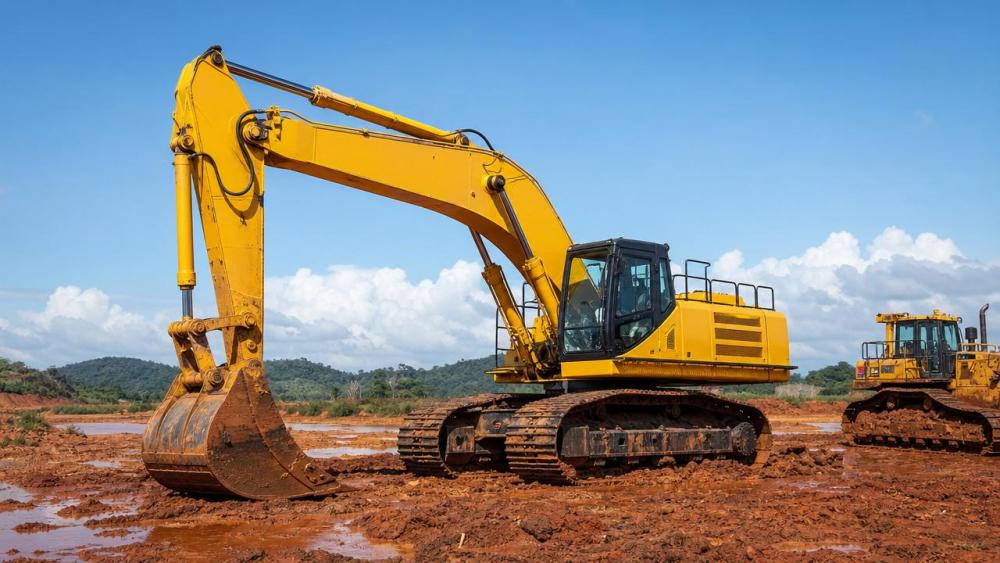
In summary, the Africa-related excavator export increase is a concrete indicator of accelerated mineral project implementation—but its broader industry significance lies in how it reshapes equipment specification expectations, service model design, and cross-border technical collaboration. It is best understood not as a short-term sales uplift, but as an early marker of evolving standards for heavy machinery in frontier mining environments.
Source: China Construction Machinery Industry Association (May 2026 data release). Note: Ongoing monitoring is recommended for EPC contract execution status, national mining policy implementation timelines, and regional after-sales infrastructure development—none of which are covered in the original dataset.