
Related News
- 00
0000-00
How to size heavy-duty loaders for North American mining operations - 00
0000-00
How altitude affects mining excavator performance in Latin America - 00
0000-00
Caterpillar Launches New Cat 6060 and Upgraded Autonomous Mining System - 00
0000-00
When does eco-friendly construction equipment pay for itself? - 00
0000-00
Will a wheel loader quick coupler fit your existing attachments?
On June 1, 2026, information disclosed at the first Wenzhou Hardware and Locks Industrial Belt Cross-Border E-Commerce Conference drew attention to export compliance for Smart Weighing Loaders. The update is relevant to cross-border trade companies, construction machinery OEMs, component suppliers, certification service providers, and overseas channel operators because the newly enforced EU EN 45501:2025 weighing sensor standard adds requirements that may affect product design, sourcing, certification, and delivery schedules.
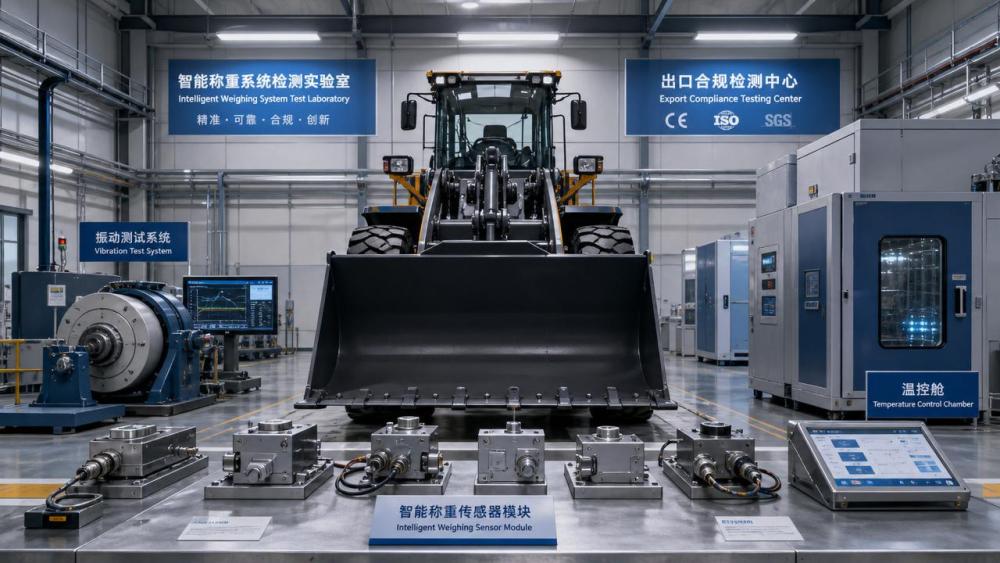
Event Overview
According to information released at the first Wenzhou Hardware and Locks Industrial Belt Cross-Border E-Commerce Conference held on May 29, the EU EN 45501:2025 updated weighing sensor standard became mandatory on June 1 for intelligent weighing construction machinery, including Smart Weighing Loaders.
The disclosed update states that the new standard adds requirements covering vibration immunity, wide-temperature-range linear compensation, and wireless communication encryption. It was also disclosed that supporting enterprises in Wenzhou have passed TUV Rheinland certification in batches and can support overseas OEMs in completing whole-machine compliance upgrades more quickly.
Which Segments May Be Affected
Cross-Border Trade Companies
Cross-border trade companies may be directly affected because Smart Weighing Loaders exported to the EU market now face updated compliance requirements for weighing modules and related sensor systems. The main impact is likely to appear in product selection, supplier qualification review, certification document verification, and communication with overseas buyers.
Analysis shows that traders handling intelligent construction machinery should pay closer attention to whether weighing modules meet the newly enforced EN 45501:2025 requirements, rather than only checking general product specifications or historical certification materials.
Construction Machinery OEMs
OEMs serving overseas markets are likely to face the most direct technical impact. The disclosed requirements involve vibration immunity, temperature compensation, and encrypted wireless communication, all of which are connected to the performance and compliance of weighing modules integrated into Smart Weighing Loaders.
From an industry perspective, the key issue for OEMs is not only whether a component can function, but whether the complete machine can meet the updated export compliance expectations after integration. This may require closer coordination between the OEM, module supplier, and certification body.
Weighing Module and Sensor Suppliers
Suppliers of weighing modules, sensors, and related electronic systems may see increased attention from overseas OEM customers. The disclosed information that Wenzhou supporting enterprises have passed TUV Rheinland certification in batches indicates that certified component readiness has become an important factor for export-oriented projects.
Observably, suppliers able to provide clear certification status, technical documentation, and compatibility support may be better positioned in export supply chains. However, this should be understood as an industry observation rather than a confirmed market outcome.
Certification and Supply Chain Service Providers
Certification service providers, compliance consultants, and supply chain coordinators may also be affected because OEMs and traders need to verify whether products, modules, and documents align with the newly enforced EU standard. The impact is mainly reflected in documentation review, certification scheduling, and communication across suppliers and overseas customers.
Current attention should be placed on the practical connection between component-level certification and whole-machine compliance, especially where Smart Weighing Loaders use wireless weighing communication or operate across varying temperature environments.
Overseas Channels and Buyers
Overseas distributors, importers, and project buyers dealing with Smart Weighing Loaders may need to adjust procurement checks. Since the standard has already become mandatory according to the disclosed information, buyers may increasingly ask for updated compliance evidence before accepting new shipments or confirming orders.
Analysis shows that channel operators should not treat this as a purely technical issue handled only by manufacturers. It may influence order confirmation, after-sales responsibility, and the risk of accepting products based on older documentation.
What Companies Should Watch and How to Respond
Track Official and Certification-Related Updates
Companies should continue to monitor official statements and certification-related explanations concerning EN 45501:2025, especially details related to vibration immunity, wide-temperature-range linear compensation, and wireless communication encryption. This is particularly important for companies exporting Smart Weighing Loaders or supplying weighing modules to overseas OEMs.
From an industry perspective, the immediate task is to confirm which products, modules, and export orders are affected by the mandatory implementation date of June 1, rather than waiting until shipment or customs-related documentation stages.
Review Key Product Categories and Target Markets
Companies should identify whether their current export portfolio includes Smart Weighing Loaders or other intelligent weighing construction machinery using similar weighing modules. For EU-oriented business, product teams should review whether existing technical files and supplier certificates reflect the newly disclosed requirements.
Analysis shows that the most practical review points include sensor certification status, module performance under vibration, temperature compensation capability, and wireless communication security design where applicable.
Separate Compliance Signals from Business Execution
The conference disclosure provides a clear compliance signal, but each enterprise still needs to verify how the requirement applies to its own products, orders, and customer contracts. Companies should avoid assuming that component certification automatically completes whole-machine compliance without checking integration conditions.
Observably, the more realistic approach is to build a compliance checklist around module selection, supplier documentation, OEM integration, and customer confirmation, then compare it with the updated standard requirements disclosed at the conference.
Prepare Supplier Communication and Documentation in Advance
Exporters and OEMs should contact weighing module suppliers to confirm whether relevant products have passed applicable certification and whether documentation can support overseas compliance review. Procurement teams should also clarify whether certified modules are available for batch supply and whether technical support is available during whole-machine upgrades.
Current attention should be placed on reducing delays caused by incomplete documents, unclear certification scope, or mismatch between certified components and actual machine configuration.
Editor’s View / Industry Observation
Analysis shows that this event is more than a local conference topic. It reflects a practical shift in export compliance for intelligent construction machinery, where weighing accuracy, operating environment resilience, and communication security are being considered together in module-level requirements.
Observably, the update is already a compliance result in terms of the June 1 mandatory implementation date disclosed at the conference. At the same time, its full business impact should still be treated as an area for continued observation, because enterprises will need to see how overseas OEMs, certification bodies, and buyers apply the new requirements in actual procurement and delivery processes.
From an industry perspective, the news is a signal that export-oriented machinery supply chains should move from reactive certification checks to earlier compliance planning. For Smart Weighing Loaders, the weighing module is no longer only a functional component; it is also a key compliance point affecting market access and order execution.
Conclusion
The Wenzhou conference disclosure highlights a timely compliance issue for Smart Weighing Loaders and related export supply chains. The mandatory implementation of EN 45501:2025, together with added requirements for vibration immunity, temperature compensation, and wireless communication encryption, may influence component sourcing, OEM integration, certification review, and overseas buyer communication.
Current information is best understood as both an implemented standard update and a signal for broader compliance adjustment. Companies involved in EU-oriented Smart Weighing Loader exports should respond by verifying affected products, reviewing supplier certification, and preparing technical documentation before business execution is delayed.
Information Source Statement
Main source: Information disclosed at the first Wenzhou Hardware and Locks Industrial Belt Cross-Border E-Commerce Conference held on May 29, 2026.
Items for continued observation: Subsequent official explanations, certification implementation details, and how overseas OEMs and buyers apply EN 45501:2025 requirements in actual Smart Weighing Loader procurement and delivery.