
Related News
- 00
0000-00
How to size heavy-duty loaders for North American mining operations - 00
0000-00
How altitude affects mining excavator performance in Latin America - 00
0000-00
Caterpillar Launches New Cat 6060 and Upgraded Autonomous Mining System - 00
0000-00
When does eco-friendly construction equipment pay for itself? - 00
0000-00
Will a wheel loader quick coupler fit your existing attachments?
Earthmoving accuracy is no longer judged only by operator skill or machine size. It is increasingly defined by how well digital guidance, site data, and hydraulic response work together in the field.
For projects measured by productivity, repeatability, and rework exposure, earthmoving machine control technology has become a practical benchmark. It helps excavators, dozers, and graders cut, fill, and shape with tighter tolerances and less uncertainty.
That matters across road building, mining support, airport grading, utilities, and urban infrastructure. In those settings, small errors in elevation or slope can quickly become schedule loss, material waste, and downstream correction costs.
What machine control changes on the jobsite
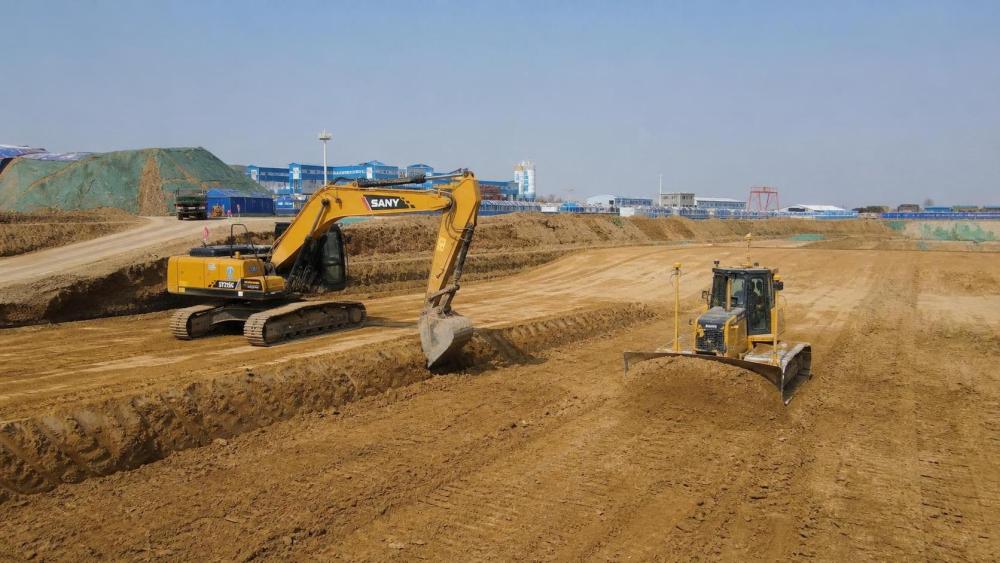
At its core, earthmoving machine control technology links machine position with a digital design surface. The system then compares actual blade, bucket, or attachment location against the target grade in real time.
The result is guidance that is far more precise than visual estimation alone. Depending on machine type and configuration, the operator sees cut-and-fill values, slope references, and immediate feedback on whether the work is on design.
In many current systems, GNSS receivers, inertial sensors, angle sensors, and control software form the measurement backbone. Higher-end setups also integrate 3D models, base stations, correction services, and automated hydraulic functions.
This is why accuracy improves. The machine is no longer relying on repeated staking, guesswork, or visual memory of a grade plan. It is working against a live spatial reference.
Why the topic now carries more weight
The pressure on earthmoving fleets has changed. Large projects move faster, labor availability remains uneven, and rework is harder to absorb when schedules are compressed and material costs remain volatile.
At the same time, machine platforms have become more electronic and more connected. Electro-hydraulic control, telematics, and digital design workflows make machine control a logical extension rather than a separate experiment.
This is especially visible in the equipment categories tracked by EMD. Crawler excavators depend on controlled breakout force and attachment positioning. Motor graders rely on precise blade geometry. Bulldozers need repeatable push accuracy across changing surfaces.
As decarbonization and autonomy gain ground, accuracy also connects directly to fuel use, cycle efficiency, and machine utilization. Better first-pass results mean fewer corrective passes and less wasted machine time.
How accuracy improves in practical terms
The strongest benefit is consistency. Earthmoving machine control technology reduces variation between operators, shifts, and working conditions. That consistency matters more than isolated peak performance.
Better elevation control
Grade errors often start with poor vertical reference. A machine control system continually tracks target elevation, making overcut and undercut easier to spot before they become expensive corrections.
More stable slope execution
Slopes on drainage works, embankments, and road shoulders can drift when operators rely only on eye judgment. Digital slope guidance keeps the machine aligned with the intended geometry over longer runs.
Reduced dependency on repeated staking
Traditional stakeout remains useful, but frequent restaking slows progress and increases exposure to interpretation errors. With 3D guidance, crews can work with fewer interruptions while keeping reference accuracy visible in the cab.
Fewer corrective passes
Accuracy is not just a finish-grade issue. Each extra pass consumes fuel, time, and component life. When the machine gets closer to design earlier, the total production cycle becomes cleaner.
Where the value differs by equipment type
The same technology does not create the same value on every machine. Evaluation should follow the work profile, attachment behavior, and tolerance expectations of each platform.
Wheel loaders usually create value more indirectly. Their benefit appears when controlled loading, stockpile shaping, and haul support reduce variability feeding the rest of the earthmoving sequence.
The hidden business impact behind better grade control
Accuracy affects more than finish quality. It changes the economics of the whole work package.
- Less rework lowers machine hours and operator time spent correcting avoidable mistakes.
- Tighter excavation and fill control reduce imported material and spoil handling.
- Cleaner execution improves handoff to paving, drainage, utility, and structural crews.
- Digital records support quality verification and clearer production review.
- More predictable performance improves fleet planning and attachment utilization.
For organizations studying capital efficiency, earthmoving machine control technology is often easier to justify when viewed as a system-level improvement instead of a cab display feature.
What deserves closer scrutiny during evaluation
Not every machine control setup delivers the same field result. Accuracy claims need context, especially when conditions include poor satellite visibility, unstable ground, or mixed attachment use.
Sensor architecture and correction method
Check whether the system depends on single GNSS, dual GNSS, total station support, or a blended positioning method. Also review correction reliability, latency, and local coverage.
Hydraulic integration depth
Guidance-only systems help visibility, but automated or semi-automated hydraulic control can deliver stronger repeatability. The tradeoff is higher integration complexity and calibration sensitivity.
Model handling and workflow discipline
A precise machine still fails if the design model is outdated, poorly translated, or inconsistently loaded. Data governance is a core part of earthmoving machine control technology performance.
Operator interface quality
A cluttered screen or weak alert logic can slow adoption. Clear visuals, intuitive controls, and fast calibration routines usually improve jobsite acceptance.
Where industry direction is heading
EMD closely follows the shift from isolated machine guidance toward connected, intelligent earthmoving ecosystems. That direction is visible in remote support, low-latency communications, and more capable electro-hydraulic control platforms.
Machine control is also becoming a foundation for autonomy. Before a machine can automate movement confidently, it must understand position, design intent, and attachment state with high reliability.
The decarbonization angle is equally relevant. Better grade accuracy reduces waste motion, and wasted motion is fuel burn, battery drain, and unnecessary wear translated directly into operating cost.
A practical next step for decision quality
A useful assessment starts with the work, not the feature sheet. Map the highest-cost accuracy failures first, such as over-excavation, finish grade drift, or repeated shaping passes.
Then compare earthmoving machine control technology by machine class, sensor configuration, model workflow, and support structure. Pay close attention to calibration routines, correction stability, and measurable first-pass improvement.
Where possible, review the technology against real surfaces and real tolerances instead of demonstration conditions. That makes it easier to judge whether the system truly improves accuracy, or simply improves visibility.
The strongest decisions usually come from pairing field evidence with broader market intelligence. That approach fits the wider EMD perspective: precision, machine dynamics, and infrastructure performance should be evaluated as one connected operating picture.