
Related News
- 00
0000-00
How to size heavy-duty loaders for North American mining operations - 00
0000-00
How altitude affects mining excavator performance in Latin America - 00
0000-00
Caterpillar Launches New Cat 6060 and Upgraded Autonomous Mining System - 00
0000-00
When does eco-friendly construction equipment pay for itself? - 00
0000-00
Will a wheel loader quick coupler fit your existing attachments?
Starting 15 May 2026, major global construction equipment manufacturers—including Sany Heavy Industry, Caterpillar, and Komatsu—implemented coordinated price increases amid sharp rises in critical raw material costs and intensifying supply chain pressures from the新能源 sector. The move directly impacts procurement strategies, cost planning, and long-term commercial frameworks across international markets.
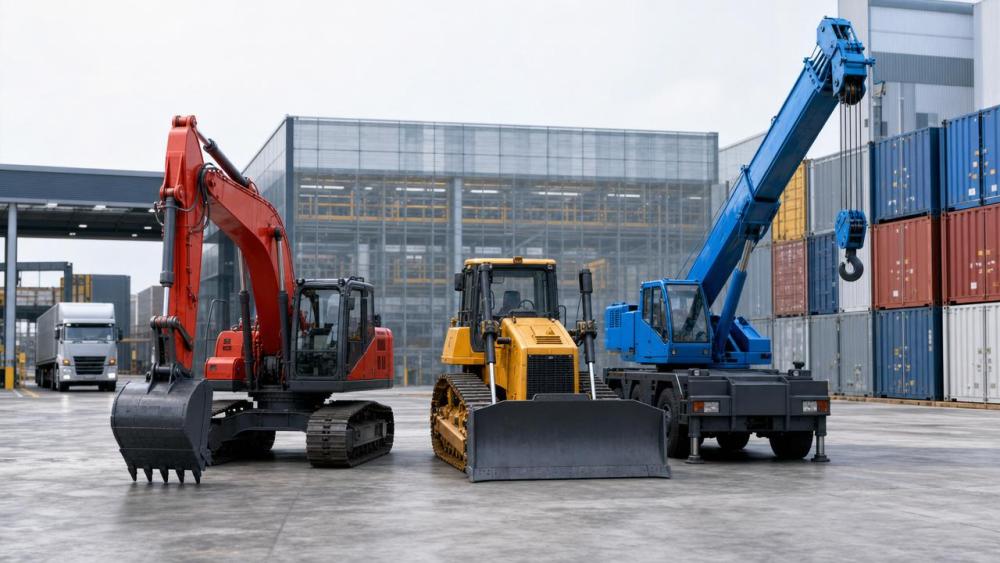
Confirmed Pricing Adjustments Effective May 2026
On 15 May 2026, Sany Heavy Industry raised prices for excavators uniformly by 5%. Caterpillar introduced a 3–5% surcharge beginning in March 2026 and announced an additional 4–7% increase scheduled for July 2026. Komatsu reported cumulative price hikes of 12–13% on its high-demand models. These adjustments stem directly from a 33%–213% surge in the prices of key raw materials—including copper, lithium iron phosphate (LiFePO₄), and lithium hexafluorophosphate (LiPF₆)—relative to early-2025 levels, compounded by intensified resource competition from the global new energy industry.
Impact Across Supply Chain Roles
International Trading Enterprises
Direct trading enterprises face immediate pressure on landed cost calculations and margin stability. With staggered timing across manufacturers (e.g., Caterpillar’s phased surcharges versus Sany’s single-step increase), trade finance terms, letter-of-credit validity windows, and forward contract enforceability require urgent reassessment.
Raw Material Procurement Firms
Firms sourcing copper, LiFePO₄, or LiPF₆ must now monitor dual-market dynamics: rising demand from both battery manufacturers and heavy equipment OEMs. This convergence tightens allocation priorities, extends lead times, and elevates qualification requirements for certified suppliers.
Equipment Manufacturing Companies
Domestic and regional assemblers relying on imported components or branded subsystems face cascading cost revisions. Bill-of-materials recalibration, BOM-level compliance documentation, and revision-controlled technical specifications are now time-sensitive operational priorities.
Supply Chain Service Providers
Logistics, customs brokerage, and bonded warehousing providers must adapt to revised valuation protocols, updated HS code interpretations for hybrid powertrain equipment, and heightened scrutiny of origin declarations—particularly where battery-integrated machinery triggers new classification thresholds under WTO and regional trade agreements.
Strategic Priorities for Enterprise Response
Re-evaluate Long-Term Pricing Agreements
Overseas customers must revise fixed-price contracts signed prior to Q1 2026, especially those lacking indexation clauses tied to raw material benchmarks (e.g., LME copper or battery-grade lithium carbonate indices). Contractual force majeure language may no longer cover sustained input-cost volatility without explicit commodity linkage.
Adjust Procurement Timelines and Inventory Buffers
Given Caterpillar’s two-phase adjustment (March + July) and Komatsu’s cumulative 12–13% rise, procurement cycles must align with manufacturer release calendars—not just fiscal quarters. Strategic pre-buying of high-turnover models before July 2026 may mitigate exposure to the second-tier increase.
Verify Technical Documentation Against New Cost Structures
Price revisions often accompany specification updates—especially for battery-integrated machines using LiFePO₄ or LiPF₆-based systems. Buyers should confirm that CE, UL, or ISO 14001/45001 certifications reflect current component configurations, and that safety data sheets (SDS) and UN transport classifications remain valid post-price change.
Industry Perspective: Beyond Short-Term Cost Adjustment
Analysis shows this is not merely a cyclical repricing event but a structural inflection point driven by cross-sectoral resource competition. From an industry perspective, the convergence of construction equipment electrification and battery-intensive new energy deployment has redefined raw material scarcity thresholds—transforming copper and specialty lithium salts from industrial commodities into strategic inputs subject to allocation governance. What deserves closer attention is how OEMs’ pricing cadence (e.g., Caterpillar’s staged approach vs. Sany’s unified action) reflects divergent supply chain resilience models—and how those models influence downstream certification pathways and tender evaluation criteria in public infrastructure projects.
Toward Adaptive Procurement Governance
This episode underscores that procurement strategy can no longer be decoupled from upstream materials policy, battery supply chain transparency, and evolving trade classification frameworks. Rather than treating price adjustments as isolated commercial events, stakeholders should integrate them into broader risk registers covering raw material traceability, technical standard alignment (e.g., IEC 62619 for industrial batteries), and multilateral tariff treatment under green transition initiatives.
Source Attribution & Verification Guidance
This article was generated exclusively from the user-provided title, event date (15 May 2026), and summary. Specific official source links were not provided in the input and should be verified continuously. Stakeholders are advised to monitor updates from the International Organization for Standardization (ISO), the United Nations Economic Commission for Europe (UNECE), national customs authorities, and OEM-specific commercial bulletins for implementation details, regulatory interpretations, tender document amendments, and supplier qualification notices.