
Related News
- 00
0000-00
How to size heavy-duty loaders for North American mining operations - 00
0000-00
How altitude affects mining excavator performance in Latin America - 00
0000-00
Caterpillar Launches New Cat 6060 and Upgraded Autonomous Mining System - 00
0000-00
When does eco-friendly construction equipment pay for itself? - 00
0000-00
Will a wheel loader quick coupler fit your existing attachments?
Heavy machinery industry signals are changing fleet investment logic
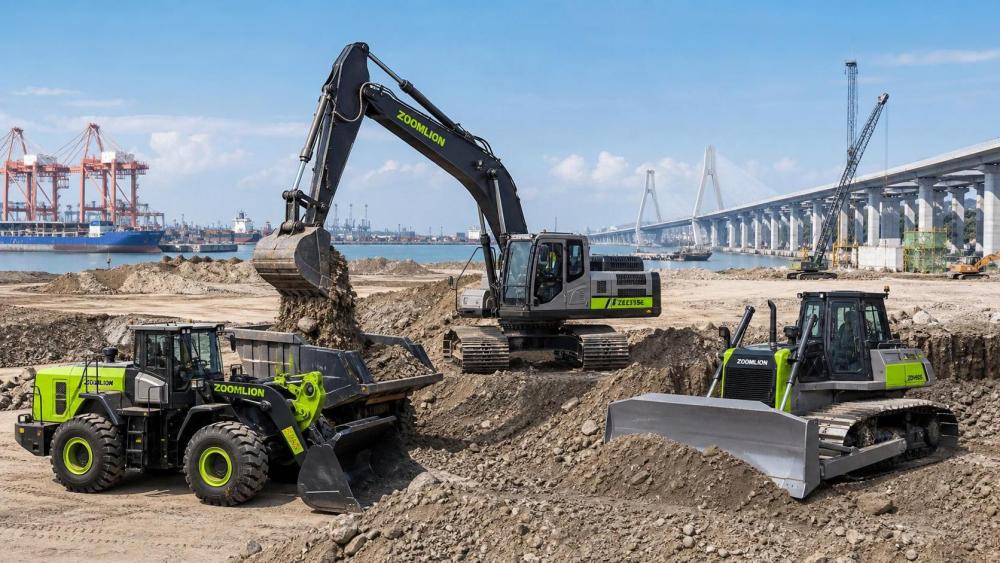
Fleet investment is no longer shaped only by project volume, financing cost, or replacement cycles.
The heavy machinery industry is moving through a deeper reset.
Emission rules are tightening, electrification is moving from pilot to practical deployment, and machine data is becoming a financial input.
That shift matters across construction, mining, roadbuilding, ports, and large public infrastructure programs.
The most visible changes appear in crawler excavators, wheel loaders, motor graders, bulldozers, and skid steer loaders.
These are the categories where uptime, hydraulic precision, fuel intensity, and operator availability directly shape returns.
Recent fleet decisions in the heavy machinery industry increasingly reflect a broader question.
Which assets can stay compliant, connected, and productive through the next operating cycle?
That is why market observation now goes beyond unit sales.
It includes hydraulic system efficiency, remote diagnostics, autonomy readiness, and regional infrastructure spending momentum.
Why this shift is becoming more visible now
Several pressures are converging at the same time, and the heavy machinery industry is feeling all of them.
Public infrastructure programs are expanding in some markets, while private construction remains uneven.
This creates demand for fleets that can move between high-volume earthmoving and more specialized precision work.
At the same time, non-road emission standards are pushing older machines toward earlier retirement or expensive retrofit decisions.
The powertrain conversation is also changing.
Diesel remains dominant in heavy-duty applications, yet electric compact equipment and hybrid support systems are gaining credibility.
This is especially relevant in urban zones, tunnels, ports, and noise-sensitive projects.
Another important driver is labor pressure.
Advanced machine control, semi-autonomous functions, and intuitive electro-hydraulic controls are reducing dependence on scarce operator experience.
That does not eliminate labor constraints, but it changes how productivity is protected.
- Decarbonization policies are raising the long-term cost of inefficient fleets.
- Telematics platforms are making utilization gaps easier to measure and harder to ignore.
- Infrastructure owners increasingly expect proof of compliance, traceability, and safety performance.
- OEM competition is shifting toward software capability, service coverage, and machine intelligence.
These forces explain why the heavy machinery industry is not simply upgrading equipment.
It is redefining what a valuable fleet looks like.
The machines drawing the most attention are not all changing in the same way
One of the clearest market signals is segmentation.
The heavy machinery industry is not moving in a single direction across every equipment class.
Crawler excavators remain central because they combine breakout force, attachment flexibility, and growing compatibility with digital jobsite systems.
Wheel loaders are seeing stronger scrutiny around fuel burn, payload accuracy, and cycle-time consistency in mining and bulk handling.
Motor graders are becoming more strategic as airports, highways, and logistics corridors require tighter tolerance control.
Bulldozers are increasingly judged by traction efficiency, hydrostatic transmission performance, and remote operation potential in hazardous environments.
Skid steer loaders continue to benefit from urban redevelopment and compact-site versatility.
That diversity is why static buying assumptions are losing relevance.
This pattern is well aligned with how EMD reads the market.
Performance is no longer separated from intelligence, compliance, and jobsite data visibility.
Data is moving from maintenance support to capital allocation tool
A more subtle shift in the heavy machinery industry is happening inside asset management.
Telematics used to support preventive maintenance and service scheduling.
Now it is being used to challenge fleet composition itself.
Utilization rates, idle hours, fuel curves, operator behavior, and component stress data are feeding investment models.
That matters because many fleets are overbuilt in some categories and under-capable in others.
In practical terms, data is making replacement timing more precise.
It also helps compare whether a newer machine justifies its premium through uptime, emissions compliance, and lower rework risk.
For the heavy machinery industry, this is a meaningful change.
Capital decisions are becoming less centered on catalog specifications and more centered on verified field performance.
What tends to matter most in current evaluations
- Actual load profile versus rated machine capacity
- Downtime patterns linked to hydraulic, control, or aftertreatment systems
- Performance in low-skill or high-turnover operator environments
- Ability to connect with grading, site mapping, or remote support platforms
- Residual value under future compliance and technology expectations
The impact reaches far beyond equipment ownership
The heavy machinery industry affects more than machines on a balance sheet.
It influences project bidding, site productivity, maintenance planning, workforce strategy, and financing conditions.
A fleet with stronger emissions performance may qualify more easily for urban and public contracts.
A fleet with integrated machine control may reduce survey dependence and grading rework.
A fleet without reliable data connectivity may appear cheaper upfront but weaken reporting discipline later.
That is why short-term cost comparisons often miss the real market direction.
More noticeable now is the gap between machine ownership and fleet capability.
Ownership answers whether equipment exists.
Capability answers whether equipment can meet tomorrow’s jobs, regulations, and productivity standards.
That distinction is becoming central across the heavy machinery industry.
How to read the next phase without overreacting
The next phase will likely be uneven rather than linear.
Electrification will expand fastest in compact and controlled environments.
Autonomy will scale first in repetitive, high-risk, or closed-site operations.
Advanced hydraulics and digital controls will remain critical in mainstream earthmoving categories.
This means the heavy machinery industry is entering a mixed transition, not a single-technology takeover.
A useful response is to separate hype from application fit.
Some fleets need low-emission compact units for city projects.
Others need heavy tracked equipment with remote support and stronger component durability for mines or remote corridors.
EMD’s perspective is relevant here because it follows both machine physics and macro infrastructure momentum.
That combination helps frame better timing decisions.
- Track which equipment classes face the earliest compliance pressure in core markets.
- Measure whether machine intelligence reduces rework, idle time, or operator dependency.
- Review where compact electrified equipment already makes economic sense.
- Test fleet scenarios against infrastructure cycles, not just annual budgets.
The heavy machinery industry is not merely adding smarter machines.
It is redefining how fleets create resilience, compliance, and earning power.
The strongest next step is to compare current fleet assumptions with live operating evidence.
Then build a staged plan around utilization, emissions exposure, digital readiness, and application-specific demand.
In this environment, better timing may matter as much as bigger spending.