
Related News
- 00
0000-00
How to size heavy-duty loaders for North American mining operations - 00
0000-00
How altitude affects mining excavator performance in Latin America - 00
0000-00
Caterpillar Launches New Cat 6060 and Upgraded Autonomous Mining System - 00
0000-00
When does eco-friendly construction equipment pay for itself? - 00
0000-00
Will a wheel loader quick coupler fit your existing attachments?
Earthmoving technology is moving into a more strategic phase for global construction, mining, roadbuilding, and urban infrastructure. Efficiency is no longer shaped by engine power alone. It now depends on how machines, operators, software, energy systems, and jobsite data work together.
That shift matters because asset utilization, fuel exposure, emissions compliance, and project timelines are all under pressure at the same time. In practice, the companies that understand emerging earthmoving technology trends early are better positioned to control operating risk and improve jobsite output.
Across crawler excavators, wheel loaders, motor graders, bulldozers, and skid steer loaders, the industry is becoming more digital, more precise, and increasingly aligned with decarbonization goals. The result is a new operating model where productivity gains come from smarter decisions, not just larger fleets.
Why earthmoving technology now sits at the center of efficiency planning
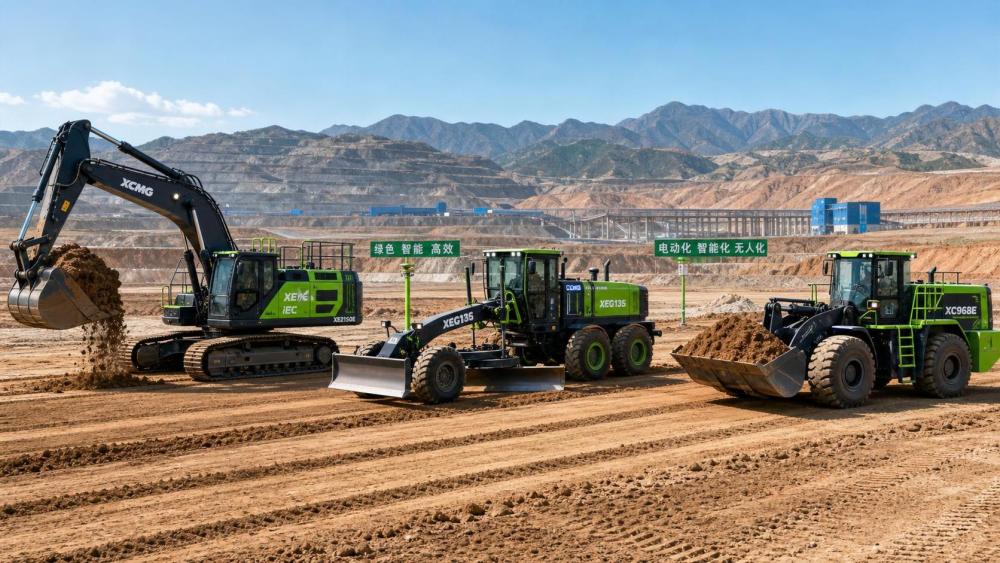
The traditional view of earthmoving technology focused on horsepower, bucket size, breakout force, and uptime. Those factors still matter, but they no longer tell the full story of performance.
Today, a machine must also fit tighter emissions rules, support mixed-skill labor environments, and deliver cleaner data for planning, maintenance, and cost control. That is why technology choices increasingly affect financial outcomes, not only field operations.
This is especially visible in large infrastructure programs and high-output material handling. A crawler excavator with strong hydraulic precision, a grader with advanced 3D guidance, or a loader with payload intelligence can change cycle efficiency across an entire project.
Platforms such as EMD track these changes closely because the market is no longer evolving in isolated product segments. Hydraulic control logic, autonomous functions, fleet connectivity, and low-emission powertrains are converging into one broader earthmoving technology landscape.
The major trends reshaping machine performance
Several trends stand out because they directly influence cycle time, operating cost, safety, and equipment life. They are not theoretical. They are already affecting buying decisions, retrofit priorities, and tender competitiveness.
Automation is moving from assistance to controlled autonomy
Machine control systems have advanced well beyond simple guidance. Excavators now support semi-automated digging paths, graders can maintain design surfaces with minimal rework, and dozers can hold consistent blade positions across changing terrain.
In hazardous mines and remote zones, low-latency communication is also expanding teleoperation. This reduces exposure to dangerous conditions while keeping high-value assets productive in environments where labor access is limited.
Electrification is becoming practical in selected duty cycles
Battery-electric and hybrid earthmoving technology is gaining traction first in compact and medium-duty applications. Urban projects, tunnels, indoor sites, and noise-sensitive areas are the clearest near-term fit.
For heavier equipment, the path is more gradual. Still, electrification is already influencing procurement decisions because energy costs, local regulations, and sustainability targets increasingly affect equipment strategy.
Precision control is reducing waste, rework, and operator variability
GPS, laser sensing, inertial measurement, and 3D spatial algorithms are changing how surfaces are cut, shaped, and verified. On road and airport projects, millimeter-level grading precision can materially reduce material overuse and corrective passes.
The same principle applies to excavation and loading. Better electro-hydraulic proportional control can improve responsiveness, shorten cycle times, and support more predictable operator performance.
Connected fleets are turning machine data into management leverage
Telematics is no longer only for location tracking. Advanced fleet systems now connect fuel burn, idle time, payload, hydraulic behavior, service intervals, and fault trends into one management view.
This gives decision-makers a clearer way to compare sites, detect underused assets, and validate whether a technology upgrade actually improves jobsite efficiency.
How the trends play out across core machine categories
Not every trend carries the same weight for every asset. The value of earthmoving technology depends on duty cycle, ground conditions, material type, labor structure, and project constraints.
This machine-by-machine view is important because technology decisions often fail when they are generalized across the fleet. What works for a mine loader may not deliver equal value for a compact urban grading team.
What the business case really looks like
The strongest case for advanced earthmoving technology is usually built on a combination of small gains. A few percentage points from lower idle time, more accurate grading, fewer return visits, and better maintenance timing can create a meaningful margin advantage.
There is also a resilience benefit. Fleets with stronger digital visibility adapt faster when fuel prices rise, emissions rules change, or operator availability tightens. That matters in a market shaped by infrastructure cycles and uneven regional demand.
EMD’s perspective is useful here because it connects machine engineering with wider commercial signals. Demand for mini-excavators and skid steers, stricter non-road emissions rules, and remote-control adoption in hazardous sites are not isolated developments. They point to a broader shift in how equipment value is judged.
How to evaluate earthmoving technology without chasing hype
The market is full of impressive claims, but not every feature improves jobsite efficiency. A disciplined evaluation framework is more useful than a feature checklist.
- Match technology to the dominant work cycle, not to brand messaging.
- Measure expected gains in hours, fuel, rework, and service intervals.
- Check whether site connectivity supports the promised digital functions.
- Review training demands, especially for advanced controls and guidance tools.
- Compare retrofit potential with full replacement economics.
- Confirm data ownership, system interoperability, and vendor support depth.
Usually, the most effective investments are the ones that remove a persistent bottleneck. On one site, that may be payload inconsistency. On another, it may be grading accuracy or maintenance delays caused by poor diagnostics.
Questions worth testing before a wider rollout
- Does the system reduce dependence on top-tier operator skill?
- Can it improve utilization across multiple project types?
- Will it remain compliant with expected emissions and safety rules?
- Is the data output usable for planning and commercial reporting?
Where the next decisions should focus
The next wave of earthmoving technology will likely reward integration more than isolated innovation. Machines that combine hydraulic efficiency, autonomy-ready controls, cleaner power options, and reliable fleet intelligence will define the new benchmark.
For that reason, the best next step is not simply to compare equipment brochures. It is to map actual jobsite friction points, rank them by cost impact, and then assess which technology trends solve those problems at scale.
A practical review can start with three areas: machines with the highest idle or fuel exposure, projects where precision errors create rework, and sites where labor or safety constraints limit throughput. From there, it becomes easier to build a clear investment logic around earthmoving technology rather than reacting to market noise.
That approach fits the direction of the industry. Earthmoving is no longer only about moving more material. It is about moving material with better control, cleaner energy logic, and sharper operational intelligence.