
Related News
- 00
0000-00
How an earthmoving equipment portal helps vet factory capabilities - 00
0000-00
How to assess equipment specifications against applicable standards - 00
0000-00
How Middle East climate conditions should shape heavy equipment selection - 00
0000-00
Can an industrial equipment sourcing supplier directory improve vendor selection? - 00
0000-00
How earthmoving equipment is applied in canal construction
Excavator technology is moving from hardware choice to strategic operating model
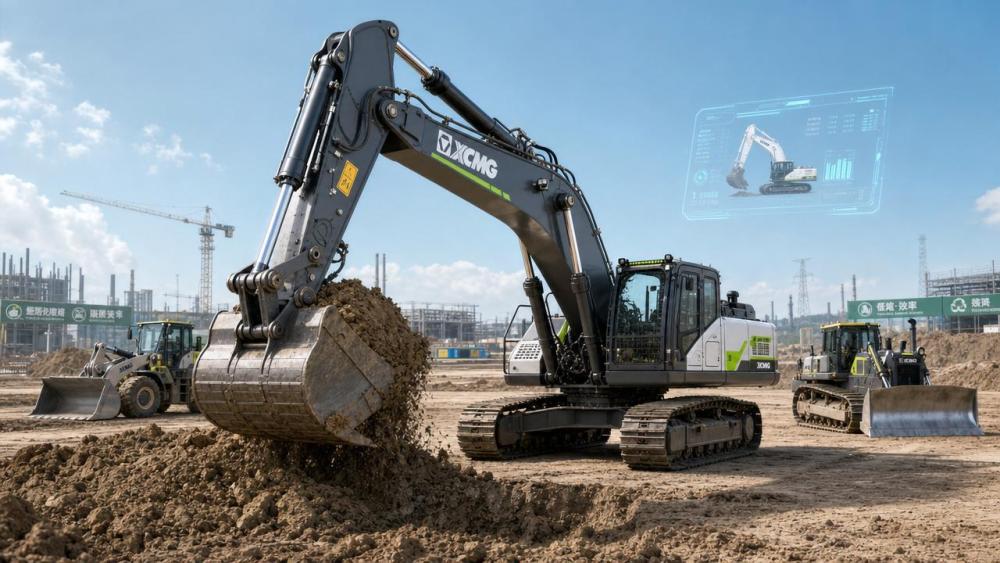
In 2026, excavator technology is no longer judged only by breakout force, reach, or cycle time.
The bigger shift is how machines now influence visibility, compliance, uptime, and capital discipline across entire fleets.
That change matters well beyond crawler excavators themselves.
Wheel loaders, graders, bulldozers, and compact machines increasingly share the same digital architecture, operator logic, and decarbonization pressure.
From EMD’s perspective, this is where the market becomes more interesting.
The industry is stitching together hydraulic performance, machine intelligence, and lower-carbon operation into one investment question.
Excavator technology now sits at the center of that decision.
Telematics is sharpening asset visibility, automation is reducing variability, and lower fuel burn is turning engineering gains into measurable margin protection.
The result is a market where the smartest machine is not always the most complex one.
It is the machine that best aligns data, operator behavior, jobsite conditions, and lifecycle cost.
Why the new signal is becoming hard to ignore
Several forces are converging at the same time, and excavator technology is absorbing all of them.
Infrastructure spending remains active in many regions, yet project economics have become less forgiving.
Fuel volatility still affects operating plans.
Non-road emissions rules continue to tighten.
Skilled operators are harder to retain, while safety expectations keep rising.
More important, digital expectations have matured.
Fleet owners no longer see telematics as a nice dashboard feature.
They expect machine data to support dispatching, idle control, predictive service, and asset redeployment.
This is why excavator technology is becoming a strategic lever for long-term ROI, not a narrow engineering upgrade.
The pressure points behind the shift
What stands out is that none of these pressures is temporary.
They are reshaping how machine value is defined across the broader industrial equipment ecosystem.
Telematics is becoming the control tower, not just the reporting layer
The most visible advance in excavator technology is still telematics, but the use case has changed.
Early systems mainly reported location, hours, and service intervals.
In 2026, connected excavators are expected to inform decisions in near real time.
That includes idle analysis, work mode selection, attachment utilization, geofencing, and comparative fuel behavior across sites.
From a management standpoint, the gain is not simply more data.
It is clearer accountability.
A connected machine makes it easier to distinguish between underused assets, poor dispatch logic, operator drift, and genuine service issues.
That is especially valuable in mixed fleets where excavators work alongside loaders, dozers, and graders on tightly sequenced jobs.
The practical implication is straightforward.
Excavator technology now affects planning quality as much as digging performance.
Where connected visibility pays off fastest
- Identifying idle-heavy machines on urban utility and road packages
- Matching attachment usage with actual project scope
- Preventing unnecessary transport between short-duration sites
- Flagging service risk before it disrupts a critical sequence
These are small decisions individually, yet together they often deliver larger savings than a headline engine upgrade.
Automation is spreading through assistance before full autonomy
There is still strong interest in autonomous heavy equipment, especially in mines and hazardous environments.
Even so, the bigger commercial story in excavator technology is assisted operation.
Grade control, swing limits, bucket path guidance, payload feedback, and automated stop functions are moving into mainstream fleet specifications.
This is happening because assistance tools solve immediate problems.
They shorten training curves, improve repeatability, and reduce rework on trenching, foundation, slope, and finishing tasks.
They also fit the logic seen across EMD’s core machinery categories.
Motor graders are already built around precision guidance.
Dozers continue to evolve through machine control.
Excavators are following the same path, but with more complex hydraulic and attachment variables.
That complexity is exactly why automation matters.
It helps standardize results in work that has traditionally depended on individual skill intensity.
Lower fuel burn is now an engineering story and a commercial story
Fuel efficiency used to be discussed as an operating expense issue.
Now it also shapes financing assumptions, tender competitiveness, and emissions positioning.
That is why lower fuel burn sits at the center of current excavator technology development.
Recent gains are coming from tighter electro-hydraulic coordination, optimized pump control, reduced parasitic losses, and smarter power mode calibration.
In practical use, this means fewer wasted engine revs during partial load cycles and less mismatch between hydraulic demand and engine output.
The effect is strongest on jobs with repeated short movements, variable material density, or frequent waiting intervals.
Mini-excavators in urban redevelopment, mid-size machines in utility work, and heavy crawler units in quarry support all benefit differently.
The common thread is that efficiency is becoming more context-specific.
A lower fuel burn claim now needs to be read against duty cycle, attachment mix, and operator behavior.
The questions worth asking in 2026
- Which duty cycles show the largest real fuel variance per hour?
- How well does the control system balance power and hydraulic demand?
- Can telematics separate operator behavior from machine efficiency?
- Does the machine support lower-carbon reporting requirements?
Those questions reveal more than a brochure specification sheet can.
The impact is spreading across jobsites, finance models, and equipment strategy
One reason excavator technology deserves closer attention is that its effects do not stay inside the excavator category.
Connected excavation changes truck timing, loader staging, and grading accuracy downstream.
Assisted digging affects safety protocols and rework rates upstream.
Fuel savings influence not only site cost, but also the economic case for replacing older companion machines.
This is becoming more visible on large infrastructure packages and in mines, where machine interactions are tightly linked.
It is also visible in smaller urban projects, where jobsite space, noise limits, and idle restrictions raise the value of smarter equipment behavior.
As a result, excavator technology is influencing fleet architecture.
Replacement cycles, attachment strategy, service contracts, and data platform choices increasingly need to be aligned.
What deserves attention before the next investment cycle closes
The strongest decisions in this market are rarely based on one flagship feature.
They come from understanding how excavator technology performs across three layers at once.
The first layer is machine physics.
That includes hydraulic response, controllability, and attachment compatibility.
The second layer is digital reliability.
Data quality, system interoperability, and alert usefulness matter more than dashboard aesthetics.
The third layer is organizational readiness.
A connected or semi-automated excavator creates value only if workflows, service teams, and operating policies can use it.
This is where disciplined intelligence becomes valuable.
EMD’s broader lens across excavators, loaders, graders, bulldozers, and skid steers shows that technology adoption succeeds fastest when evaluation is cross-functional, not siloed.
A practical next-step agenda
- Map current fleet idle patterns and fuel variance by application
- Compare automation features by rework reduction, not novelty
- Review whether telematics data can support maintenance and compliance decisions
- Test machine value within full jobsite workflows, not isolated demos
In 2026, the real edge in excavator technology comes from choosing systems that make heavy equipment fleets more visible, more precise, and less wasteful.
The next phase will belong to organizations that read those signals early and turn them into disciplined operating advantage.