
Related News
- 00
0000-00
What determines equipment durability on airport construction sites? - 00
0000-00
How terrain and dealer support shape machinery selection in Latin America - 00
0000-00
How market insight content analysis reveals shifts in equipment demand - 00
0000-00
When do OEM heavy machinery parts justify their higher cost? - 00
0000-00
What to compare among construction equipment manufacturers in North America
In 2026, excavator technology is no longer defined by isolated hardware upgrades. It is being shaped by connected controls, assisted operation, safer jobsite behavior, and cleaner power systems that influence cost, uptime, and project risk at the same time.
That shift matters across the wider equipment ecosystem. Excavators sit at the center of earthmoving workflows, linking with loaders, graders, bulldozers, and compact machines in projects where timing, fuel use, precision, and operator performance all affect margins.
From the perspective of EMD, this is where technical detail becomes strategic intelligence. The market is moving toward machines that combine hydraulic force, spatial data, remote connectivity, and decarbonization into a more measurable operating model.
Why excavator technology is becoming a board-level issue
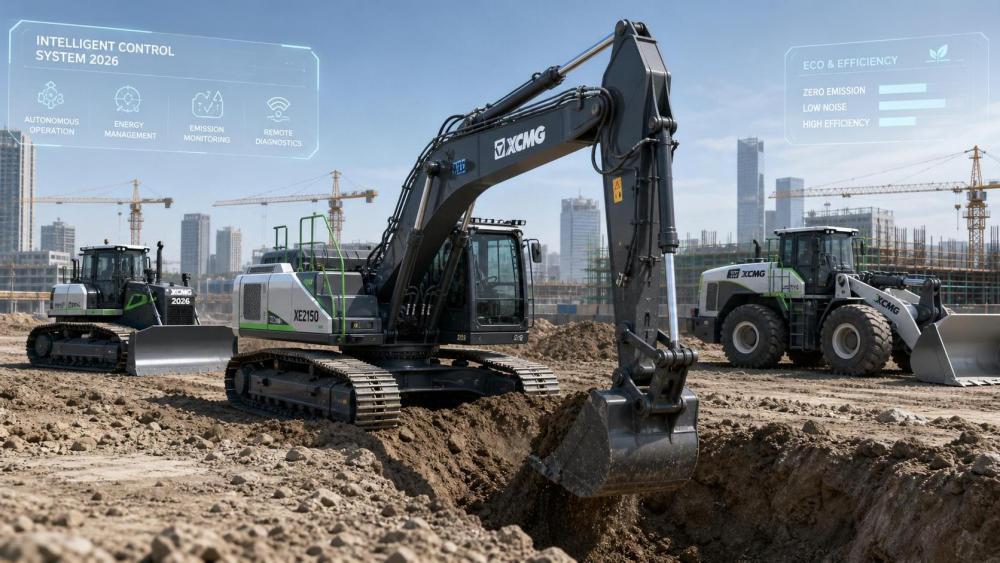
The first question is not whether automation is coming. It is how fast its economics are improving.
Excavator technology now affects procurement logic, fleet renewal cycles, bid competitiveness, and compliance planning. A machine with better automation may reduce rework, idle fuel burn, and safety exposure more effectively than a simple increase in engine power.
Global infrastructure programs, mining development, urban redevelopment, and stricter non-road emission rules are all pushing the market in the same direction. Buyers are not only comparing tonnage classes. They are comparing digital capability, data visibility, and lifecycle resilience.
This helps explain why advanced crawler excavators remain the crown jewel of many fleets. They are no longer judged only by breakout force and cycle time, but also by how well they integrate with grade control, telematics, remote support, and predictive maintenance systems.
What defines excavator technology in 2026
The term covers more than machine electronics. In practical use, excavator technology refers to the way sensors, software, hydraulics, powertrain architecture, and operator interfaces work together to produce repeatable field performance.
A modern excavator may include electro-hydraulic proportional control, GNSS-supported guidance, 3D spatial positioning, obstacle detection, payload estimation, and cloud-linked service data. These features are increasingly interconnected rather than optional add-ons.
The important change is integration. When machine intelligence can coordinate boom, arm, bucket, swing, and travel behavior against design data or site limits, the result is not just convenience. It is tighter process control.
Core technology layers shaping decisions
- Operator-assist controls that smooth digging, limit overcut, and support faster training curves.
- Safety systems that detect people, machines, edges, and restricted movement zones.
- Telematics platforms that convert machine data into service and utilization insight.
- Low-emission powertrains, including hybrid, battery-electric, and improved diesel efficiency packages.
- Remote communication architecture for diagnostics, fleet coordination, and hazardous-site operation.
Automation is moving from assistance to workflow control
Automation in excavator technology does not always mean a fully unmanned machine. In most commercial settings, the real value begins with assisted precision.
Grade-assist functions, semi-automatic trenching, bucket path guidance, and swing boundary control are reducing variability between shifts and operators. This matters wherever projects face labor shortages, compressed schedules, or tighter tolerances.
More advanced applications are appearing in mining, demolition, tunneling support, and hazardous material environments. There, remote-controlled systems and low-latency communication reduce human exposure while keeping production active.
EMD has tracked this transition across broader earthmoving categories. Excavators increasingly set the digital standard that adjacent equipment must follow, especially where loaders, graders, and bulldozers need synchronized site data.
Where automation creates measurable value
Safety is becoming predictive, not only protective
A few years ago, safety features often meant alarms and cameras. In 2026, leading excavator technology is moving toward predictive behavior.
Machine vision, radar, proximity alerts, and geofenced work zones are helping prevent incidents before the operator reacts. That shift is especially important on mixed jobsites where excavators work near trucks, compact equipment, and ground personnel.
Safety also connects directly to productivity. Fewer unexpected stops, less damage, and better confidence in confined areas support more stable daily output.
Another important trend is ergonomic intelligence. Better cab layout, interface design, and smoother hydraulic response reduce fatigue, which can be as critical as any external sensor package during long operating cycles.
Efficiency now means data quality as much as fuel economy
Efficiency in excavator technology used to be discussed in terms of liters per hour. That still matters, but it is no longer enough.
The stronger metric is useful work per operating hour. That includes cycle consistency, reduced idle time, lower rework, attachment compatibility, maintenance timing, and the ability to keep machines deployed where they create the highest return.
Telematics platforms are central here. When fleet data is accurate and readable, it becomes easier to compare sites, detect underused assets, and identify where training or machine specification is limiting output.
For EMD, this is where intelligence stitching becomes commercially relevant. Data from excavators should not sit alone. It becomes more valuable when reviewed alongside loader transfer rates, grader precision targets, and bulldozer push efficiency.
Powertrain choices are widening
Low-emission powertrains are no longer niche experiments. Hybrid systems are improving fuel efficiency in larger classes, while battery-electric excavators are gaining fit in urban, indoor, and noise-sensitive applications.
Diesel remains important, especially in heavy-duty cycles and remote regions. However, cleaner engine platforms, smarter energy recovery, and better hydraulic matching are changing the total cost picture.
The right decision depends on duty profile, charging or fueling access, shift length, regulation exposure, and residual value assumptions. The best technology is not the most advanced on paper. It is the one that matches the operating pattern.
Where to focus when comparing new excavator technology
Specification sheets rarely show the full difference between machines. A stronger comparison starts with business questions rather than feature counts.
- Check whether automation functions solve a real bottleneck, not just add complexity.
- Review sensor performance in dust, vibration, rain, and congested operating zones.
- Compare telematics outputs, data ownership terms, and integration with existing fleet tools.
- Assess hydraulic responsiveness with attachments, not only with a standard bucket.
- Test service support, software update policy, and remote diagnostics capability.
- Model lifecycle value using uptime, training needs, compliance costs, and resale outlook.
This approach helps separate meaningful excavator technology from feature inflation. It also makes cross-brand evaluation more disciplined.
The next competitive edge lies in informed adoption
The 2026 market rewards those who treat excavator technology as an operating system for earthmoving performance, not a standalone machine upgrade.
Automation, safety, and efficiency are now linked. Better control supports safer movement. Better data supports cleaner maintenance decisions. Better powertrain alignment supports lower cost and stronger compliance positioning.
A practical next step is to map current fleet pain points against the technology layers that can actually change outcomes. That may mean reviewing utilization data, ranking high-risk tasks, comparing emission exposure by region, and testing how digital workflows connect across machine categories.
The most useful market intelligence will come from that wider view. In other words, the future of excavator technology is not only about smarter excavation. It is about building a more coordinated, resilient, and measurable earthmoving operation.