
Related News
- 00
0000-00
How an earthmoving equipment portal helps vet factory capabilities - 00
0000-00
How to assess equipment specifications against applicable standards - 00
0000-00
How Middle East climate conditions should shape heavy equipment selection - 00
0000-00
Can an industrial equipment sourcing supplier directory improve vendor selection? - 00
0000-00
How earthmoving equipment is applied in canal construction
Autonomous construction is moving out of the pilot phase
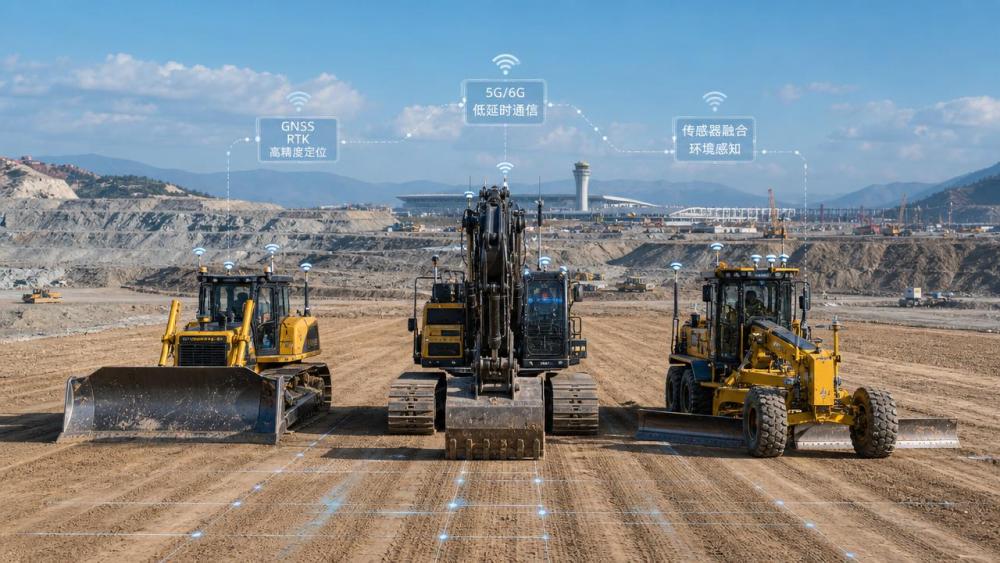
Autonomous construction now sits closer to capital planning than innovation theater.
That shift is visible across earthmoving fleets, quarry operations, airport grading, and large civil works.
What changed is not only software maturity.
The bigger change is operational pressure.
Projects face tighter labor availability, stricter emissions rules, thinner schedule buffers, and rising expectations for traceable site performance.
In that environment, autonomous construction is becoming a practical answer to recurring execution risk.
For heavy equipment intelligence platforms such as EMD, the most revealing signal is where demand is concentrating.
Attention is clustering around crawler excavators, wheel loaders, motor graders, bulldozers, and compact machines that already generate rich control data.
These are the machines where hydraulic precision, GNSS guidance, low-latency communication, and repeatable work cycles increasingly intersect.
As 2026 approaches, the main question is no longer whether autonomy matters.
It is what must be checked before rollout, so investment creates usable production rather than impressive demonstrations.
The market signals behind autonomous construction are getting harder to ignore
Recent movement in autonomous construction reflects several pressures arriving at once.
Large sites want more output consistency, not just more peak performance.
That matters especially in grading, repetitive digging, haul loading, stockpile management, and hazardous-zone operation.
The old model depended heavily on individual operator excellence.
The new model values process stability across shifts, subcontractors, and mixed fleets.
More noticeably, autonomous construction also aligns with decarbonization targets.
Idle reduction, smoother machine motion, optimized route planning, and less rework can lower fuel burn without waiting for full fleet replacement.
That is why autonomy is increasingly discussed beside electrification, telematics, and emissions compliance instead of as a separate digital experiment.
- Infrastructure projects need tighter schedule certainty under volatile material and labor conditions.
- Mine and heavy civil sites want safer production in hazardous, remote, or low-visibility areas.
- Equipment owners need better asset utilization across mixed machine brands and machine ages.
- Regulators and project sponsors increasingly expect measurable environmental and safety reporting.
Each driver reinforces the others.
That is why autonomous construction now looks less like a frontier bet and more like a governance challenge.
Before a 2026 rollout, interoperability matters more than headline autonomy claims
One of the most common rollout mistakes is treating autonomy as a machine feature instead of a site system.
In real projects, autonomous construction succeeds only when excavators, graders, loaders, dispatch tools, and site models share reliable instructions.
This is especially important in mixed fleets.
A highly automated bulldozer can still underperform if grade plans, correction data, payload systems, and fleet management platforms do not stay synchronized.
EMD’s coverage of electro-hydraulic control logic and spatial guidance trends points to the same conclusion.
Precision at the attachment or blade level is only useful when the digital jobsite is equally precise.
The strongest autonomous construction programs usually begin by cleaning the digital foundation.
That work feels less visible than a demo machine, but it determines whether autonomy scales beyond one site.
Safety governance is becoming a board-level issue, not just a site procedure
Autonomous construction changes who makes decisions in motion and who remains accountable when conditions change suddenly.
That makes governance design just as important as sensor performance.
The practical concern is not whether systems can operate unattended for a period.
The concern is whether exceptional events are anticipated clearly enough to prevent cascading risk.
This includes unauthorized access, unclear handoff between manual and autonomous modes, temporary signal loss, and unexpected obstacles.
In high-force equipment such as crawler excavators and bulldozers, these gaps carry serious consequences.
A mature rollout plan should define operating envelopes before deployment begins.
- Map tasks that are suitable for repeatable autonomy and separate them from variable tasks.
- Set clear human intervention rules for low-confidence sensor or positioning conditions.
- Align incident documentation with insurer, regulator, and client reporting expectations.
- Test emergency stop performance under dust, slope, weather, and traffic interference.
More projects are learning that autonomous construction does not eliminate human responsibility.
It redistributes it across software, site planning, supervision, and compliance functions.
The return on autonomous construction depends on task design, not generic ROI promises
ROI claims often fail because they compare autonomy with an unrealistic manual baseline.
The better comparison uses actual job conditions.
That means varying ground conditions, shift changes, haul distances, weather disruption, and idle time between tasks.
Autonomous construction tends to create value in three less glamorous places.
It reduces rework, lowers variability, and extends productive hours in controlled zones.
Those effects matter greatly in precision grading, repetitive loading cycles, and remote or hazardous work areas.
They matter less in chaotic sites where plans change hourly.
For that reason, rollout decisions should be tied to task categories, not broad fleet narratives.
A motor grader following a stable digital terrain model has a very different autonomy case from a compact loader working around unpredictable urban utility crews.
This is where EMD’s focus on asset utilization becomes relevant.
Autonomy creates stronger economics when it improves utilization across the entire engineering value chain, not only one machine shift.
Emissions compliance and autonomy are starting to reinforce each other
Another important signal is the growing overlap between autonomous construction and non-road emissions strategy.
As regulations tighten, fleet owners need more than cleaner engines.
They need operating discipline that cuts unnecessary fuel burn and documents performance credibly.
Autonomous construction can help by smoothing throttle behavior, reducing idle waiting, improving haul path efficiency, and limiting corrective passes.
That does not mean every autonomous system delivers emissions gains automatically.
It means emissions outcomes should be measured as part of rollout design.
This is especially relevant for heavy earthmoving fleets under scrutiny from public infrastructure sponsors and multinational mining groups.
Where electrification is partial or years away, better autonomous operating logic may be the fastest route to near-term carbon and fuel improvements.
The next twelve months favor disciplined pilots over symbolic deployments
The strongest near-term strategy is selective expansion, not blanket autonomy.
Autonomous construction should first be tested where repeatability, digital mapping quality, and safety boundaries are already strong.
That often includes quarry loading zones, mine support tasks, airport grading sections, and large infrastructure cut-and-fill operations.
The goal is to prove operational resilience, not just autonomous motion.
A credible 2026 rollout plan usually starts with a compact checklist.
- Audit which sites already have dependable survey data and machine connectivity.
- Rank machine classes by repeatable task potential and integration readiness.
- Measure baseline fuel use, rework rates, idle time, and schedule variance before pilots.
- Build governance rules for handoff, exception handling, cybersecurity, and incident review.
- Track outcomes by site productivity and compliance quality, not by software activation alone.
Autonomous construction is no longer defined by what the machine can do in ideal conditions.
It is defined by what the operating system around the machine can sustain at scale.
That is the checkpoint worth watching now.
The next move is simple.
Review readiness site by site, compare machine-task fit, and build a staged plan before 2026 locks in new competitive standards.