
Related News
- 00
0000-00
How an earthmoving equipment portal helps vet factory capabilities - 00
0000-00
How to assess equipment specifications against applicable standards - 00
0000-00
How Middle East climate conditions should shape heavy equipment selection - 00
0000-00
Can an industrial equipment sourcing supplier directory improve vendor selection? - 00
0000-00
How earthmoving equipment is applied in canal construction
Why autonomous construction matters in 2026
Autonomous construction is no longer a fringe experiment for innovation budgets.
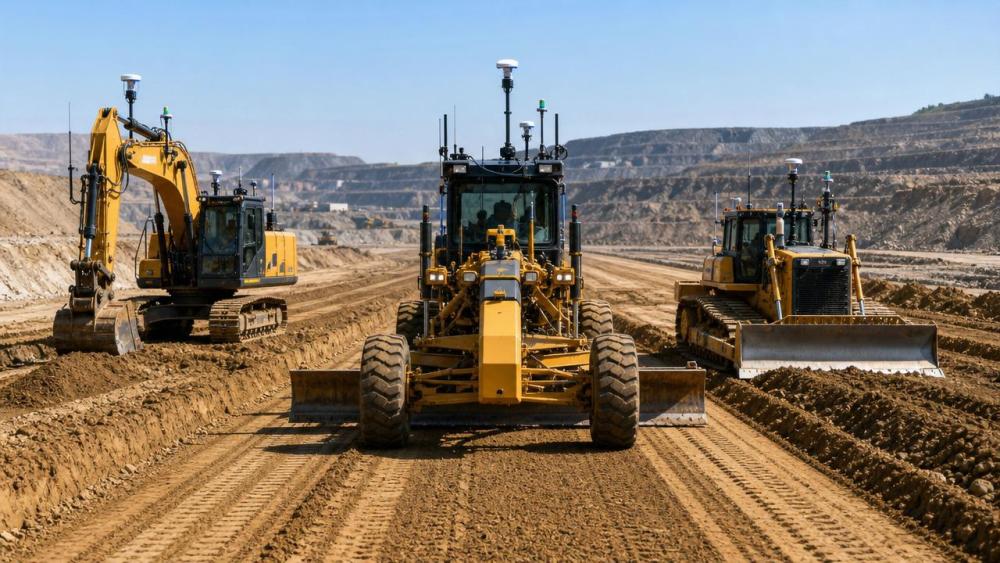
In 2026, it is becoming a practical operating model across earthmoving, grading, quarry activity, mining support, and large infrastructure delivery.
The shift matters because labor pressure, fuel volatility, emissions targets, and schedule risk now collide on the same jobsite.
That makes autonomous construction less about novelty and more about control over production, safety exposure, and asset productivity.
For equipment-intensive operations, the real question is not whether autonomy will arrive.
The real question is where value survives implementation risk, and where the numbers remain compelling after integration, training, and maintenance are included.
This is especially relevant in the EMD landscape, where crawler excavators, wheel loaders, motor graders, bulldozers, and skid steer loaders increasingly operate within data-rich and regulation-sensitive environments.
In that context, autonomous construction sits at the intersection of hydraulic performance, machine intelligence, low-latency control, and decarbonization strategy.
What autonomous construction actually includes
The term covers more than fully driverless machines.
It includes assisted digging, semi-autonomous grading, remote operation, automated haul cycles, obstacle detection, site mapping, and coordinated fleet workflows.
In practice, autonomous construction often starts with narrow, repeatable tasks.
Examples include trenching by design model, stockpile loading, repetitive dozing passes, and precision grading for roads or airport surfaces.
That matters because the highest returns usually appear where work cycles are structured, machine paths are predictable, and digital site data is reliable.
EMD has tracked this pattern closely across machines that already depend on electro-hydraulic precision, GPS correction, laser sensing, and advanced payload control.
Autonomy, in other words, builds on existing machine intelligence rather than replacing the whole operating system overnight.
Where industry attention is moving
Current interest is shifting from pilot success stories to scale discipline.
A site can demonstrate autonomous construction in a controlled zone and still fail to create enterprise value.
The main reason is that deployment quality depends on the full system around the machine.
Connectivity, GNSS correction, sensor cleanliness, operator override logic, workface design, and maintenance readiness all shape performance.
Regulatory pressure is another major factor.
Non-road emissions rules, safety obligations, and data governance requirements increasingly affect procurement decisions for smart heavy equipment.
This is one reason the EMD intelligence model links autonomy with decarbonization rather than treating them as separate agendas.
Autonomous construction becomes more attractive when it improves idle control, reduces rework, supports better fuel planning, and raises utilization of expensive machines.
The risks that can erode value
The most damaging risk is not always technical failure.
Often it is a business model mismatch between where autonomy performs well and where buyers expect immediate transformation.
Several risk areas deserve close attention:
- Workflow risk, when site plans, haul routes, or work sequencing change too often for stable automation.
- Integration risk, when fleet software, machine controls, and telematics platforms do not exchange clean data.
- Safety risk, when mixed traffic between autonomous and manned equipment lacks clear separation logic.
- Connectivity risk, especially in mines, tunnels, remote corridors, or dense urban environments.
- Maintenance risk, when sensors, cameras, antennas, and calibration routines are treated as optional extras.
- Compliance risk, when audit trails, cybersecurity, and incident accountability remain undefined.
There is also a subtler risk in over-automation.
Some environments still need human judgment for irregular soil behavior, unexpected underground conditions, or crowded urban work zones.
In these cases, autonomous construction should support supervised execution, not force a fully unmanned model.
The ROI signals that deserve attention
Healthy ROI rarely starts with headline labor savings alone.
The stronger signals usually come from operational consistency and better use of high-value assets.
The best ROI cases often appear in grading, repetitive excavation, quarry loading, mine support, and large-scale dozing.
These are environments where digital plans, measured surfaces, and repeated passes create a stable foundation for autonomous construction.
How use cases differ by machine category
Not every machine class generates value in the same way.
A useful evaluation starts with the production logic of each asset.
Crawler excavators and bulldozers
These machines benefit when cut depth, blade path, and work zones can be mapped with confidence.
Autonomous construction here supports repeatable earthmoving, reduced overcut, and stronger control of fuel-intensive passes.
Motor graders
Grading is one of the clearest autonomy opportunities.
High-precision GPS and laser systems already push the work toward rule-based execution and measurable surface quality.
Wheel loaders and skid steer loaders
These assets can benefit from automated loading paths, stockpile logic, and attachment-based workflows.
Yet they also face more dynamic interactions, especially in urban and mixed-traffic settings.
That means autonomous construction may scale more cautiously here than on isolated mine or highway projects.
A practical framework for judging readiness
A strong decision process looks beyond vendor claims.
It asks whether the operating environment is structurally compatible with autonomous construction.
- Check task repeatability before checking feature lists.
- Measure data quality from design files, terrain models, and telematics feeds.
- Map intervention points where human override remains essential.
- Model uptime impact from sensor cleaning, calibration, and software updates.
- Test cybersecurity and communications resilience in real operating conditions.
- Use phased deployment targets tied to productivity, safety, and rework indicators.
This kind of discipline is where intelligence platforms like EMD create value.
The point is not simply to follow a technology trend.
It is to connect machine physics, site conditions, regulation, and commercial timing into a coherent investment case.
What to do next
In 2026, autonomous construction should be evaluated as a portfolio decision, not a standalone gadget purchase.
The most credible path is to rank use cases by repeatability, hazard exposure, data maturity, and capital intensity.
Then compare ROI signals against the real risks of integration, supervision, and compliance.
Where those signals are clear, autonomous construction can improve throughput, protect margins, and strengthen long-term competitiveness.
Where they are weak, a staged approach using remote operation, assisted control, or precision guidance may deliver better results.
The next step is straightforward: build a short list of machine-task combinations, define measurable success thresholds, and assess them against operating reality rather than market noise.