
Related News
- 00
0000-00
How much does a 3D grader guidance system cost fully installed? - 00
0000-00
How to verify capacity before sourcing equipment from manufacturers - 00
0000-00
When to choose LGP dozers for infrastructure site preparation - 00
0000-00
How to size heavy-duty loaders for North American mining operations - 00
0000-00
How altitude affects mining excavator performance in Latin America
A grading crew is ready, haul trucks are waiting, and the project schedule says the next lift must be complete before the utility subcontractor arrives. Then visibility drops, a skilled dozer operator is unavailable, or repeated rework reveals that the finished surface is outside tolerance. A delay that began as a small operational interruption can quickly affect trucking windows, material deliveries, inspections, and downstream trades.
Robotic autonomous earthmoving equipment reduces site delays when it is assigned to work that is repeatable, measurable, and supported by a stable operating environment. It is not a universal replacement for experienced operators or site supervisors. Its strongest value appears where teams need machines to keep moving through labor gaps, hazardous conditions, night shifts, or highly repetitive production cycles—while maintaining a digital record of where work has been completed.
For project managers, the key question is not “Can this machine operate autonomously?” It is “Which delay on this site is predictable enough for autonomy to remove?” The answer may be a dozer repeatedly pushing cut material along a defined route, an excavator loading from a controlled bench, a fleet hauling within a geofenced quarry, or a motor grader maintaining formation levels across a long road corridor.
Autonomy works best when the delay has a repeatable pattern
Construction delays are often treated as unavoidable consequences of weather, people, equipment, and changing ground conditions. Some are unavoidable. Others occur because a machine cycle depends too heavily on constant human intervention: repositioning for the next pass, waiting for instructions, correcting inconsistent grade, or pausing when operators change shifts.
Autonomous operation is most practical when the task has a recognizable production rhythm. The machine needs a defined work zone, clear boundaries, reliable positioning, and a workflow that can be translated into repeatable machine actions. In that setting, automation can reduce variation rather than merely add another technology layer.
- High-volume cut-and-fill work: Long, consistent dozing runs and repeated loading cycles are easier to automate than scattered, one-off excavation tasks.
- Closed or semi-controlled haul routes: Mines, quarries, landfills, ports, and large greenfield projects can support autonomous haulage more readily than congested urban streets.
- Precision grading: GPS, GNSS, total station, laser, and 3D machine-control data give motor graders and dozers a reliable reference for maintaining target surfaces.
- Hazardous zones: Unstable slopes, blast-adjacent areas, contaminated ground, extreme heat, and poor-visibility operations are environments where removing people from the cab can matter as much as cycle time.
- Labor-constrained shifts: Where qualified operators are difficult to staff overnight or across multiple rotations, supervised autonomous equipment can keep critical production moving.
The common thread is predictability. A robotic machine performs well when its environment is structured enough that exceptions are limited, identifiable, and safely escalated. On a site where every hour brings new obstructions, undocumented utilities, changing access routes, and mixed pedestrian traffic, autonomy may still play a role—but usually as operator-assist or remote operation rather than fully autonomous production.
The delays that autonomous earthmoving can actually reduce
Not every minute saved at the machine becomes a day saved on the schedule. Project leaders should trace delays back to the constraint that controls the next activity. If compaction cannot begin until grade is accepted, then more accurate autonomous grading may have much greater schedule value than simply increasing dozer utilization.
1. Shift-change and operator-availability interruptions
Traditional earthmoving output is tied closely to the availability of a capable person in every cab. When staffing is thin, a machine may be parked even though fuel, material, and access are available. Autonomous and remotely supervised fleets can extend operating windows, particularly on repetitive work fronts. The aim is not unattended operation without accountability; it is to allow one control team to supervise defined tasks while on-site personnel handle inspection, exceptions, fueling, and changing conditions.
This is especially relevant for bulldozers, wheel loaders, and haul units working in contained production areas. A project with a short weather window may not need a larger fleet. It may need more dependable productive hours from the fleet already mobilized.
2. Grade rework and inspection hold points
Fine grading delays often hide inside the schedule. A surface may look complete, yet require another pass because drainage falls are inconsistent, subgrade is overcut, or the finished level does not match the digital design model. Rework consumes machine time, delays testing, and can force other crews to wait.
Precision grading equipment equipped with 3D control systems can maintain the intended surface more consistently, provided the design files, local control, and calibration process are sound. Autonomous functionality adds value when the grader or dozer can repeatedly execute planned passes without drifting from the target strategy. But the digital terrain model must be treated as a live construction document, not an upload completed at project kickoff. Design revisions, temporary drainage changes, and field-engineered adjustments need disciplined version control.
3. Waiting caused by poor fleet synchronization
An excavator waiting for trucks is underutilized. Trucks queuing without a loader are equally costly. In a conventional operation, radio calls and experienced dispatchers often keep the system together. Yet on large sites, the visibility of real-time queues, route blockages, dumping status, fuel state, and production balance can be incomplete.
Robotic autonomous earthmoving equipment is most useful when connected to fleet coordination software rather than deployed as isolated machines. Autonomous haulage, loading, and dozing become schedule tools when the system can assign routes, manage safe separation, reroute around restricted areas, and show supervisors where the bottleneck is forming. The machine intelligence matters, but the workflow intelligence is what prevents one automated unit from simply waiting more efficiently.
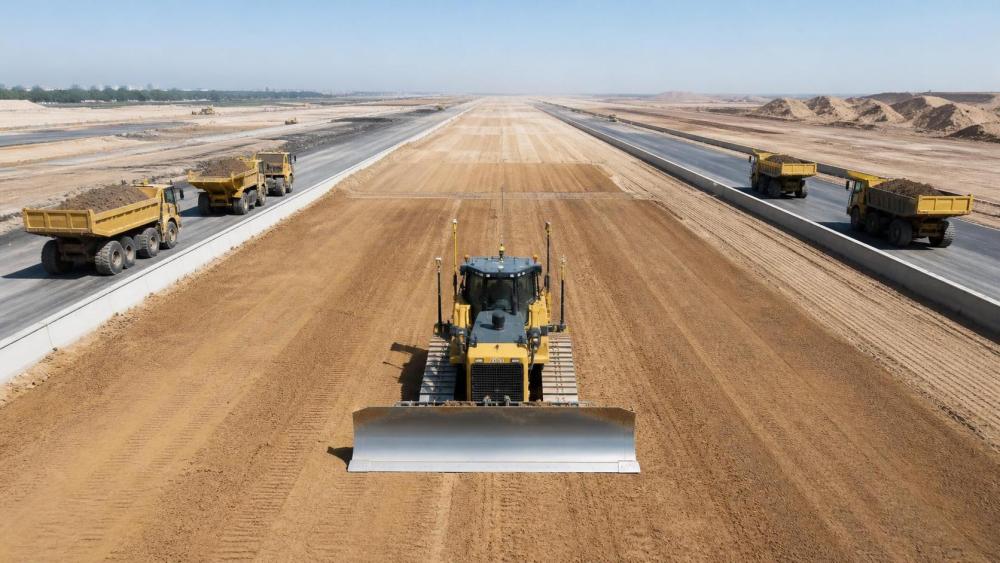
4. Work stoppages in exposure-prone areas
There are conditions in which the most sensible delay is a safety stop. A human operator should not be placed under an unstable highwall, in a blast exclusion zone, or in an area affected by poor air quality simply to protect production. Remote control and autonomous modes can allow limited, carefully governed work to continue after risk controls are established.
In these cases, schedule protection comes from reducing human exposure, not from asking machinery to take unsafe decisions. Geofences, obstacle detection, emergency-stop logic, communications redundancy, and clear exclusion zones are essential. If those controls are not available or cannot be verified, the work should remain paused.
A practical decision test before mobilizing an autonomous fleet
Automation investments disappoint when teams start with the machine instead of the operating problem. A project manager can make a more defensible decision by reviewing five conditions together.
A positive result across these areas does not mean a site is ready for full autonomy from day one. It suggests that a controlled pilot is likely to provide useful evidence. A negative result in one area—especially traffic management, survey control, or emergency-response readiness—should lead to redesign of the work zone before any broader deployment.
Choose the automation level that matches the workfront
The phrase “autonomous equipment” can obscure important differences. Many projects gain more from a graduated approach than from pursuing full autonomy immediately.
Machine guidance and operator assist are often the right first step for complex excavation and finish work. A skilled excavator operator still controls the bucket, but 3D guidance shows cut depth, slope, and reach limits. A dozer operator uses automatic blade control to maintain design grade while retaining control of route choice and obstacle response. These systems can reduce rework without requiring a fully segregated site.
Remote operation is valuable where the task is variable but personnel exposure is unacceptable. An operator can control an excavator from a safe station during slope cleanup, hazardous-material handling, or work near unstable ground. Latency, camera coverage, and communication reliability become critical engineering concerns, particularly for fine hydraulic movements.
Supervised autonomy fits repetitive production tasks in geofenced areas. The equipment follows approved routes and work plans while remote staff monitor progress and respond to exceptions. This model is common sense for controlled bulk earthmoving because it retains human oversight where judgment is needed.
Full autonomous fleet operation is most credible in highly controlled environments, such as mine stripping, quarry hauling, or purpose-designed large infrastructure zones. It requires more than autonomous machines: it depends on traffic rules, digital maps, maintenance discipline, reliable communications, and a site culture that respects exclusion protocols.
Where project teams commonly lose the expected benefit
The first mistake is measuring automation only by machine hours. A fleet may operate longer while total project progress barely changes because material testing, blasting, trucking permits, crusher capacity, or utility access remains the actual constraint. Measure release of downstream work, rework avoided, queue time reduced, and schedule float protected—not just autonomous hours accumulated.
The second is assuming sensor technology compensates for poor site discipline. It does not. Unmarked temporary stockpiles, uncommunicated route changes, parked light vehicles, and outdated digital models create exceptions that consume supervisor attention. Autonomous operations need a visible daily process for changing geofences, validating maps, and communicating shifts in traffic patterns.
Another concern is maintenance. Heavy earthmoving machinery works in vibration, dust, mud, heat, and abrasive material. Cameras, radar, lidar, antennas, hydraulic systems, undercarriages, and onboard computing all require inspection. A robotic dozer with a blocked sensor or damaged track is not simply less productive; it may be removed from autonomous service until it can be safely validated. Maintenance planning must account for both conventional mechanical uptime and autonomy-system uptime.
Finally, do not underestimate workforce adoption. Experienced operators can be the strongest source of practical automation insight when they are involved early. They know where material behaves differently, which haul intersections become chaotic after rain, and where a design model does not reflect field reality. Treating autonomy as a replacement narrative can create resistance. Treating it as a way to move experienced people toward supervision, optimization, quality control, and difficult exception handling produces a more resilient operating model.
Build the pilot around a schedule-critical question
A useful pilot is narrow enough to control and important enough to matter. Instead of automating an entire site, select one work package with a known delay pattern: a repeated haul loop, a stockpile transfer cycle, a long grading section, or a hazardous cleanup zone. Establish the baseline before deployment. Record cycle time variation, rework passes, operator-related idle periods, truck queues, machine availability, and the effect on the next trade.
Then define the conditions under which the pilot is considered successful. The goal may be fewer grade corrections before inspection, steadier night-shift output, reduced exposure hours, or a shorter wait for aggregate placement. This keeps the evaluation grounded in project delivery rather than novelty.
Global Earth-Mover Dynamics follows this shift closely across crawler excavators, wheel loaders, motor graders, bulldozers, and compact skid steer platforms. The technology is advancing quickly, from electro-hydraulic control response to low-latency remote communications and increasingly precise spatial algorithms. Yet the operational principle remains straightforward: automation earns its place when it removes a repeatable source of delay without introducing a larger coordination burden.
For project leaders, the best opportunity is rarely “automation everywhere.” It is the disciplined use of robotic autonomous earthmoving equipment where the work is defined, the data is trustworthy, safety boundaries are clear, and every recovered hour helps the rest of the project move forward.