
Related News
- 00
0000-00
How to size heavy-duty loaders for North American mining operations - 00
0000-00
How altitude affects mining excavator performance in Latin America - 00
0000-00
Caterpillar Launches New Cat 6060 and Upgraded Autonomous Mining System - 00
0000-00
When does eco-friendly construction equipment pay for itself? - 00
0000-00
Will a wheel loader quick coupler fit your existing attachments?
Why is low-emission construction equipment now a financial decision, not just a compliance one?
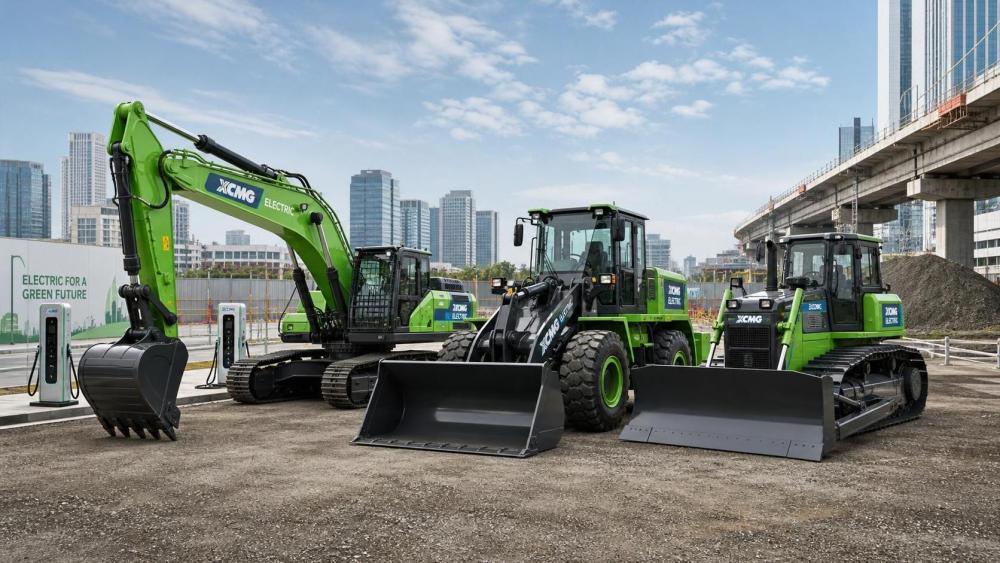
In 2026, regulation is only part of the story.
The larger question is how low-emission construction equipment changes total ownership cost, bid access, and asset value over time.
That matters across excavators, wheel loaders, bulldozers, motor graders, and skid steer loaders.
In practical terms, cleaner fleets can reduce idle fuel burn, lower penalties, and protect utilization in regulated urban and infrastructure projects.
The catch is that purchase prices, charging or aftertreatment support, and technician readiness can raise the first-year budget.
This is where the decision becomes analytical rather than ideological.
EMD tracks this shift closely because emission rules now influence machine selection as much as breakout force, payload flow, grading accuracy, and hydraulic responsiveness.
For heavy earthmoving fleets, the strongest business case usually appears when compliance cost is measured against uptime, contract eligibility, and resale risk together.
What costs should be counted before approving a fleet upgrade?
The visible price premium is only the starting point.
A sound review of low-emission construction equipment should separate direct cost, transition cost, and avoided future cost.
Direct cost includes acquisition price, taxes, financing, attachments, telematics, and any site energy upgrades.
Transition cost often hides in operator retraining, spare-parts changes, software calibration, and service contract revisions.
Avoided future cost may be even larger.
That category covers restricted-site exclusion, carbon reporting burdens, low-emission zone fees, and accelerated write-downs on older equipment.
The comparison below helps organize those inputs before a budget meeting.
A common mistake is modeling only fuel savings.
For low-emission construction equipment, the better model includes utilization risk and contract access, especially on public works and urban redevelopment sites.
Where does ROI usually come from in real operating conditions?
The answer depends on machine class and duty cycle.
Compact and mid-size fleets often recover value faster because they spend more time in emission-sensitive locations.
Skid steer loaders and mini to mid-size excavators are frequent examples.
Larger crawler excavators, bulldozers, and wheel loaders can still justify the shift, but payback usually depends more on high annual hours and predictable project flow.
In actual fleet reviews, ROI often comes from five sources working together.
- Lower fuel or energy spend during long operating windows.
- Reduced idling losses through smarter control systems and telematics.
- Better access to infrastructure tenders with emission thresholds.
- Improved residual value where older diesel units face resale pressure.
- Lower reputational and reporting friction in decarbonization-linked projects.
EMD’s coverage of grading systems, hydraulic efficiency, and autonomy trends also matters here.
A cleaner machine with poor duty matching rarely beats a well-used efficient unit with strong control logic and high uptime.
Simple payback looks attractive on paper, but whole-life ROI becomes stronger when software, machine guidance, and service support raise asset utilization.
How can you tell whether a low-emission machine will really outperform a conventional unit?
The most reliable method is not a brand comparison alone.
It is a task-by-task comparison using hourly cost, jobsite restriction exposure, and projected resale pathways.
For instance, a motor grader used in airport expansion may gain value from precise control, lower on-site emissions, and easier compliance documentation.
A bulldozer in remote heavy push work may show a slower payback unless fuel burn is extreme or upcoming rules limit engine classes.
More often, the best decision comes from a short evaluation matrix.
This kind of check is especially useful when comparing crawler excavators or wheel loaders with very different utilization profiles across regions.
What risks are commonly underestimated when budgeting for low-emission construction equipment?
The main risk is assuming the cleaner option automatically saves money.
That is not always true when fleet dispatch, charging logistics, or maintenance readiness are weak.
Another underestimated issue is productivity mismatch.
If a machine meets emission goals but struggles under peak hydraulic demand, project economics can worsen.
This is why EMD’s broader lens on hydraulic systems, control response, and severe-duty applications matters for capital planning.
The following warning signs deserve attention before approval.
- Savings assumptions based on ideal duty cycles, not actual site behavior.
- No budget for power supply, chargers, workshop retrofits, or technician certification.
- Weak clarity on software support life and battery or aftertreatment warranty terms.
- Ignoring downtime risk during the first year of deployment.
- Using one ROI model for loaders, graders, excavators, and dozers without duty adjustments.
More commonly, successful adopters start with the applications where site restrictions and annual hours make the economics visible within a manageable period.
What is a practical way to evaluate payback timelines in 2026?
A useful approach is to build three cases instead of one.
Use a base case, a regulated-project growth case, and a stress case with lower utilization.
Then compare annual cash impact, not just nominal lifetime savings.
Include purchase premium, financing cost, estimated energy or fuel variance, maintenance difference, and expected residual value at disposal.
Where possible, assign value to bid eligibility.
That line is often omitted, yet it can be decisive for low-emission construction equipment used on public, airport, mining, or city-linked projects.
In many cases, the best trigger for approval is not the shortest payback.
It is the most resilient business case under uncertain regulation and resale conditions.
That means favoring machines with reliable service ecosystems, solid software support, and proven fit for actual work cycles.
So, when does low-emission construction equipment make financial sense?
It makes the most sense when compliance pressure, utilization, and asset strategy point in the same direction.
If fleets operate in restricted zones, bid on infrastructure projects, or face falling resale value for older diesel units, the case becomes stronger.
If work is remote, inconsistent, or unsupported by local service capacity, a phased transition is usually more defensible.
The smarter next step is to rank machine classes by duty cycle, emission exposure, and replacement urgency.
Then build a comparison using operating hours, site restrictions, maintenance readiness, and projected disposal value.
Low-emission construction equipment should not be approved because it is newer.
It should be approved when the numbers show stronger long-term asset performance, lower compliance friction, and better project access.
That is the point where decarbonization stops being a headline and becomes a measurable capital decision.