
Related News
- 00
0000-00
How to size heavy-duty loaders for North American mining operations - 00
0000-00
How altitude affects mining excavator performance in Latin America - 00
0000-00
Caterpillar Launches New Cat 6060 and Upgraded Autonomous Mining System - 00
0000-00
When does eco-friendly construction equipment pay for itself? - 00
0000-00
Will a wheel loader quick coupler fit your existing attachments?
In 2026, industrial machinery trends are redefining margin control across the equipment channel. Pricing power is less stable, inventory risk is rising, and customer expectations are becoming more technical and data-led.
For global heavy equipment markets, the pressure is not coming from one direction. It is coming from electrification, autonomy, emissions rules, financing costs, software value, and changing project cycles.
That matters across crawler excavators, wheel loaders, motor graders, bulldozers, and skid steer loaders. It also matters for intelligence platforms like EMD, where market signals and technical shifts increasingly shape commercial outcomes.
The most important question is no longer whether change is coming. It is how fast each trend changes gross margin, parts revenue, service mix, and asset turn.
Why industrial machinery trends are tightening margin conditions in 2026
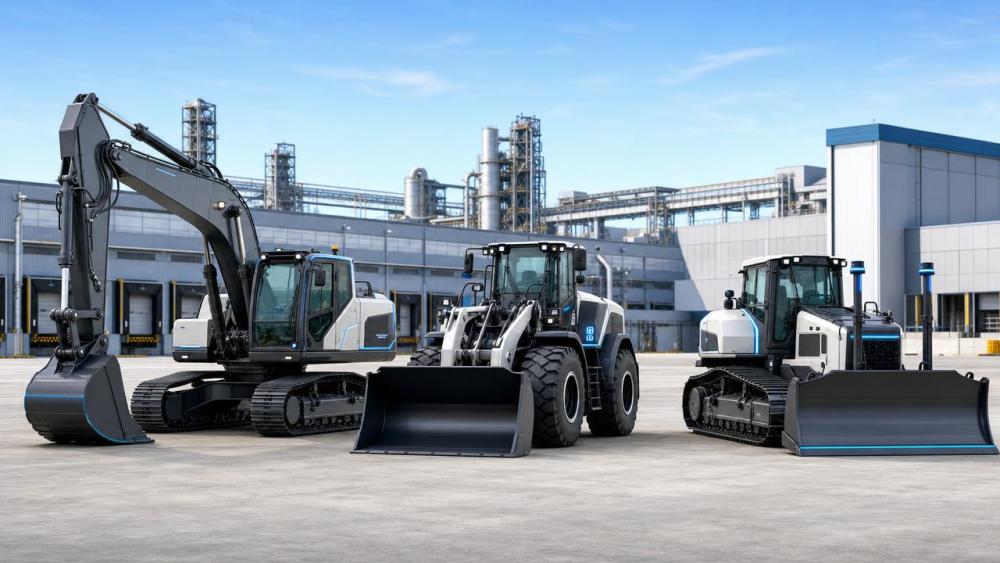
Several market signals explain why industrial machinery trends will affect dealer margins more sharply in 2026 than in earlier cycles.
First, machine pricing remains high, but replacement demand is more selective. Buyers now compare lifecycle cost, software support, uptime guarantees, and residual value more closely.
Second, inventory mistakes are becoming more expensive. Carrying costs, interest rates, and slower-moving premium models can quickly compress margin, even when list prices look healthy.
Third, technology is changing the value stack. Hardware still matters, but telematics, control systems, remote diagnostics, and autonomous functions now influence deal structure and aftersales profit.
Fourth, regulation is splitting markets. Some regions reward low-emission fleets and compact electric machines, while others still prioritize durability, fuel efficiency, and simplified maintenance.
This uneven transition creates opportunity, but it punishes generic stocking strategies. In 2026, margin quality depends on alignment between local demand, machine specification, and support capability.
The strongest industrial machinery trends shaping channel economics
The following drivers explain why industrial machinery trends are changing profitability across broad industrial and infrastructure equipment markets.
These shifts are especially important in equipment categories observed by EMD. Excavators and loaders now carry more embedded electronics, while graders and dozers increasingly depend on precision control systems.
Software is becoming part of equipment pricing
One of the clearest industrial machinery trends is the move from pure iron value to blended iron-and-intelligence value. That changes discounting logic.
Machines with telematics, payload optimization, 3D grading, and remote diagnostics can protect margin better. However, only if those functions are activated, explained, and supported correctly.
Used equipment pricing is no longer a simple fallback
Trade-in values are becoming more sensitive to emissions tier, software compatibility, battery condition, and maintenance data quality. Resale strength now depends on documentation, not only hours.
How these trends influence margins across sales, inventory, and aftersales
The direct effect of industrial machinery trends appears in three places: front-end gross profit, balance-sheet exposure, and recurring service income.
On the sales side, technically differentiated machines can command healthier margins. Yet the same machines take longer to sell when local financing, charging access, or operator readiness is weak.
On the inventory side, mixed demand creates uneven stock performance. Compact machines may move quickly in urban projects, while large units depend heavily on mining, quarry, or infrastructure timing.
In aftersales, traditional mechanical service remains critical, but new value comes from calibration, software updates, sensor replacement, connectivity support, and fleet analytics interpretation.
- Higher-spec machines can lift deal value, but also raise demo and training costs.
- Slow-moving inventory erodes margin faster when financing costs stay elevated.
- Aftersales revenue shifts from purely mechanical labor toward hybrid digital support.
- Attachment strategy matters more because versatility improves utilization and close rates.
For earthmoving categories, this is especially visible in mini excavators, skid steers, and precision graders. These segments increasingly win on application fit, not only horsepower or bucket size.
Where companies should focus as industrial machinery trends accelerate
Margin protection in 2026 requires disciplined attention to a few high-impact areas. The following priorities are practical and measurable.
1. Match inventory to local project reality
Use regional infrastructure pipelines, mining activity, rental utilization, and urban redevelopment data to guide stock decisions. Broad assumptions are now too risky.
2. Protect value through configuration quality
Correct hydraulic packages, grade control options, undercarriage choices, and attachment compatibility reduce discount pressure. Specification accuracy now supports margin preservation.
3. Expand service around connected equipment
Remote monitoring, fault code interpretation, and utilization reporting create recurring value. They also improve retention when machine replacement decisions return.
4. Build a smarter used equipment model
Residual value forecasting should include emissions eligibility, digital service history, and retrofit potential. Used machinery strategy is now part of new machinery margin planning.
5. Monitor policy and decarbonization timing
Not every market adopts electrification equally. The best response is selective readiness, supported by intelligence on incentives, restrictions, and grid practicality.
Practical responses to industrial machinery trends in the next planning cycle
The best response to industrial machinery trends is not a single strategy. It is a coordinated operating model that connects sales, inventory, intelligence, and support.
For platforms like EMD, this planning cycle favors deep intelligence rather than broad commentary. Margin outcomes increasingly depend on understanding technical adoption at machine-category level.
That includes excavator control logic, loader duty cycles, grader automation uptake, dozer transmission efficiency, and compact equipment attachment demand. Small shifts in these areas can produce large commercial effects.
The next move for businesses tracking industrial machinery trends
In 2026, winning on industrial machinery trends means acting before margin pressure becomes visible in monthly reports. The strongest positions are built through early signal detection and disciplined execution.
Review stock aging, option mix, telematics activation rates, used inventory quality, and service attachment performance. Then compare them against local infrastructure demand and emissions direction.
If the goal is healthier margins, the path is clear: use sharper market intelligence, carry more precise inventory, sell total machine value, and strengthen digital aftersales capabilities.
As industrial machinery trends continue evolving, businesses that translate technical change into commercial discipline will protect profitability far better than those relying on volume alone.