
Related News
- 00
0000-00
How to size heavy-duty loaders for North American mining operations - 00
0000-00
How altitude affects mining excavator performance in Latin America - 00
0000-00
Caterpillar Launches New Cat 6060 and Upgraded Autonomous Mining System - 00
0000-00
When does eco-friendly construction equipment pay for itself? - 00
0000-00
Will a wheel loader quick coupler fit your existing attachments?
A low advertised rate can become the most expensive option when equipment arrives late, burns excessive fuel, or remains idle awaiting service.
Project leaders should compare rental proposals as operating plans, not as isolated equipment quotations. The best partner protects production targets while keeping controllable costs visible.
This approach applies across crawler excavators, wheel loaders, motor graders, bulldozers, and skid steer loaders, where utilization and reliability often determine margin.
The practical objective is straightforward: select the rental company that delivers the required output at the lowest realistic cost and schedule risk.
Start with the Total Cost of Equipment Ownership During the Rental Period
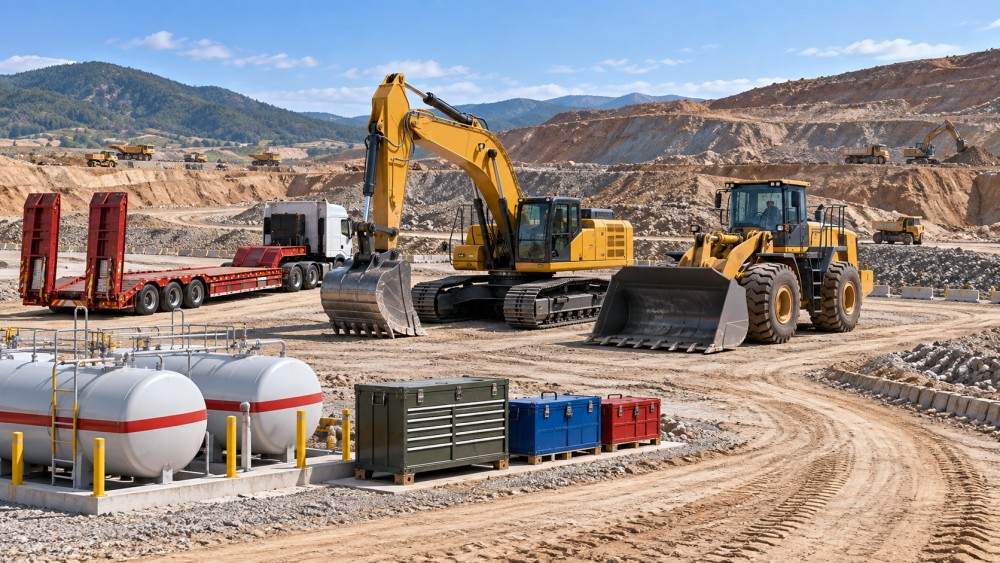
The rental invoice is only one component of project cost. Build a comparison model that measures every expense connected to placing equipment into productive service.
Begin with the base rental rate, then add delivery, pickup, mobilization, demobilization, fuel, attachments, taxes, insurance, and anticipated operator costs.
Also include costs that may not appear in the quotation, such as standby time, cleaning fees, wear charges, permit delays, and off-rent inspection requirements.
For long-duration work, convert every proposal into a daily, weekly, and monthly total. Different billing structures can materially change the final cost.
A company offering a lower monthly rate may impose high transport charges, strict hour limits, or expensive overtime charges that erase the apparent savings.
Use expected operating hours rather than calendar days alone. A bulldozer scheduled for two shifts has a different cost profile than one used intermittently.
Include the cost of inactive equipment when sequencing changes. A flexible supplier can reduce exposure when weather, permits, or subcontractor delays affect production.
The resulting comparison should answer one question: what will each supplier cost if the project proceeds according to plan and if it encounters normal disruption?
Normalize Quotes Before Comparing Heavy Equipment Rental Companies
Rental quotes are rarely structured identically. One supplier may include a bucket, telematics, and routine servicing, while another lists each item separately.
Create a common bid sheet with identical equipment specifications, rental periods, estimated hours, delivery locations, required attachments, and expected service coverage.
Request pricing for the same machine class, operating weight, horsepower range, bucket capacity, blade configuration, and emissions tier where relevant.
Comparing a 30-ton excavator against a lighter machine solely by daily rate ignores productivity, reach, lifting capacity, and cycle-time differences.
Ask whether quoted equipment is a guaranteed model or a “similar unit.” Similar-unit language can introduce uncertainty around features and machine condition.
For grading work, confirm whether the motor grader includes GPS preparation, machine-control compatibility, mast brackets, calibration support, and required sensor hardware.
For loaders and skid steers, specify attachments clearly. Forks, grapples, cold planers, sweepers, trenchers, and hydraulic breakers affect both production and pricing.
Normalize fuel assumptions as well. A supplier’s stated consumption estimate should reflect expected material, terrain, idle time, climate, and operating practices.
Measure Productivity, Not Just Machine Availability
Equipment availability has value only when the machine can achieve the planned output. Project managers should connect rental selection to measurable production requirements.
For excavators, evaluate digging depth, breakout force, hydraulic flow, attachment compatibility, swing speed, and stability for the actual excavation profile.
For wheel loaders, compare bucket payload, cycle time, traction, operating weight, tire condition, and performance in the material being handled.
For bulldozers, assess blade type, drawbar pull, undercarriage condition, grade-control readiness, and pushing distance rather than simply comparing horsepower.
Motor grader selection should reflect road width, moldboard capability, articulation, all-wheel drive requirements, and the precision demanded by final-grade specifications.
For compact jobsites, skid steer loaders may reduce handling time through attachment versatility, even when their hourly rental rate appears relatively high.
Estimate production in units meaningful to the project: cubic meters moved, truckloads loaded, linear meters graded, or completed utility trench sections.
Then divide total expected rental cost by planned output. Cost per productive unit is generally a stronger decision metric than cost per day.
A more capable machine may cost more to rent but reduce the fleet size, shorten the rental period, lower labor exposure, and protect milestones.
Put a Financial Value on Downtime and Service Response
Downtime is often the largest hidden variable when comparing heavy equipment rental companies. A failed machine can interrupt crews, trucks, materials, and critical sequencing.
Ask each supplier for documented service response commitments, local technician coverage, parts availability, replacement-machine procedures, and after-hours escalation contacts.
A vague statement that support is “available” is insufficient. Request practical details about response windows, dispatch locations, and typical repair turnaround times.
Calculate the cost of one lost operating day. Include idle labor, delayed subcontractors, equipment standing by, liquidated damages risk, and lost production.
On a high-output earthmoving package, one unavailable excavator can affect hauling balance and create costs far exceeding several weeks of rental-rate savings.
Review fleet age and maintenance records when available. Newer equipment is not automatically better, but well-maintained machines usually reduce unplanned operational disruption.
Telematics can strengthen project control by tracking hours, location, fuel use, idle time, fault codes, and preventive-maintenance schedules across rented assets.
Confirm who monitors alerts and who acts on them. Data has limited value if responsibility for responding to overheating, regeneration, or fault warnings remains unclear.
Where schedule exposure is substantial, give greater weight to suppliers with nearby replacement inventory and proven field-service capability, even at a premium.
Compare Fuel, Transport, and Site Logistics as Integrated Costs
Fuel cost can materially affect the rental decision, especially for machines operating long shifts in mining, bulk earthworks, roadbuilding, and remote infrastructure projects.
Ask whether fuel is supplied by the rental company, procured independently, or charged through a managed fueling service with delivery surcharges.
Compare estimated hourly consumption using similar work conditions. Generic manufacturer figures may understate fuel use in heavy digging, steep terrain, or high-idle operations.
Modern machine-control systems and efficient hydraulic designs can reduce rework, overexcavation, and unnecessary passes, improving total fuel and labor economics.
Transport costs deserve the same attention. Oversize permits, escort vehicles, lowboy availability, route limitations, and remote-site access can affect mobilization timing.
Confirm whether quoted delivery includes loading, unloading, assembly, attachment installation, site induction, and final collection from restricted-access locations.
For phased projects, evaluate the supplier’s ability to move machines between work fronts without excessive remobilization charges or scheduling gaps.
Local branch coverage can lower transport costs, but a more distant supplier may still be preferable when its fleet condition and support capability are demonstrably stronger.
Read Contract Terms for Budget Risk, Not Just Legal Compliance
Rental contracts allocate financial risk between the project and the supplier. Project managers should review these terms before treating a quote as comparable.
Focus on billing triggers, minimum rental periods, overtime thresholds, off-rent notice requirements, damage provisions, maintenance responsibilities, and payment timing.
Hourly limits are especially important. A favorable monthly rate can become expensive when actual utilization exceeds the included hours during accelerated construction periods.
Clarify whether preventive maintenance occurs during billable time and whether the supplier provides a replacement unit if scheduled service interrupts critical work.
Examine damage clauses carefully. Normal wear, track damage, tire wear, undercarriage conditions, and attachment breakage can create disputed end-of-rental charges.
Insurance requirements should identify deductibles, coverage limits, theft exposure, transportation responsibility, and liability for damage occurring during third-party operation.
Ask how off-rent inspections are documented. Joint photographs, hour-meter records, and signed condition reports reduce disputes when equipment leaves the project.
Contract flexibility has measurable value. The ability to extend, substitute, suspend, or return units quickly can prevent unnecessary charges during changing site conditions.
Use a Weighted Scorecard Instead of Choosing the Lowest Bid
A weighted scorecard helps the project team make a defensible decision when several rental proposals contain different strengths, assumptions, and risk levels.
Assign the largest weighting to total project cost, expected production, service response, machine suitability, contract flexibility, and supplier reliability.
For a schedule-critical project, downtime response may deserve more weight than a modest difference in base rental price.
For a short, simple job with low utilization, delivery cost and minimum-rental terms may matter more than advanced telematics or premium machine-control features.
Score each supplier against documented evidence rather than sales claims. Use written commitments, fleet details, references, service locations, and complete commercial terms.
Include an internal stakeholder from operations, procurement, finance, and safety. Each function sees a different cost that can affect the final project outcome.
Document assumptions behind every score, including expected hours, production rates, fuel price, contingency allowance, and the estimated cost of downtime.
This process creates an auditable procurement decision and makes it easier to explain why the selected supplier offers the best total value.
Match the Rental Partner to the Equipment Category and Project Conditions
Not every rental company has equal depth across equipment categories. A supplier strong in compact machines may not provide comparable support for large crawler excavators.
For excavator-intensive work, prioritize hydraulic expertise, attachment availability, replacement capacity, and technicians experienced with high-hour earthmoving applications.
Road and airport projects should assess grader support, 3D control expertise, calibration resources, and field personnel familiar with precision-grade workflows.
For dozer fleets, inspect undercarriage support, track-service capability, grade-control systems, and availability of suitable blades for the material and slope conditions.
High-cycle loading applications require suppliers that understand payload management, tire selection, bucket wear, and the consequences of machine downtime on haul operations.
Urban projects often benefit from partners with compact equipment, low-emission options, attachment inventories, and rapid delivery capacity for constrained access sites.
Where decarbonization targets apply, compare electric or lower-emission equipment availability, charging or fueling logistics, operating range, and realistic productivity impacts.
Make the Final Decision Around Cost Certainty and Schedule Protection
The best rental decision is rarely the lowest headline price. It is the proposal that delivers predictable equipment cost and dependable production throughout the planned work.
Start with a normalized total-cost model, then test every supplier against equipment performance, service resilience, logistics, fuel exposure, and contract risk.
Give special attention to downtime because its cost compounds quickly across labor, hauling, subcontractors, milestones, and client relationships.
When comparing heavy equipment rental companies, use cost per productive output alongside base rates. This keeps procurement aligned with actual project profitability.
A disciplined comparison process gives project managers stronger negotiating leverage, fewer budget surprises, and a rental fleet that supports delivery rather than threatening it.