
Related News
- 00
0000-00
How much does a 3D grader guidance system cost fully installed? - 00
0000-00
How to verify capacity before sourcing equipment from manufacturers - 00
0000-00
When to choose LGP dozers for infrastructure site preparation - 00
0000-00
How to size heavy-duty loaders for North American mining operations - 00
0000-00
How altitude affects mining excavator performance in Latin America
When evaluating dozer performance, buyers need more than headline specifications. A machine that looks strong on a comparison page may behave very differently once it encounters wet clay, a steep slot, abrasive rock, a high-altitude mine, or a tightly managed roadbuilding schedule. That is why the question behind an EMD portal bulldozer comparison is not simply, “Are these numbers correct?” It is, “Are they reliable enough to guide a real decision?”
The practical answer is: EMD portal data can be a highly useful starting point for screening models, identifying technical differences, and building a procurement shortlist. It should not be treated as a substitute for the latest OEM documentation, dealer configuration confirmation, site-specific production analysis, or an operator-led field trial. Accuracy is not a single yes-or-no condition in earthmoving; it depends on what kind of data is being compared and how that data will be used.
What “accurate” means in a bulldozer comparison
For many fixed specifications, comparison data is relatively straightforward. Operating weight, engine power rating, blade dimensions, track gauge, shipping dimensions, and published ground pressure can usually be traced back to manufacturer literature. These fields are valuable because they establish a common technical baseline.
Yet even apparently simple figures need context. Operating weight may change with blade type, ripper fitment, cab protection, undercarriage option, guarding package, fuel level, or regional equipment specification. Engine ratings can be stated as gross or net power, under different regulatory standards and at different rated speeds. A comparison that does not clarify those conditions may be technically sourced but still misleading in practice.
For this reason, the most dependable way to read EMD portal bulldozer comparison data is to separate it into three categories:
- Published equipment specifications: dimensions, weights, engine ratings, capacities, and standard system descriptions.
- Configuration-dependent specifications: blade capacity, ground pressure, transport weight, ripper performance, and technology packages.
- Operational outcomes: fuel burn, hourly production, cycle times, traction in specific material, operator comfort, and maintenance availability.
The first category is generally suitable for early comparison. The second requires closer reading of notes and configurations. The third should always be treated as a planning discussion rather than a universal fact.
Where credible portal data comes from—and where variation enters
A serious machinery intelligence portal typically builds a record from OEM technical sheets, operator manuals, launch materials, regional product pages, emissions documentation, dealer information, and industry reporting. This method is useful because it brings fragmented information into one place. For fleet managers comparing several brands or machine classes, that consolidation can save days of opening brochures and chasing inconsistent terminology.
However, a portal cannot eliminate the complexity created by global equipment markets. A bulldozer sold in North America may not have the identical engine package, cab arrangement, aftertreatment system, hydraulic options, or grade-control preparation as a model carrying the same designation elsewhere. Model-year revisions can also change a specification without changing the machine’s familiar name.
That is why users should view EMD data as intelligence that organizes the market, not as an immutable build sheet. A sound portal comparison reveals the questions worth asking before a purchase order is issued: Which blade is included? Is the stated weight for a standard machine or a fully guarded unit? Does “grade control ready” mean installed hardware, factory wiring, or a complete integrated system? Is the quoted power figure net or gross?
Those questions are not signs that comparison data has failed. They are the normal due-diligence process for a machine expected to push thousands of cubic metres, work long shifts, and remain productive for years.
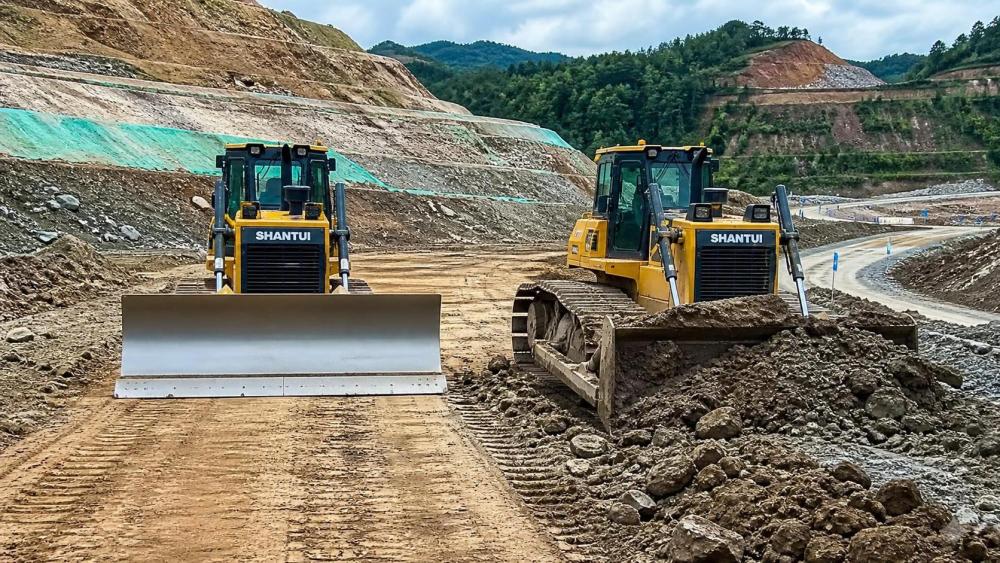
Why blade capacity and drawbar pull deserve extra caution
Bulldozer buyers often focus on two figures: blade capacity and drawbar pull. Both matter, but both are easy to overinterpret.
Blade capacity is commonly expressed as a heaped volume. The real load carried in front of the blade changes with material density, moisture, fragmentation, blade shape, operator technique, pushing distance, slope, and spillage. A coal pile, loose sand, ripped shale, and sticky clay will not fill or move in the same way. Even a highly accurate published blade capacity does not predict daily production by itself.
Drawbar pull also depends on conditions beyond the headline value. Tractive effort is influenced by track condition, grouser design, machine balance, underfoot material, slope, slip, and available engine power. A dozer can have impressive theoretical pull yet lose practical advantage if the jobsite prevents the tracks from converting that power into grip.
When comparing machines through the EMD portal, use these figures to understand machine class and intended duty. Then ask a more useful operational question: What material must this dozer move, how far, over what grade, and with what expected underfoot conditions? That shift moves the evaluation from brochure arithmetic toward production reality.
Can the portal compare fuel efficiency fairly?
Fuel efficiency is one of the most searched and least portable bulldozer metrics. Procurement teams understandably want a direct answer: which machine uses less fuel per hour? But idle time, operator behavior, application severity, blade loading, ambient temperature, altitude, machine condition, and the use of automatic grade-assist functions all influence the answer.
A listed fuel-saving feature—such as eco modes, automatic gear selection, hydrostatic transmission management, lower engine speed strategies, or blade-load control—can be accurately described. What cannot be assumed is a single fuel-burn outcome for every operation. A machine spreading stockpiles for part of a shift will produce a different result from the same model doing sustained heavy slot dozing in compacted material.
Use portal information to compare the design logic behind efficiency: transmission architecture, engine-management approach, cooling strategy, automation capability, and available telemetry. For a bid model, verify fuel consumption using records from comparable work or a controlled demonstration. The meaningful measure is often litres per bank cubic metre, tonnes moved, or completed grading area—not litres per hour alone.
Technology fields need a configuration check
Modern bulldozer comparisons increasingly include 3D machine control, GNSS readiness, slope assist, automatic blade control, remote monitoring, payload-related reporting, and remote-operation capability. These are commercially important fields, especially for contractors balancing labor shortages, tight grade tolerances, and rework risk.
But technology terminology is not always standardized. “Integrated,” “ready,” “compatible,” and “available” can describe very different levels of delivery. One machine may arrive with factory-installed sensors and a complete control platform; another may be structurally prepared for a dealer-installed solution. A portal listing should be read alongside the exact regional option code and technology supplier arrangement.
This is particularly important for motor-grader-like finishing work performed by dozers on pads, roads, and large earthworks. The value of 3D control is not only the hardware on the roof. It also depends on survey control, model quality, site connectivity, calibration discipline, technician support, and operator adoption. EMD’s broader focus on precision grading and low-latency machine systems can help users understand that ecosystem, but the final specification must still be confirmed for the individual machine.
A practical confidence test before you rely on comparison data
A procurement manager does not need to distrust every online figure. They need a repeatable way to decide which figures need verification. Before using an EMD portal comparison in a tender, internal budget, or fleet replacement plan, apply the following test.
1. Match the model suffix and market
Confirm the exact machine designation, emissions tier or stage, and country or region. A missing suffix can conceal an important difference in engine, transmission, or equipment package.
2. Identify the stated configuration
Check whether the comparison refers to a PAT blade, SU blade, U blade, angle blade, ripper-equipped machine, low-ground-pressure version, forestry package, or standard construction setup. Weight and productivity-related figures can shift substantially between these options.
3. Check the date of the source material
Construction machinery evolves in increments. A current portal entry may summarize an established model family, while the dealer’s current quotation reflects a recent update. Confirm publication dates and request the latest specification sheet for a purchase decision.
4. Normalize the comparison
Do not compare one machine’s net power with another’s gross power, or one model’s standard operating weight with another’s equipped weight. If the basis is not clearly comparable, the ranking is not meaningful.
5. Put production assumptions on paper
For any major project, estimate push distance, swell factor, material type, grade, operator shifts, expected utilization, service intervals, and haul-road conditions. Portal data provides the machine inputs; your job conditions determine the output.
Common mistakes when using bulldozer data online
The most frequent mistake is selecting a dozer by horsepower alone. Power matters, but undercarriage durability, blade design, machine balance, transmission response, visibility, service access, and dealer support may have a larger effect on lifecycle performance.
Another error is comparing only purchase price. A lower initial cost can be outweighed by fuel use, undercarriage wear, unplanned downtime, parts lead times, resale prospects, or a technology package that does not fit the contractor’s digital workflow. Conversely, the most equipped machine is not automatically the right one if the project does not have the survey infrastructure or trained personnel to use its automation.
Finally, users sometimes treat a portal’s “best” or “largest” specification as a verdict. It is not. Bulldozer selection is an application match. A lighter, more maneuverable dozer may be the better asset for utility work, landfill operations, finish grading, or constrained sites, while a heavier machine with a different blade and undercarriage setup may excel in bulk push work.
How EMD data fits into a stronger buying process
EMD is most valuable when used as the intelligence layer between an initial question and a defensible decision. Its comparative view of crawler excavators, wheel loaders, motor graders, bulldozers, and skid steer loaders gives planners a wider picture of how equipment choices connect across an earthmoving operation. That perspective matters when a dozer is not working alone: excavator production, loader support, haul arrangements, grading tolerances, and site logistics all affect its utilization.
For early-stage fleet planning, EMD portal bulldozer comparison data can help narrow a broad market to two or three realistic candidates. For technical evaluation, it can highlight the specifications and technology claims that deserve clarification. For project planning, it can frame discussions around traction, grading precision, emissions requirements, and the transition toward connected or autonomous jobsite systems.
Then comes the essential final step: validate the shortlisted machine against current OEM documents, a written dealer quotation, and the intended job conditions. If the decision is high-value or operationally critical, arrange a demonstration in representative material and include the operators and maintenance team who will live with the machine after the sales presentation ends.
So, how accurate is EMD portal data for bulldozer comparisons?
EMD portal data is accurate enough to be useful for structured research, market comparison, and informed shortlisting—provided users understand the boundary between published specifications and field performance. It is strongest when comparing clearly defined technical attributes on an equivalent basis. It becomes less definitive when the question involves fuel economy, production, traction, or technology value under a specific jobsite condition.
In other words, treat the portal as a well-organized map, not the terrain itself. It can show where the serious options are, where specifications diverge, and where a seemingly small configuration detail may change the outcome. The final choice should still be grounded in the machine’s exact build, local support network, and the hard physical reality of the earth it must move.