
Related News
- 00
0000-00
How to size heavy-duty loaders for North American mining operations - 00
0000-00
How altitude affects mining excavator performance in Latin America - 00
0000-00
Caterpillar Launches New Cat 6060 and Upgraded Autonomous Mining System - 00
0000-00
When does eco-friendly construction equipment pay for itself? - 00
0000-00
Will a wheel loader quick coupler fit your existing attachments?
Are Global Earth-Mover Dynamics EMD equipment specs reliable enough to guide critical purchasing, fleet planning, and infrastructure decisions? In a market shaped by punishing duty cycles, tighter non-road emissions rules, and fast-moving automation, a specification sheet is not merely a list of numbers. It can influence tender assumptions, attachment choices, transport planning, operating costs, and the confidence of the people expected to deliver work on time.
The short answer is: EMD equipment specifications can be highly useful when they are read as verified decision intelligence rather than as isolated catalog claims. A crawler excavator’s breakout force, for example, only becomes meaningful when considered alongside hydraulic flow, operating weight, boom configuration, bucket geometry, soil conditions, and the work cycle. The same principle applies to loaders, graders, bulldozers, and skid steer loaders.
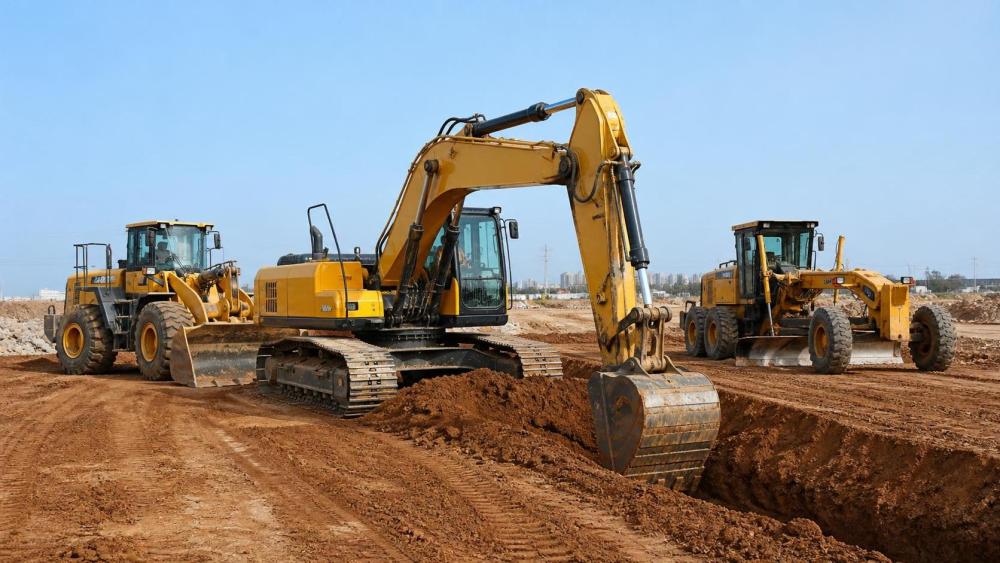
Global Earth-Mover Dynamics approaches specifications through the realities of earthmoving work: how machines cut, push, lift, load, grade, travel, consume energy, and communicate with increasingly digital jobsites. That context is what separates a workable comparison from a misleading one.
What Does “Reliable” Mean for EMD Equipment Specs?
Reliability does not mean that every published figure will be reproduced exactly on every project. Construction equipment operates in variable environments: hot quarries, wet urban sites, high-altitude road corridors, confined demolition zones, and mines where production never pauses. No responsible equipment evaluator should imply otherwise.
Instead, reliable specifications should meet several practical tests. They should identify the machine configuration behind the number, distinguish standard and optional equipment, use recognized measurement conventions where applicable, and make clear whether a value is theoretical, rated, or dependent on conditions. A machine’s advertised engine output, for instance, may not tell a buyer much unless the relevant emissions stage, power-rating method, and auxiliary load demands are understood.
For users researching whether Global Earth-Mover Dynamics EMD equipment specs reliable is a reasonable assumption, the most useful answer is this: EMD-style intelligence is strongest when it connects published manufacturer information with operating logic, comparison criteria, regulatory context, and known application constraints.
Why Specification Sheets Can Mislead Even When the Numbers Are Correct
Most disputes over machine specifications do not begin with deliberately false data. They begin when a number is treated as universal while the conditions behind it are ignored.
A wheel loader may show an impressive bucket capacity, but that does not automatically mean it will carry that volume in dense, wet aggregate without exceeding a practical payload target. A bulldozer may offer exceptional drawbar pull, yet track shoe selection, undercarriage condition, ground bearing pressure, and slope can fundamentally change its performance. A motor grader with a sophisticated 3D control package can theoretically maintain fine tolerances, but only if the site model, sensors, calibration process, and operator workflow are properly managed.
EMD’s value lies in treating the equipment specification as the beginning of the evaluation, not the conclusion. This is particularly important in global procurement, where the same machine family may be sold with regional engine packages, different safety arrangements, alternate counterweights, optional tracks or tires, and varying electronic-control features.
- Configuration variance: A base machine and a heavily optioned machine may carry the same model name while delivering different working capabilities.
- Measurement conditions: Lift capacities, breakout forces, travel speeds, and fuel-use claims are often tied to defined test conditions.
- Attachment impact: Buckets, hammers, grapples, rippers, blades, couplers, and forks change the way a machine behaves.
- Regional compliance: Emissions and safety requirements can alter engine systems, service intervals, or equipment availability.
- Operator and site effects: Production is shaped by technique, material, haul distance, maintenance, and jobsite layout—not engine power alone.
How EMD Evaluates the Five Core Earthmoving Categories
Different machines invite different specification mistakes. A credible intelligence portal should not evaluate them with one generic checklist.
Crawler excavators: hydraulic force with a purpose
For crawler excavators, operating weight and engine power are familiar starting points, but they rarely answer the questions that matter on a difficult excavation. EMD analysis gives greater weight to the interaction between hydraulic pump capacity, electro-hydraulic control response, arm and boom geometry, bucket cylinder force, swing performance, and stability.
Buyers should examine whether digging forces are stated at the bucket tooth or cutting edge, whether the arm length is standard, and how lift charts are presented. A machine that excels in trenching may not be the optimal choice for heavy lifting, high-reach demolition, or hammer work. Hydraulic auxiliary circuits also deserve close scrutiny, especially when a fleet will run multiple attachments.
Wheel loaders: capacity is not the same as productivity
Wheel loaders earn their place through repeated loading cycles. Here, reliable equipment specs need to account for rated payload, breakout force, linkage design, tire choice, bucket type, axle arrangement, and transmission behavior. A large nominal bucket is not automatically a productive bucket if material density, fill factor, or machine stability creates payload inconsistency.
EMD places loader figures in the context of quarry loading, stockpile handling, waste transfer, mine stripping, and truck matching. The question is not simply “How much can the bucket hold?” It is “Can the loader consistently load the target truck in the right number of passes while preserving tires, fuel, and operator control?”
Motor graders: precision depends on the complete control chain
Grader specifications are especially vulnerable to shallow comparisons. Blade width, articulation angle, and horsepower matter, but road formation and airport work demand a deeper view. Machine balance, moldboard reach, circle torque, steering response, all-wheel drive availability, and control-system integration influence whether the machine can hold grade under changing material conditions.
For precision applications, EMD considers GPS and laser-guidance capability as part of a wider spatial workflow. The accuracy of a finished surface depends on survey data, machine-control calibration, sensor health, connectivity, operator practice, and quality verification. A “millimeter-level” claim should always be understood as a system outcome under controlled conditions—not a permanent promise independent of site management.
Bulldozers: traction must be read alongside undercarriage economics
Bulldozer buyers often focus on horsepower, blade capacity, and maximum drawbar pull. Those are important figures, but they do not fully explain how a dozer will behave in hard pushing, slot dozing, reclamation, landfill work, or fine finish grading.
Track type, shoe width, blade design, machine balance, transmission strategy, and undercarriage wear all matter. A full-hydraulic or hydrostatic transmission can offer useful control characteristics in particular applications, yet its advantages should be evaluated against maintenance capability, operator familiarity, climate, and expected duty cycle. EMD’s technical perspective emphasizes this kind of operational fit rather than declaring one drivetrain universally superior.
Skid steer loaders: versatility has limits that should be visible
Skid steers are frequently selected because they can turn within tight footprints and accept a broad range of hydraulic attachments. That flexibility is real, but compact dimensions can lead buyers to overlook rated operating capacity, tipping load, auxiliary hydraulic flow, visibility, ground conditions, and attachment weight.
A skid steer intended for pallet handling, trenching, sweeping, cold-planing, or forestry work should be specified as an attachment platform, not as a generic compact machine. High-flow hydraulics may be decisive for one job and irrelevant for another. EMD comparisons should therefore make attachment compatibility and hydraulic requirements visible before a purchase decision is locked in.
Questions to Ask Before Trusting Any Published Machine Figure
When reviewing a machine profile, tender document, or online comparison, a few disciplined questions can prevent expensive misunderstandings:
- Which exact model and configuration does this figure describe? Confirm the boom, arm, blade, counterweight, tire, track, bucket, and attachment assumptions.
- What standard or test method supports the number? This is vital for lift capacities, fuel claims, noise levels, emissions statements, and grading accuracy.
- Is the stated capability available in my market? Regional regulations and dealer options can affect what is delivered.
- What happens across the expected duty cycle? Peak output matters less than sustained, serviceable performance over long shifts.
- What is missing from the sheet? Service access, telematics functions, operator visibility, parts availability, and control ergonomics may not appear in headline comparisons.
These questions are not meant to create unnecessary doubt. They make equipment selection more grounded. For a contractor, fleet manager, rental business, hydraulic supplier, or OEM procurement team, the cost of selecting the wrong configuration is often much larger than the cost of spending extra time validating the right one.
Can EMD Specifications Support Purchasing and Tender Decisions?
Yes—but they should support a structured decision process rather than replace engineering review, dealer confirmation, site testing, or contractual verification. EMD intelligence is most valuable at the stage where decision-makers need to narrow a global field of options, identify meaningful trade-offs, and ask better technical questions.
For example, a contractor bidding a major infrastructure project may use EMD equipment data to compare excavator reach and hydraulic requirements, assess grader machine-control compatibility, or determine whether an electric or lower-emission fleet strategy is realistic for the project environment. A mining operation may focus more heavily on loader availability, remote-control architecture, thermal performance, and component durability. An urban utility contractor may place maneuverability, transport width, attachment changeover, and noise restrictions ahead of outright horsepower.
The specification is reliable when it is used in the correct decision frame. It becomes risky when it is copied into a tender without checking the local machine configuration, work method, and contractual assumptions.
What About Electrification, Autonomy, and Remote Operation?
The construction machinery market is changing the meaning of a “machine specification.” A traditional sheet focused on dimensions, power, capacities, and travel speed. Today, users also need to understand battery architecture, charging constraints, software updates, sensor suites, remote-control latency, geofencing, machine-control compatibility, and data ownership.
EMD’s Strategic Intelligence Center examines these emerging considerations because they increasingly affect asset utilization. An electric compact machine may offer meaningful benefits in indoor, urban, or emissions-sensitive work, but charging windows and duty-cycle planning remain essential. A remotely operated excavator may reduce exposure in hazardous zones, but reliability depends on communications infrastructure, control-system design, training, and emergency procedures—not simply on the presence of a remote-control feature.
In other words, the future does not make specifications less important. It makes contextual reading more important.
FAQ: Are Global EMD Equipment Specifications Reliable?
Are EMD specifications official manufacturer specifications?
EMD intelligence should be viewed as an analytical resource that organizes and interprets equipment information for practical comparison. For final procurement, compliance, warranty, and contractual decisions, always confirm the exact specification with the manufacturer or authorized dealer for the relevant market.
Which specs matter most when comparing excavators?
Look beyond engine power. Compare operating weight, hydraulic flow and pressure, digging forces, lifting capacities at the required radius, working range, auxiliary circuits, attachment compatibility, fuel or energy use, and service support. The ideal balance depends on the work being performed.
Can one loader’s bucket capacity be compared directly with another’s?
Not safely without checking bucket type, material density assumptions, rated payload, linkage geometry, tire specification, and the intended loading cycle. Nominal volume alone can create a false impression of productivity.
Do 3D grade-control specifications guarantee finished-grade accuracy?
No. They indicate system capability, but finished accuracy also depends on data quality, calibration, sensors, operator workflow, material behavior, and site quality-control procedures.
What is the safest way to use EMD equipment data?
Use it to build a shortlist, frame technical questions, compare operational priorities, and recognize configuration differences. Then validate the selected machine against local documentation, application requirements, and, where possible, a real-world demonstration.
Global Earth-Mover Dynamics is built around a simple but demanding idea: reshaping the earth requires more than powerful machines; it requires clear intelligence about how those machines perform in the real world. Reliable specifications are not magic numbers. They are carefully interpreted evidence—useful when they are connected to the ground, the operator, the regulation, and the job still waiting to be completed.