
Related News
- 00
0000-00
How to size heavy-duty loaders for North American mining operations - 00
0000-00
How altitude affects mining excavator performance in Latin America - 00
0000-00
Caterpillar Launches New Cat 6060 and Upgraded Autonomous Mining System - 00
0000-00
When does eco-friendly construction equipment pay for itself? - 00
0000-00
Will a wheel loader quick coupler fit your existing attachments?
Heavy Machinery Undercarriage Parts: Wear Signs That Lead to Early Failure
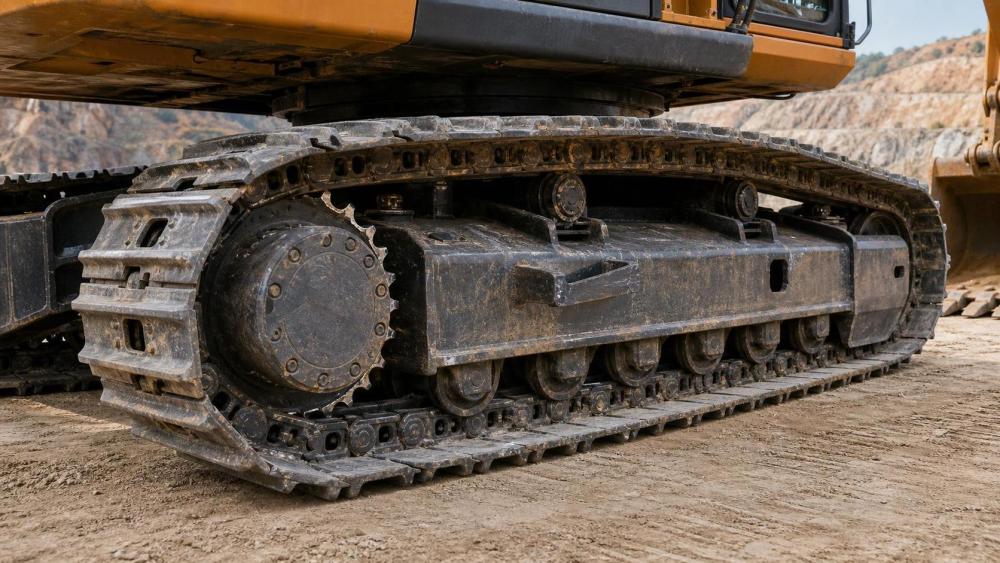
Heavy machinery undercarriage parts rarely fail without warning. Most problems start small, then grow fast under load, shock, dirt, and poor adjustment.
For service teams, early detection matters more than post-failure repair. A few visible clues can protect uptime, lower parts cost, and extend component life.
This is especially true for crawler excavators, bulldozers, and other track-driven equipment working in abrasive, high-impact environments.
The main issue is simple. Heavy machinery undercarriage parts wear as a system, not as isolated pieces.
When one part drifts out of spec, stress shifts to the next part. That is usually how early failure begins.
The signs are often visible before a breakdown stops production. Uneven wear, heat, noise, looseness, and vibration usually appear first.
From a maintenance point of view, the goal is not only to replace parts. It is to understand why those heavy machinery undercarriage parts are wearing early.
Why Early Wear on Heavy Machinery Undercarriage Parts Happens
Undercarriage life is influenced by terrain, operator habits, cleaning routines, and track setup. In practice, tension errors are one of the most common causes.
Over-tight tracks raise friction and load. Loose tracks increase impact, misalignment, and the chance of accelerated component movement.
Contamination is another major factor. Packed mud, stone, and demolition debris create grinding conditions around rollers, idlers, and track links.
Low-speed turning on abrasive ground also adds stress. Repeated counter-rotation can shorten life across multiple heavy machinery undercarriage parts.
Aging hardware matters too. Worn pins, bushings, sprocket teeth, and roller flanges rarely wear at the same pace.
That mismatch changes load distribution. Once the system loses balance, one premature replacement can quickly turn into several.
The First Wear Signs You Should Never Ignore
Some signals are obvious. Others are easy to miss during a busy inspection round.
A practical approach is to look for change, not just damage. Small shifts from normal condition are often the real warning.
1. Uneven Wear Patterns
Uneven wear is one of the clearest signs that heavy machinery undercarriage parts are not working together properly.
Look for one-sided roller wear, sharp flange loss, asymmetrical idler faces, and irregular track shoe thinning.
These patterns often point to alignment issues, poor tracking, worn frames, or frequent side loading.
2. Cracks and Surface Fractures
Hairline cracks around shoes, links, and welded zones deserve immediate attention. They usually grow under repetitive shock.
More importantly, cracking can signal overload, hard impacts, or a hidden geometry issue affecting other heavy machinery undercarriage parts.
3. Loose or Moving Components
Loose bolts, shifting guards, and extra play at pins or bushings are early warnings, not minor housekeeping issues.
Once movement starts where movement should not exist, wear speed usually increases across connected heavy machinery undercarriage parts.
4. Abnormal Noise and Vibration
A change in sound often appears before visible breakage. Clicking, grinding, or rhythmic knocking should always be traced.
The same applies to fresh vibration through the frame or cab. This can indicate roller seizure, sprocket wear, or track pitch mismatch.
How to Inspect Heavy Machinery Undercarriage Parts More Accurately
Good inspection work is consistent, visual, and measurable. Rushing through a walk-around usually misses the real cause.
A practical field routine should include these checks:
- Check track tension against manufacturer guidance, not visual guesswork.
- Measure roller, idler, and sprocket wear at the same inspection interval.
- Inspect both sides of the machine for side-to-side differences.
- Look for oil leakage around sealed rollers and idlers.
- Check shoe bolts and hardware retention after hard-duty operation.
- Monitor heat after operation, especially at rollers and final drive areas.
- Record wear progression instead of relying on memory.
This kind of routine turns inspection into decision support. It also makes replacement timing for heavy machinery undercarriage parts more predictable.
In actual service work, trend data is often more useful than a single measurement. One reading shows condition. A series shows direction.
What Specific Parts Reveal About Early Failure Risk
Different heavy machinery undercarriage parts fail in different ways. Reading those patterns helps narrow the root cause faster.
Track Chains and Bushings
Elongation, dry joints, and pitch growth often show up as rough travel and uneven sprocket engagement.
If ignored, chain wear can force early replacement of matching heavy machinery undercarriage parts downstream.
Sprockets
Hooked or pointed teeth are not just signs of age. They often reveal chain wear, poor fit, or load concentration.
Replacing sprockets alone may not solve the problem if related heavy machinery undercarriage parts have already drifted out of tolerance.
Rollers and Idlers
Flat spots, flange loss, leakage, and binding all suggest abnormal contact or failed sealing.
When rollers stop turning freely, friction rises fast and wear spreads across other heavy machinery undercarriage parts.
Track Shoes and Hardware
Cracked shoes, loose bolts, and worn grousers reduce traction and increase impact loading during travel and turning.
That extra shock can shorten service life across the entire undercarriage system.
A Simple Decision Table for Service Action
How to Reduce Early Failure in Daily Maintenance
Prevention is usually cheaper than rebuild work. The best results come from routine controls that are easy to repeat.
- Clean undercarriage areas before inspection, especially after mud, quarry, or demolition work.
- Set track tension for the actual jobsite condition, not one fixed setting for every environment.
- Replace matched heavy machinery undercarriage parts strategically when wear levels are closely linked.
- Use wear records to plan service windows before failure risk spikes.
- Review operating habits that create scrub turning, side loading, or repeated shock travel.
This also supports better inventory planning. Knowing which heavy machinery undercarriage parts fail together helps avoid both stockouts and unnecessary purchases.
From a broader equipment strategy view, stronger maintenance discipline protects asset utilization and improves total machine lifecycle value.
Final Takeaway
Heavy machinery undercarriage parts tell a clear story when inspected carefully. The key is catching the pattern before the failure becomes expensive.
Uneven wear, cracks, looseness, and vibration are not isolated symptoms. They are connected signals inside a stressed mechanical system.
The most effective response is consistent inspection, accurate measurement, and timely action on related heavy machinery undercarriage parts.
When those habits are in place, service decisions become faster, failure risk drops, and undercarriage life becomes much easier to control.