
Related News
- 00
0000-00
How to size heavy-duty loaders for North American mining operations - 00
0000-00
How altitude affects mining excavator performance in Latin America - 00
0000-00
Caterpillar Launches New Cat 6060 and Upgraded Autonomous Mining System - 00
0000-00
When does eco-friendly construction equipment pay for itself? - 00
0000-00
Will a wheel loader quick coupler fit your existing attachments?
Private Label Equipment Planning Starts With the Real Cost Picture
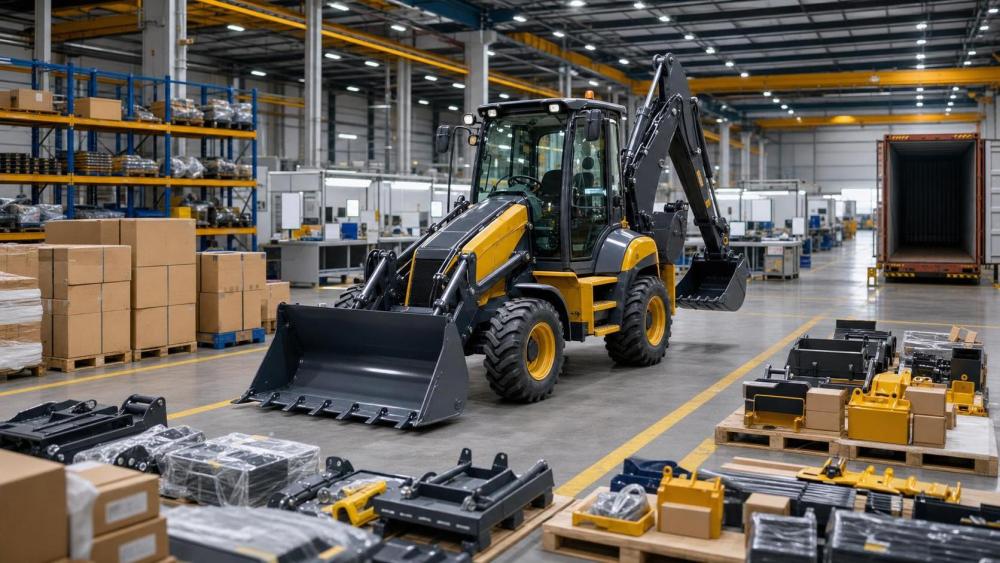
Private label equipment planning often looks attractive for one simple reason: margin control improves when branding, specification, and channel strategy move under one roof.
But in industrial machinery, the decision is rarely just about unit price. It also touches warranty exposure, spare parts readiness, compliance, and launch timing.
That becomes more important in sectors tracked by EMD, where crawler excavators, wheel loaders, motor graders, bulldozers, and skid steer loaders face tighter emissions rules and rising performance expectations.
A private label strategy can work well when the target product is stable, demand is visible, and supplier engineering discipline is proven. It becomes risky when branding moves faster than validation.
So the better question is not whether private label equipment planning is cheaper. It is whether the full launch model remains profitable after tooling, MOQ, inspection, service, and delay risk are counted.
What does private label equipment planning really include?
In practice, it means more than putting a logo on standard machinery. The scope can range from cosmetic branding to partial specification control and, sometimes, localized documentation and support packaging.
For compact or mid-range equipment, the common changes include decals, paint schemes, operator interface language, attachments, lighting packages, emissions configuration, and bundled wear parts.
On heavier platforms, especially excavators or graders, private label equipment planning may also involve hydraulic options, telematics setup, safety features, and region-specific regulatory files.
The key point is that every added variation creates another layer of cost and responsibility. A branded machine with custom settings is no longer just standard stock with a new badge.
EMD coverage of infrastructure equipment shows this clearly. As machines become more digital, private label decisions increasingly affect software calibration, diagnostic access, and after-sales uptime.
A quick way to frame the scope
This table matters because many launch problems begin with a mismatch between expected simplicity and actual scope.
How should cost be evaluated beyond the quoted unit price?
The quoted machine price is only the visible layer. Solid private label equipment planning separates one-time launch cost from recurring landed cost and post-sale support cost.
One-time items usually include tooling, artwork approval, sample builds, compliance testing, translation, packaging design, and pre-shipment validation visits.
Recurring costs cover the machine itself, attachments, shipping, tariffs, insurance, spare parts kits, field service training, and warranty reserves.
There is also the cost of slower turns. If MOQ is too high, inventory can consume margin faster than a supplier discount can recover it.
For earthmoving lines, cost discipline should also reflect utilization risk. A delayed grader launch, for example, can miss a roadwork season and distort annual sell-through.
Which cost questions deserve immediate attention?
- Is the quoted MOQ tied to a full machine, a paint batch, or a component family?
- Are certification documents included, updated, and usable in the destination market?
- Does the warranty assumption change when branding changes?
- Will custom options reduce future parts interchangeability?
- How much working capital is locked before the first commercial shipment arrives?
A disciplined landed-cost sheet usually reveals whether private label equipment planning creates a genuine advantage or only a lower-looking invoice.
MOQ looks manageable on paper, so where does it become dangerous?
MOQ becomes dangerous when it is treated as a purchasing number instead of a demand commitment. That is especially true for specialized machinery with slower replenishment cycles.
A low stated MOQ can still hide higher practical thresholds. The supplier may accept ten units, yet require larger orders for custom cabs, hydraulic pumps, or region-specific engines.
In private label equipment planning, the real MOQ is often the highest minimum inside the bill of materials, not the sales quote headline.
Another issue is mix complexity. If demand is split across several model variants, the combined volume may look healthy while each individual SKU remains too thin.
More cautious planning usually starts with fewer specifications, broader parts commonality, and a launch range built around service simplicity.
A practical MOQ judgment table
How can supplier capability be checked before launch risk becomes expensive?
The usual mistake is focusing only on factory size. For private label equipment planning, process discipline matters more than presentation.
A capable supplier should show consistent change control, traceable inspection records, stable core component sourcing, and clear escalation paths for field failures.
This matters even more in the machinery fields EMD follows. Electrification, autonomy, and tighter environmental compliance are increasing the cost of undocumented variation.
For example, a skid steer with custom auxiliary hydraulics or a mini excavator with revised telematics needs validation that goes beyond a brochure claim.
A short audit list helps keep the review grounded in facts instead of promises.
- Ask for recent test data on the same platform, not a similar model.
- Check whether software versions and hardware revisions are logged and controlled.
- Review parts availability for wear items and failure-prone assemblies.
- Confirm whether critical components come from approved, repeatable sources.
- Verify who owns technical files, drawings, and diagnostic permissions.
If the answers stay vague, the launch risk is usually higher than the pricing advantage suggests.
What launch risks are most often underestimated in private label equipment planning?
The biggest blind spot is assuming that a proven factory product remains equally proven after customization. Small changes can alter certification, assembly flow, packaging, and service procedures.
Another common issue is support readiness. The launch may succeed commercially, yet field claims rise because manuals, parts coding, or technician training were incomplete.
Timing risk also deserves attention. Industrial equipment demand often follows infrastructure funding cycles, tender windows, and project seasonality.
A late delivery can matter more than a small cost increase. In grading, loading, and earthmoving categories, missed timing can postpone revenue for months.
More experienced teams treat launch risk as measurable. They run pilot orders, define exit criteria, and avoid committing full-range volume too early.
A sensible first-launch checklist
- Limit custom features to the changes that clearly affect market acceptance.
- Approve a reference sample before bulk production begins.
- Create a spare parts package tied to the exact launch configuration.
- Set inspection gates for paint, hydraulics, electronics, and documentation.
- Build a contingency for lead time drift and first-batch rework.
So when is private label equipment planning actually the right move?
It tends to make sense when the target category has stable demand, repeatable service requirements, and a supplier platform with enough maturity to handle controlled customization.
It also works better when the commercial goal is clear. That could mean protecting channel margin, aligning branding across regions, or adapting equipment to a well-defined local requirement.
It is less suitable when product-market fit is still uncertain, regulations are shifting quickly, or after-sales infrastructure is too thin to support a branded launch.
EMD’s view of heavy equipment markets reinforces that point. Machines are becoming cleaner, smarter, and more integrated, which raises the penalty for weak planning.
A strong private label equipment planning process usually ends with a short decision file: full cost model, practical MOQ, validated supplier controls, and a phased launch path.
Before moving ahead, map the must-have specifications, test the real support burden, and compare launch scenarios against working capital exposure. That is where a private label plan becomes a business case instead of a branding exercise.